Defining Authorship for AI-Generated Images in the EU
While technology makes high-end visual production effortless, many creators overlook the precarious legal status of their output. This article explores whether you can copyright AI generated images in the EU and how to navigate ownership risks.
The Human Authorship Requirement
European intellectual property frameworks rest entirely on the presence of a human creator who makes free and creative choices. We will now examine the originality threshold and how to identify your specific contribution.
The Originality Threshold in EU Law
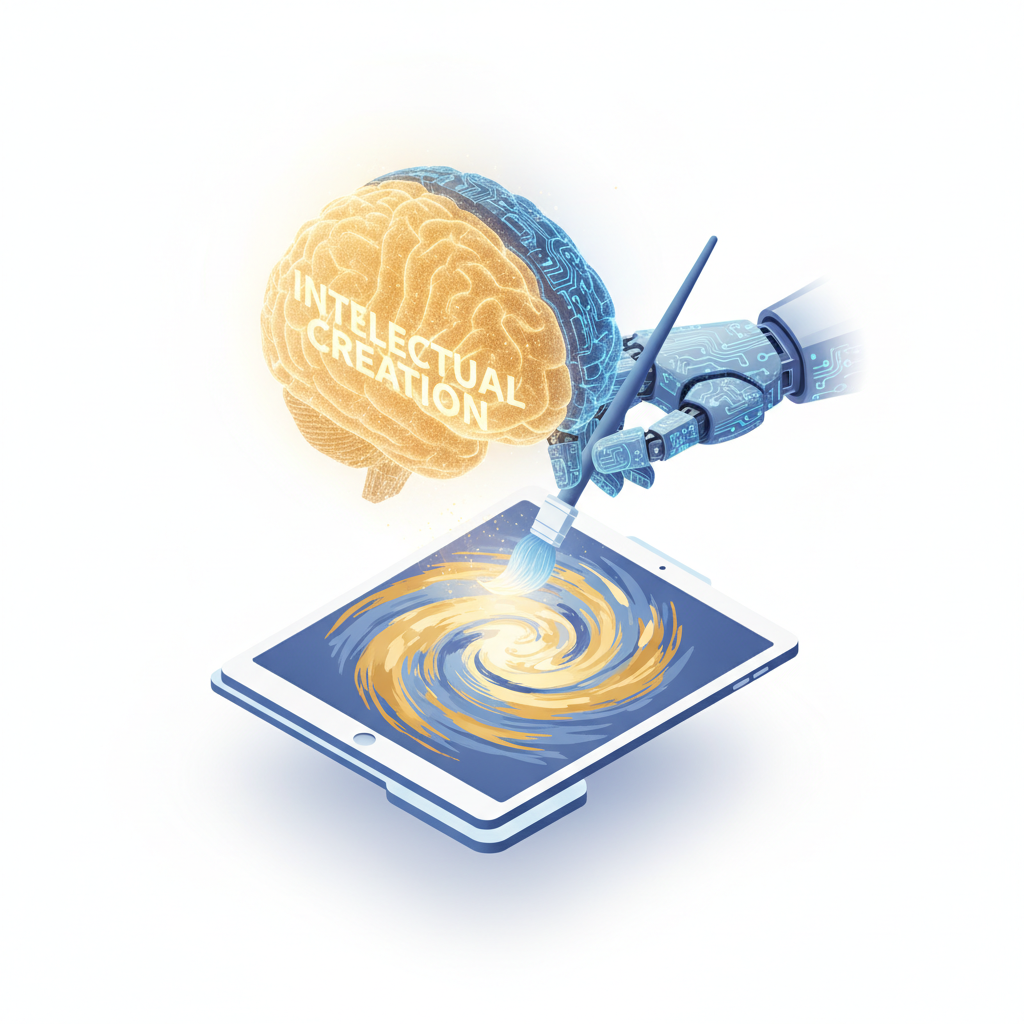
The Court of Justice of the European Union (CJEU) has established through landmark cases like Infopaq that a work is only protectable if it is the author’s own intellectual creation. In practice, this means the result must reflect the personality of a human being. When you use a prompt-based generator, the algorithm often makes the decisive creative choices—such as lighting, composition, and brushstroke texture—which can disqualify the output from copyright protection because the “personal touch” is absent.
An AI image is just a pixel calculation until a human guides the brush; without human creative intent, the result remains in the public domain.
Unlike traditional tools like Photoshop or a digital camera, where the software executes a human’s specific technical command, generative AI often produces unpredictable results. While creators may document their process and prompt logs, such evidence serves primarily to demonstrate the evolution of the work; it does not automatically bridge the gap if the final output lacks the requisite human intellectual creation. This distinction is vital, as one cannot enforce copyright over an image that failed to meet the originality threshold at its inception.
Understanding these boundaries helps determine the level of human intervention required to move from a generic machine output to a legally defensible asset.
Related topic reference: Legal risks when selling digital products in EU copyright rules.
Identifying Your Creative Contribution
Establishing a clear chain of human creativity is the only viable path to securing protection under current regulations. While the question of whether AI-generated imagery can be copyrighted in the EU often leads to a skeptical “no” for raw outputs, the legal landscape shifts significantly when you document the specific intellectual choices made during the creative process. By transforming the algorithm from a decision-maker into a sophisticated brush, you can meet the originality threshold required by the CJEU.
- Prompt Iteration Logs: Maintain a record of the evolution of your prompts, showing how you moved from generic instructions to specific stylistic, lighting, and structural commands to achieve a precise vision.
- External Compositional Control: Document the use of tools like ControlNet or custom-trained LoRA models, which prove you exercised technical command over the layout rather than leaving it to the AI’s randomness.
- Manual Post-Processing: Keep all working files (PSD, Affinity) showing manual retouching, color grading, or the merging of multiple AI-generated layers into a final, human-curated composition.
- Selection and Arrangement: Record the “curation” phase where you selected one specific output from hundreds, justifying why that particular image uniquely represents your personal touch.
For many digital entrepreneurs, even a well-documented workflow carries inherent litigation risks due to the evolving nature of case law. In such cases, a more robust defensive strategy involves securing a trademark registration in the EU for the final asset. While a copyright claim might be challenged in court based on the level of automation, a registered trademark provides a clear, certificate-backed right to exclude others from using that visual identity in commerce, effectively bypassing the technical debate over algorithmic originality. This strategic layer is particularly vital for those protecting designs from copycats on Instagram, where platform takedown tools often respond faster to registered trademarks than to disputed copyright claims.
To determine which protection path fits your project, it is essential to look at how these digital assets perform when measured against more conventional creative works.
Related topic reference: Protecting my designs from copycats on Instagram and beyond.
Comparing AI Assets vs Traditional Works
Understanding the gap between algorithmic output and human craft is essential for enforcement. We will now examine how copyright protection levels vary across these categories and why trademarks offer superior brand security.
Copyright Protection: A Comparison Table
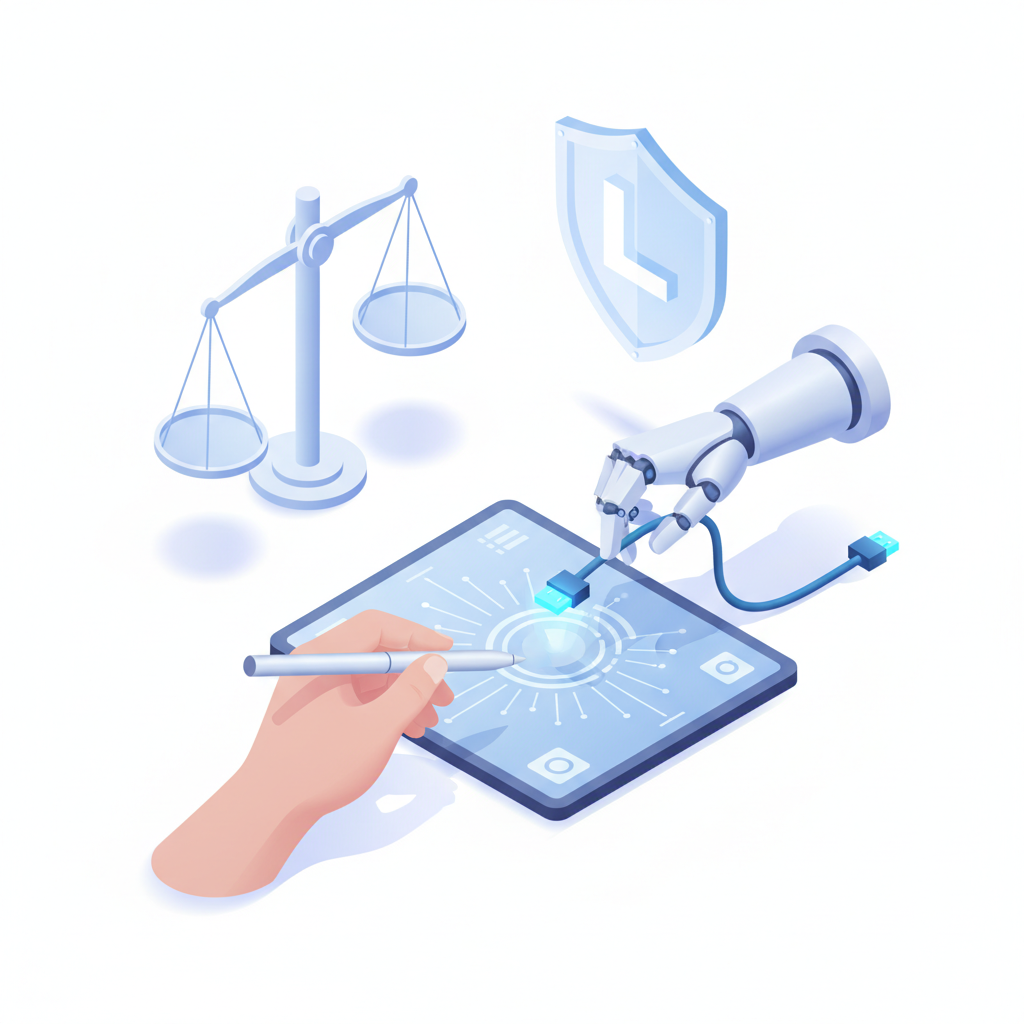
Understanding how the law treats different levels of machine involvement is critical for any digital entrepreneur building a portfolio in the European market. The distinction between a protected asset and a public domain file often rests on whether the human was a director of the creative process or merely a spectator to the algorithm’s calculations.
| Content Type | Authorship Status | Copyright Eligibility | Legal Risk |
|---|---|---|---|
| Human-Made (e.g., manual digital painting) | Full human authorship | High (standard protection) | Low; ownership is clearly established by creative execution. |
| AI-Assisted (Human-guided with ControlNet/LoRAs) | Joint/Human-dominant | Protected (subject to originality requirements) | Moderate; relies on documenting the iteration process to prove human creative choice. |
| Autonomous AI (Single prompt or raw output) | No human author | None (Public Domain) | High; lacks the threshold of human intellectual creation for copyright. |
For those navigating the legal requirements for AI assets, the answer lies in the transition from autonomous output to assisted creation. When an image is generated entirely by an algorithm without external compositional control, it effectively falls into the public domain, meaning you lack the right to exclude others from using it. To secure enforcement leverage, you must shift your workflow toward the “AI-Assisted” category, where your documented interventions—such as manual overpainting or the use of specific LoRA models—create the necessary link to human originality required by the CJEU.
This structural gap in copyright law necessitates a more robust commercial defense, where many creators secure their intellectual property through registration as an EU design or trademark to obtain definitive market protection.
Why Trademarks Trump AI Copyright
While copyright protection for AI-generated output remains legally complex due to the requirement for “human intellectual creation,” businesses can leverage intellectual property law to protect their brand assets. In the EU, shifting the focus from the authorship of the underlying file to the asset’s function as a “badge of origin”—by using it to signify the source of goods or services—provides a more robust commercial foundation.
Securing a trademark registration in the EU allows entrepreneurs to ground their commercial rights in the objective reality of an EUIPO-granted certificate. This registration provides the exclusive right to use specific visual elements as identifiers for defined classes of goods or services. While it does not grant copyright over the artistic content itself, it offers a reliable mechanism to protect brand identity, distinct from the ongoing legal debates surrounding the copyrightability of AI-generated work.
Strategic Implementation Checklist
- Audit Brand Assets: Identify high-value recurring visuals or logos that serve as the primary identifier for your goods or services.
- Verify Distinctiveness: Ensure the visual elements meet the EUIPO criteria for distinctiveness rather than relying on stylistic complexity.
- Define Commercial Scope: Limit filings to the specific Nice Classification goods and services you intend to protect, avoiding broad, unenforceable claims.
For a digital creator, this approach ensures that your brand remains protected even when the copyright status of individual digital files is ambiguous. A registered mark provides the enforcement leverage necessary to address infringements on digital platforms, as marketplaces and authorities prioritize verified registration certificates when managing intellectual property disputes.
Disclaimer: Trademark eligibility and enforcement outcomes are subject to specific regional regulations and the distinctiveness of the mark; this information is for educational purposes and does not constitute formal legal advice.
Strategic Steps for Content Creators
To navigate the complexities of protecting digital art in Europe, creators must adopt a systematic approach that secures both creative proof and commercial rights. We will now explore the specific workflow for maintaining legal control.
A Four-Step Protective Workflow
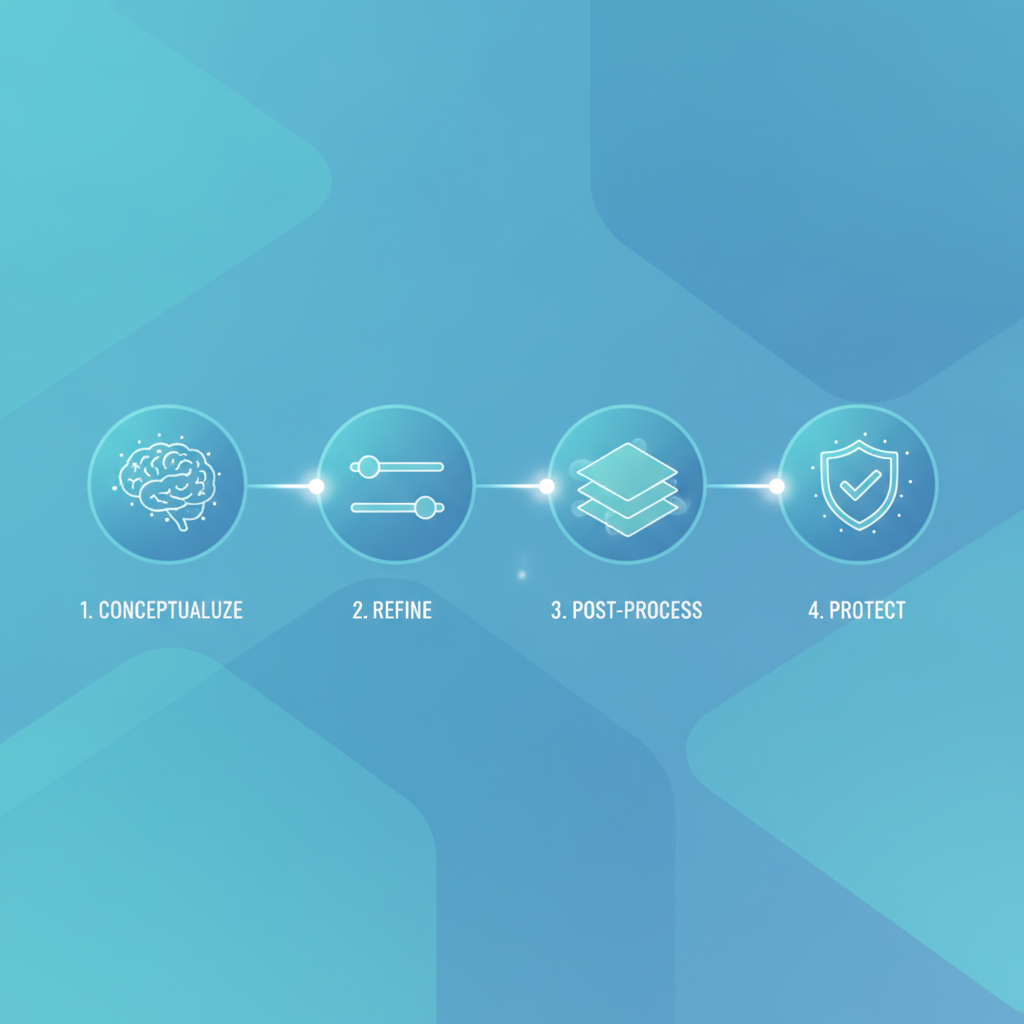
Establishing a defensible portfolio requires more than just high-quality prompts; it demands a structured approach to bridge the gap between algorithmic output and human originality. In the European Union, the legal weight of your work rests on the ability to prove a continuous chain of creative choices. By following a proactive workflow, digital entrepreneurs can demonstrate the intellectual effort invested in their creative process, which serves as essential evidence when asserting authorship.
- Documenting the Creative Iteration: Start by maintaining a “Chain of Evidence” that records the progression from your initial conceptual intent to the final image. This includes saving draft versions, specific prompt refinements, and notes on why certain parameters were adjusted. In the event of a dispute, documenting that the final result was the product of human-led trial and error helps demonstrate the creative choices made throughout the process.
- Substantial Post-Processing: Move beyond the raw output of the generator. By bringing the image into professional editing software to adjust composition, light balance, or specific textures, you introduce secondary layers of human creative expression. This manual intervention serves as evidence of your personal touch on the digital canvas.
- Visual Identity Consolidation: Integrate individual images into a broader, cohesive brand context. When an image is used as a core component of a logo or a recurring character in a series, it gains protection through its association with your unique visual style. This step transforms isolated pixels into valuable business identifiers that are easier to defend in a commercial environment.
- Strategic Intellectual Property Audit: Periodically review which assets are most critical to your revenue. High-value visuals, such as those used for primary marketing campaigns or product packaging, should be prioritized for formal registration. This ensures that your most important work is backed by a certificate of registration, providing immediate leverage during enforcement actions on digital platforms.
Implementing this workflow ensures that your creative process is not just productive but legally resilient, providing the necessary documentation to survive the scrutiny of a copyright office or a court. This technical preparation becomes your first line of defense when navigating the competitive landscape and protecting your portfolio from unauthorized use.
Avoiding the ‘Copycat’ Trap
Relying on the documentation workflow previously discussed is vital, yet creators must remain vigilant against digital plagiarism. In the European market, competitors may exploit the legal ambiguity of algorithmic content to replicate successful visual styles. While the copyright status of a standalone AI output remains a complex frontier, the brand identity built around that content functions as an enforceable commercial asset.
Copycats often focus on the pixels, but they struggle to replicate the legally secured context of a registered brand. Trademark registration in the EU acts as a protective shell, allowing creators to shield their designs from unauthorized imitation on social media by leveraging certificate-based evidence. Per the EUIPO guidelines, a trademark provides a clear, unified layer of protection across all 27 Member States, offering a robust alternative to relying solely on copyright arguments.
Rather than attempting to register a raw AI file, proactive creators integrate these elements into a unique logo or trade dress. By securing this composition as a trademark, you transition the claim from “who authored the pixels” to “who owns the exclusive right to use this badge of origin in commerce.” This creates a defensible position based on consumer confusion and infringement.
Shifting focus from pixel-level authorship to the strategic use of marks as a badge of origin helps neutralize the risks of AI-assisted creation. This commercial transition provides the necessary enforcement leverage to secure your project’s economic value as you establish your digital footprint.
For help with this task, use the Trademark registration in the EU service.
Securing Your Digital Legacy
Establishing long-term value for digital assets requires moving beyond the uncertainty of whether you can copyright AI generated images in the EU by shifting toward intentional legal structures, such as registering your core visuals as trademarks across all 27 Member States. To ensure your creative output remains a defensible business asset, you should complement your documentation of human input with the strategies for safeguarding designs against digital infringement. For a proactive registration strategy that secures your brand’s future, the team at Brandr-Legal is ready to help you navigate these emerging European standards with precision.
Frequently Asked Questions
If I cannot copyright an AI-generated image, can I still prevent others from using it?
While raw, autonomous AI-generated content may fall into the public domain due to the lack of human authorship, you are not without defenses. Even if your image lacks copyright protection, you can often leverage other legal frameworks:
- Trademark registration in the EU: By registering your logo or specific brand imagery as a trademark, you gain exclusive rights to use that asset as a badge of origin. This prevents competitors from using your AI-generated assets in a way that creates consumer confusion, regardless of copyright status.
- Unfair Competition Laws: Many EU Member States have national laws that protect businesses against parasitic acts or deceptive commercial practices. If a competitor misappropriates your digital assets to benefit from your brand reputation, you may have grounds for a claim based on unfair business conduct.
- Contractual Agreements: If you share your files under specific Terms of Service or Licensing Agreements, you create a private legal relationship that binds the user to your rules, providing a layer of protection that copyright alone cannot offer.
What is the difference between an AI tool and traditional software like Adobe Photoshop in the eyes of EU law?
The distinction lies in the level of autonomy. In EU law, copyright is awarded based on the ‘intellectual creation’ of the author.
Traditional Software: Tools like Photoshop are treated as instruments—much like a digital paintbrush. The software does not make creative decisions; the human operator controls every pixel, color, and composition choice. The output is a direct manifestation of the human’s specific, intentional choices.
AI Tools: Generative AI models function as systems that receive high-level instructions and output complex data based on probability. Because the machine determines the specific arrangement of pixels based on training data rather than direct human execution, the degree of control is lower. To achieve copyrightable status, you must prove that the AI was merely a tool and that your specific, iterative guidance dictated the final result.
Does registering my brand asset as an EU trademark automatically protect all my AI-generated marketing content?
No, trademark registration is not a blanket protection for all your images. A trademark protects specific signs—such as words, logos, or shapes—that distinguish your goods or services in the marketplace. It is not a substitute for copyright for individual pieces of art.
However, Trademark registration in the EU is highly strategic because it anchors your identity. If your brand relies heavily on AI-generated assets, registering the core visual identity (like your primary logo or brand icon) ensures that even if individual images remain in a legal gray area, your brand’s presence in the market is legally shielded. It effectively shifts your protection strategy from the ‘artwork’ level to the ‘brand identity’ level.
How do I maintain a ‘Chain of Evidence’ to prove I am the author of an AI-assisted design?
Proving human authorship in a post-AI world requires shifting your workflow from simply ‘downloading a result’ to ‘documenting a process.’ To build a strong chain of evidence, consider keeping the following:
- Prompt Logs: Save the evolution of your prompts, showing how you moved from a generic idea to a specific, unique vision.
- Intermediate File States: Maintain working files (e.g., .PSD or .AI files) that include layers, masks, and manual corrections performed after the initial generation.
- Version History: Save iterations that demonstrate you rejected dozens of outputs to achieve a specific composition, illustrating that the AI was constrained by your creative filter.
- Control Data: If using advanced tools like ControlNet or depth maps, save the structural guides you created to direct the AI’s final output.
This documentation proves the personal touch required by EU copyright standards.
What happens if a competitor uses an image that looks ‘too similar’ to my AI-generated work?
If the image is purely AI-generated and lacks copyright, you may struggle to win an infringement case based on copyright law. This is exactly why a dual-pronged strategy is essential:
- Commercial Defense: If the work is associated with your brand, and the competitor is using it to sell competing products, you can pursue a trademark or unfair competition claim, which focuses on market behavior rather than creative ownership.
- Evidence of ‘Originality’: If you can demonstrate the significant human intervention (via your documentation/chain of evidence), you may be able to argue that the work is a derivative work or a protected creative composition.
Without a proactive strategy, you are vulnerable. Building a registered trademark portfolio in the EU is the most effective way to ensure that your competitors cannot exploit your brand assets, regardless of the copyright status of individual images.