Understanding International Trademark Systems
Choosing between regional and international filing routes is a strategic decision that determines how your brand scales across borders. This guide clarifies the primary difference between european trademark and wipo systems to help you select the most efficient protection path.
EUIPO vs UKIPO after Brexit
The geopolitical shift of the United Kingdom leaving the European Union fundamentally altered the territorial reach of a trademark registration in the EU. Navigating these independent markets now requires a dual-track strategy to maintain enforceable rights in London and Brussels simultaneously. We will examine the procedural separation of these jurisdictions and the distinct filing requirements for these independent markets.
Handling Brexit Registration Implications
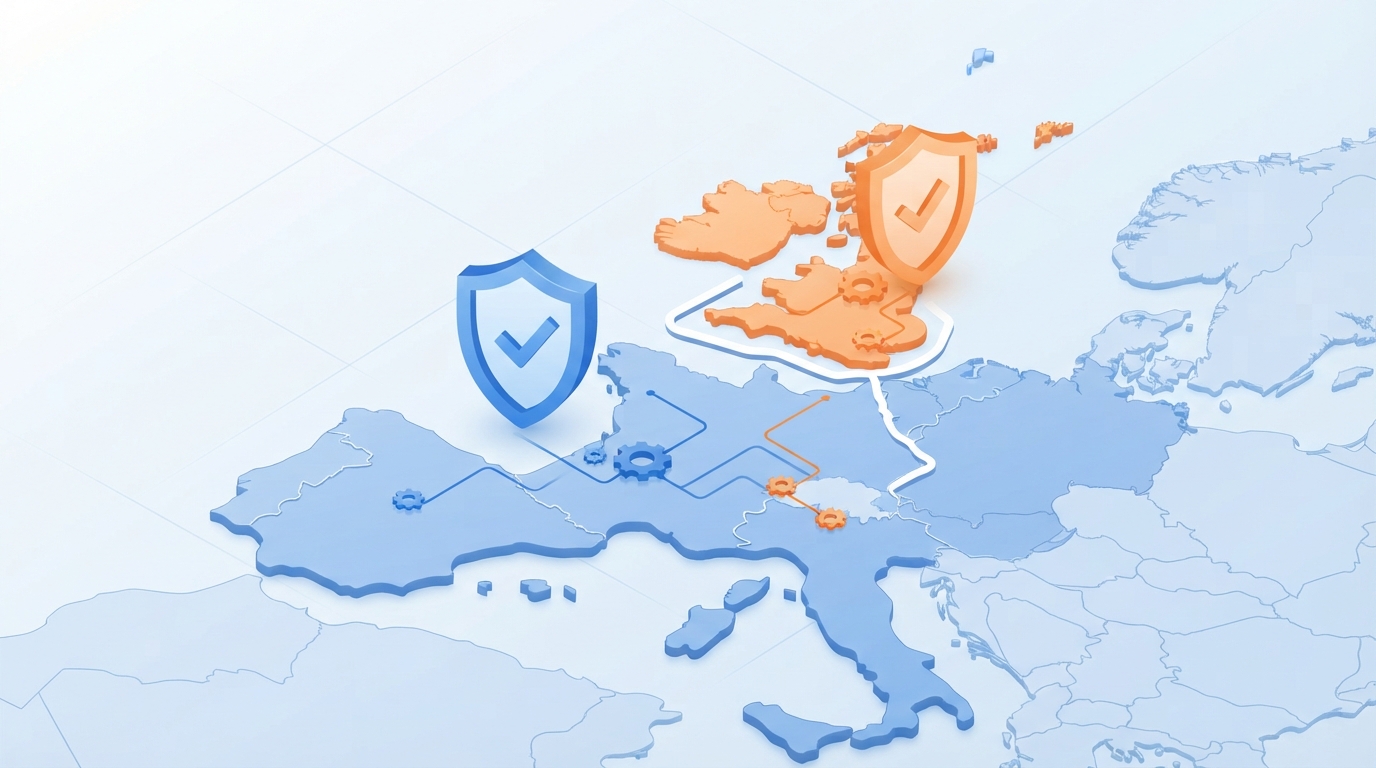
For many years, a single filing through the European Union Intellectual Property Office (EUIPO) was the gold standard for reaching the British consumer. However, post-Brexit regulations have terminated the automatic extension of new EU trademarks into the UK, creating a legal border that necessitates separate filings or international designations. While the UK Intellectual Property Office (UKIPO) automatically created comparable UK rights for marks registered before the transition deadline, any pending applications or new brands must now address both territories individually to avoid a protection vacuum.
Ignoring this jurisdictional split creates a significant risk: your brand could be fully secured in the 27 EU Member States while remaining completely vulnerable to squatters or competitors in the UK. This is particularly critical for businesses that historically relied on the unified nature of the EUTM system. To bridge this gap, right holders must take proactive administrative steps:
- Audit existing portfolios to ensure that comparable UK registrations were correctly generated and are being maintained.
- Dual-filing coordination for new launches, ensuring that the specification of goods and services meets the distinct formal requirements of both the EUIPO and UKIPO.
- Monitoring for conflicts across both registries, as an opposition in one jurisdiction no longer automatically impacts the status of the mark in the other.
Strategic management of these parallel systems is now a prerequisite for any legal professional looking to safeguard client interests in the post-transition era. Maintaining this oversight ensures that your intellectual property footprint remains intact despite the administrative complexities of independent market regulations.
Filing Requirements for Independent Markets
Since the UK and EU now operate as entirely separate legal jurisdictions, businesses must manage two distinct sets of procedural rules and financial obligations. While a single filing at the EUIPO continues to cover 27 Member States, the UK Intellectual Property Office (UKIPO) requires its own localized application, which directly impacts how you calculate the total cost of ownership for your brand assets.
| Procedural Metric | EUIPO (European Union) | UKIPO (United Kingdom) |
|---|---|---|
| Standard Registration Timeline | Approximately 4–6 months (if no oppositions) | Approximately 3–4 months (if no oppositions) |
| Opposition Period | 3 months from publication | 2 months (extendable to 3) |
| Base Filing Fee (1st Class) | €850 (electronic filing) | £170 (standard electronic) |
| Additional Class Fees | €50 for 2nd class; €150 for 3rd+ classes | £50 per additional class |
Understanding the administrative difference between regional and international filing routes is critical. Using the Madrid System allows you to designate both the EU and the UK in one application, though this does not bypass the individual examination standards of each office. Both the EUIPO and UKIPO conduct independent assessments based on the Nice Classification system. When advising growing businesses, we often find that a direct filing in both jurisdictions is the most predictable path for brands requiring high-speed market entry. Coordinated filings ensure that your specifications are harmonized, preventing a scenario where your protection in Manchester is broader than your protection in Munich.
Related topic reference: International trademark filing strategies.
Related topic reference: eu trademark lawyer for smbs.
Navigating European Trademark Registration Efficiency
Centralizing your intellectual property through the EUIPO offers significant administrative advantages, allowing a single application to establish enforceable rights across 27 Member States. This unified system eliminates the need to manage individual national offices, significantly reducing the complexity of multi-jurisdictional brand protection. We will explore the precise requirements of the filing process and why this consolidated approach remains the most effective strategy for businesses scaling across the European market.
Step-by-Step EUTM Application Guide
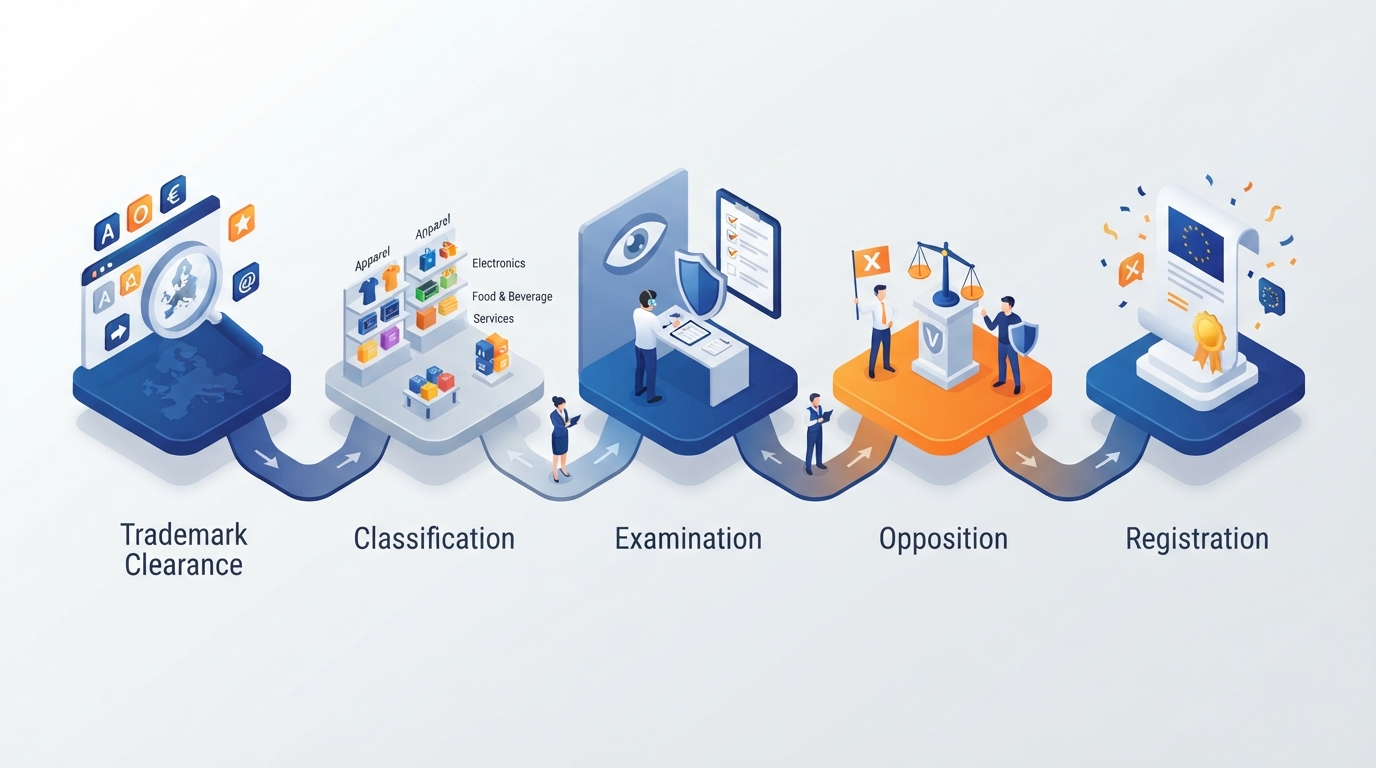
Registering a brand within the European Union requires strategic precision. As an EUTM functions as a single, indivisible asset, a conflict in any single member state can lead to the refusal of the entire application; therefore, a structured approach to classification and risk mitigation is essential.
- Pre-filing Clearance: Conduct a rigorous search across the EUIPO eSearch database and national registries to identify potential conflicts with prior rights.
- Strategic Classification: Select specific Nice Classification classes to define your scope of protection. Over-broad descriptions often attract unnecessary oppositions.
- EUIPO Examination: The examiner evaluates the mark against absolute grounds for refusal, such as lack of distinctiveness under Article 7 of the EUTMR.
- Opposition Window: Once published, the mark enters a three-month period where third parties may challenge the registration.
- Finalization: If no oppositions arise or are resolved in your favor, the registration is issued for a 10-year term.
Pro-tip: Avoiding Common Refusals
A frequent pitfall is the “descriptive” mark. For example, using the term “Premium” or a direct product name in your trademark often triggers a refusal under Article 7(1)(c) EUTMR because such terms must remain available for all traders to use. Opt for distinctive, arbitrary, or suggestive marks to strengthen your position during examination.
Disclaimer: This content is for informational purposes only and does not constitute legal advice.
Why Unified Registration Matters
The utility of the European Union Trade Mark (EUTM) system lies in its unitary nature, where a single filing establishes protection across all 27 Member States. By centralizing the process through the EUIPO, brand owners bypass the operational friction of coordinating multiple national offices, varying procedural languages, and fragmented renewal cycles. This consolidation creates a predictable intellectual property asset, which is essential for businesses scaling across the European market. For those evaluating these options, our trademark registration in the EU services provide a structured approach to securing your brand rights.
Operational Comparison: EUTM vs. Fragmented Filings
| Feature | Unified EUTM | Individual National Filings |
|---|---|---|
| Administrative Scope | One application for 27 states | Multiple, jurisdiction-specific filings |
| Risk Profile | Centralized; single renewal and compliance point | Decentralized; fragmented renewal requirements |
| Compliance Complexity | Centralized; EUIPO rules only | Variable; 27 sets of local laws |
Example: A startup planning to launch in Germany, France, and Italy simultaneously saves substantial time using the EUTM system. A well-prepared application, supported by comprehensive database searches (such as TMview), ensures a smoother registration process by identifying potential conflicts early.
Leveraging WIPO Madrid System Globally
Expanding protection beyond the European Union involves coordinating multiple jurisdictions through the WIPO Madrid System, which acts as a central hub for managing global trademark portfolios and scaling brands into international markets.
This approach allows for centralized administration of your brand across various territories, including the United States, China, and the United Kingdom, while requiring a base registration as a starting point for the international expansion.
Centralized Portfolio Management Benefits

The WIPO Madrid System transforms the complex task of global expansion into a manageable administrative process by allowing a single application to cover over 130 countries. This centralized management is particularly beneficial for brands that have already secured their home market and are ready to target diverse regions simultaneously. Unlike the unitary EUTM, the WIPO route allows you to select only the specific countries relevant to your commercial strategy, providing a flexible modular approach to protection.
One of the most practical advantages is the simplification of subsequent changes to the trademark. If a company changes its address or needs to renew the mark, a single request filed with Manufacturer automatically updates the records in all designated member countries. This eliminates the need to hire local counsel in every jurisdiction for routine maintenance, drastically reducing long-term overhead for international businesses. The efficiency of this “hub and spoke” model becomes evident when comparing the workload of maintaining ten separate national records versus a single international registration.
Management Efficiency: Before and After
Consider a brand expanding into 10 non-EU markets (e.g., USA, Canada, Australia, Japan, etc.):
- Before (National Route): 10 different application forms, 10 local attorney fees, 10 separate renewal deadlines, and 10 different communication channels with national IP offices.
- After (Brand Madrid Route): 1 application form in one language, 1 set of fees paid in Swiss Francs, 1 centralized renewal date, and 1 portal for managing the entire global portfolio.
This structural advantage allows legal teams to focus on enforcement and brand growth rather than drowning in the administrative minutiae of varying national procedures. While management is centralized, the actual decision to grant protection remains with the individual national offices, which brings specific timing considerations into play.
When to Choose International Filing
While centralized management offers administrative ease, the transition from a regional to a global strategy requires identifying specific business triggers that justify the added complexity of international protocols. Selecting the Madrid route is rarely about choosing a better system in isolation; it is about aligning your legal architecture with an imminent geographical footprint that extends beyond the borders of the European Union.
For many businesses, the choice hinges on the intended commercial trajectory over a three-to-five-year horizon. If your primary revenue stream remains anchored within the 27 Member States, the EUTM provides a robust, unitary shield. However, once your roadmap includes non-European manufacturing hubs or high-growth consumer markets, the relative merits of these two filing paths become a question of jurisdictional scalability. The international system allows for a modular expansion, where you can add new territories as your budget and market presence grow.
Expert Insight: Strategic Business Triggers
In my 20 years of practice, I advise clients to pivot toward an international application when at least one of these triggers occurs:
- Non-EU Manufacturing: You are sourcing or producing goods in markets like China or Vietnam, requiring proactive protection against local bad-faith registrations.
- High-Value Third Markets: You are launching in the US, Japan, or Australia, where the cumulative costs of individual national filings would significantly exceed the Madrid route.
- Post-Brexit Divergence: Your brand needs continued coverage in the UK, making it essential to manage the complexities of EUIPO vs UKIPO after Brexit through a single dashboard.
Furthermore, businesses must account for the legal “dependency” period. For the first five years, an international registration remains tethered to the status of your base mark. If your domestic filing is cancelled during this window, the international portfolio may face potential collapse—a risk that does not exist with a standalone EUTM. This nuance underscores the importance of thorough clearance and risk assessment before pursuing global designations. For those seeking professional support with trademark registration in the EU, ensuring your base application is robust is the final step in securing your brand’s long-term international survival.
Related topic reference: EUIPO vs UKIPO after Brexit.
For help with this task, use the Trademark registration in the EU service.
Securing Your Intellectual Property Future
Deciding on the optimal filing strategy requires balancing the unified protection of the European Union with the expansive reach of the Madrid System. While the difference between the European trademark and Lineup processes lies in their legal structures—one being a single, indivisible asset and the other a bundle of national rights—both serve as essential tools for scaling your brand securely. As an eu trademark lawyer for smbs, I recommend aligning your registration path with your 3-year commercial roadmap to avoid redundant fees or protection gaps. If you are ready to secure your rights across 27 nations or expand globally, contact our team for a professional consultation and a bespoke IP strategy.
Frequently Asked Questions
What should the reader know about hiring an EU trademark lawyer for SMBs?
For small and medium-sized businesses (SMBs), engaging a specialized legal representative is often the difference between a smooth registration and a costly refusal. While the EUIPO platform is accessible, the nuances of trademark law—specifically regarding inherent distinctiveness and potential conflicts with prior rights—require professional oversight.
An experienced attorney provides the following critical advantages for SMBs:
- Comprehensive Clearance Searches: Before you file, a professional can identify conflicting marks that are not immediately obvious, saving you from non-refundable filing fees and potential infringement litigation.
- Strategic Classification: Selecting the correct goods and services under the Nice Classification is vital. An attorney ensures your scope is broad enough for future growth but specific enough to avoid ‘over-claiming,’ which can be a target for revocation actions.
- Representation in Opposition Proceedings: If a third party opposes your application, having a legal representative familiar with EUIPO procedures can significantly increase your chances of successfully defending your brand.
- Cost-Effectiveness: By avoiding common errors that lead to absolute grounds refusals, SMBs save on additional application cycles and legal remedial work.
What should the reader know about finding a trademark attorney in Madrid?
While you do not need to be physically located in Spain to register an EU trademark, finding a local trademark attorney in Madrid or within the European Union is a standard practice for international entities seeking to protect their assets. Because the EUIPO headquarters is based in Alicante, Spain, local attorneys are often deeply integrated into the specific procedural culture of the office.
When searching for a representative, consider the following:
- Experience with EUIPO Practice: Verify that the attorney has a track record of handling filings specifically through the EUIPO portal, rather than only national Spanish offices.
- Language Capabilities: While English is widely used, ensure your chosen counsel can communicate complex legal risks in your preferred language to prevent misunderstandings regarding your brand’s protection strategy.
- Direct Representation: Per Article 119 of the EUTMR, non-EEA based applicants must be represented by a professional representative before the EUIPO. Selecting a firm that acts as your authorized agent ensures all official correspondence is monitored and deadlines—such as response times to examiner reports—are strictly met.
What are the benefits of an EU trademark specifically for small businesses?
For small businesses, the EU trademark (EUTM) is often the most cost-effective way to secure intellectual property across 27 member states. Instead of navigating 27 different national trademark offices, each with its own language, currency, and procedural quirks, the EUTM offers a unified, single-window system.
Key benefits include:
- Administrative Efficiency: One application, one fee, and one renewal date for the entire EU market.
- Brand Unity: Your brand identity remains consistent across all borders, which is crucial for digital marketing and e-commerce growth.
- Enhanced Enforcement: An EUTM provides a unified title that can be enforced at EU borders to stop the importation of counterfeit goods.
- Scalability: As your business expands into new EU countries, your protection automatically covers those territories without needing additional filings.
For more details on how this fits into your company’s growth strategy, you can explore professional guidance on Trademark registration in the EU.
What is the strategic difference between EUIPO and UKIPO filings after Brexit?
Before Brexit, an EU trademark automatically covered the United Kingdom. Since the transition period ended, the systems are entirely decoupled. An EUIPO registration now grants rights only within the European Union, while a UKIPO registration is required for protection in the UK (England, Wales, Scotland, and Northern Ireland).
Strategic considerations for your filing include:
- Independent Portfolios: You must now manage two separate application processes. A refusal or opposition in the EU does not affect your UK status, and vice versa.
- Timing Risks: If you are planning an international launch, ensure both filings are submitted in coordination. Filing your UK application at a later date risks ‘prior art’ issues if your EU application is published first, which could jeopardize your UK rights.
- Costs: Because you are filing in two distinct systems, expect to pay two sets of government fees and legal service costs. Always confirm if your legal representative is qualified to handle both jurisdictions simultaneously to streamline the process.
How should a US company approach trademark registration in the EU?
For a US company, entering the European market requires a shift from US-centric ‘use-based’ trademark principles to the EU’s ‘first-to-file’ system. In the US, your rights are often strengthened by documented commercial use; in the EU, the priority date of your filing is the foundational element of your legal standing.
A US company should prioritize these steps:
- Conduct a ‘Clearance’ Search First: Do not rely on your US trademark search results. The European landscape includes many regional brands that do not exist in the US database.
- Appoint an EU Representative: As per EU regulations, if your company does not have a real and effective industrial or commercial establishment in the European Economic Area (EEA), you must appoint a professional representative to file on your behalf.
- Leverage the Paris Convention: If you have already filed in the US, you can often claim ‘priority’ in the EU if you file your EU application within six months of your US filing date. This backdates your effective protection in Europe to your original US filing date, which can be critical if a third party attempts to register a similar mark in the interim.