Understanding Logo Ownership: Copyright vs Trademark
Owning a high-resolution design file is often mistaken for full legal control over a brand’s visual identity. This guide clarifies the critical distinction between artistic copyright and commercial trademark rights to secure your creative assets.
The Dual Nature of Logo Protection
A logo serves as both a creative work and a market identifier, requiring a dual-layered approach to legal protection. This section examines how copyright guards the artistic execution while trademarks secure your commercial position.
Copyright: Protecting the Artistic Expression

In the legal landscape of the European Union, copyright is an automatic right that arises the moment a designer creates an original work. It protects the specific artistic expression—the arrangement of lines, colors, and shapes—of your logo, but provides no monopoly over your brand identity in a commercial context.
The limitation of copyright lies in its scope: it protects the fixed execution of a design, not the underlying idea or concept. If you have a minimalist mountain logo, copyright prevents others from tracing your exact drawing, but it does not stop a competitor from commissioning their own original mountain graphic that conveys a similar vibe. To protect your market position and prevent consumer confusion, businesses must look beyond copyright to formal trademark registration.
| Scenario | Copyright Myth | Legal Fact |
|---|---|---|
| Competitor uses a similar concept | I can sue them because I had the idea first. | Copyright only covers the specific drawing, not the general concept or industry theme. |
| Market Confusion | Copyright protects me if customers confuse our brands. | Confusion is a trademark issue; copyright only cares about artistic duplication. |
| Social Media Copycats | A DMCA takedown solves all my brand problems. | Copyright (DMCA) takedowns are narrow and only remove specific image files; trademark registration is required for broad, systemic enforcement against infringing brands. |
Understanding these gaps is essential for business owners. Many companies conflate copyright ownership with brand rights, yet your business requires robust tools to prevent others from trading on your reputation. Securing the artistic foundation is just the first step before addressing the commercial necessity of a registered trademark.
Related topic reference: Navigating EU copyright laws for freelance creators.
Trademark: Securing Your Commercial Identity
While copyright protects the creative brushstrokes of a designer, it offers little resistance when a competitor opens a shop across the street using a confusingly similar aesthetic. This is where commercial rights diverge from artistic ones. To gain a true monopoly on a visual identifier in the marketplace, formal registration is the only viable path for a growing business.
A trademark functions as a strategic business asset rather than a mere creative record. It grants the owner the exclusive right to use the mark for specific goods or services and, crucially, the power to sue for infringement based on market confusion. In the EU, where thousands of established brands operate, having a registered mark ensures that your visual identity is legally viable before you invest heavily in marketing and product launches.
Unlike the automatic nature of creative rights, securing these commercial protections requires an active filing with the EUIPO. This process establishes a clear public record and prevents others from profiting from your reputation. Without these formal rights, it becomes difficult to remove counterfeit goods or take down look-alike accounts on digital platforms. Whether you are an influencer building a personal brand or an EdTech platform expanding internationally, a protected trademark supports long-term credibility and smoother commercial growth. Many businesses mistakenly ask, “do i own the copyright to my logo or the brand?” only to realize that without registration, they lack the legal teeth to stop a competitor from using a similar name or symbol in a related industry. Ownership of the artistic file is a baseline; the trademark is the shield for the market share itself.
Gaps in this protection often stem from a lack of formal paperwork during the creation phase, which can leave a brand vulnerable even after a successful launch.
When You Don’t Own Your Logo
Establishing legal control over a brand requires moving beyond creative concepts to address the underlying contractual gaps that often leave businesses without the actual rights they believe they purchased. We will examine the default legal rules governing designer-client relationships and the essential steps for formalizing the assignment of intellectual property to ensure your brand remains fully under your control.
The Default Rules of Ownership

In many jurisdictions across Europe, the law assumes that the person who creates an image is its initial owner, regardless of who paid for the work. This default position can create a dangerous paradox where a company uses a logo daily but does not actually hold the rights required to register or defend it. Without a specific written agreement, you may only possess a limited license—essentially permission to use the art—while the designer retains the underlying intellectual property.
This distinction between “usage rights” and “total ownership” is a common trap for entrepreneurs. If your contract is vague, the creator might technically retain the right to showcase the work in ways you dislike or prevent you from modifying the design for future sub-brands. To determine if you truly own your logo’s copyright, you must audit the paper trail for specific language that explicitly transfers all economic rights from the creator to your entity.
- Absence of a written assignment: Relying on an invoice or a verbal agreement rather than a signed IP transfer document.
- Vague scope of use: Agreements that permit use on a website but remain silent on physical merchandise or international expansion.
- Moral rights reservations: Clauses that allow the creator to object to any modifications, potentially blocking future rebrands.
- Payment-contingent ownership: Terms where rights only transfer upon final payment, which can become a liability during billing disputes.
- Non-exclusive licensing: Language that grants you the right to use the logo but doesn’t stop the designer from selling similar concepts to others.
Addressing these red flags early prevents costly disputes during due diligence or when attempting to enforce your rights against third parties. Once these internal gaps are identified, the focus shifts to the specific legal mechanisms used to bridge them and secure your assets permanently.
Formalizing Design Transfers and Assignments
Securing the creative foundations of a brand requires moving beyond verbal agreements and simple invoices. While copyright in the EU often arises automatically for the creator, the transfer of these rights is not automatic; it requires a formal intellectual property (IP) assignment agreement to move these assets into your company’s portfolio.
A common pitfall is the “Good Enough” trap, where businesses assume that paying for a logo gives them full ownership. In practice, unless the contract explicitly defines the scope of transfer, you may lack the legal authority to modify the design or register it as your own. As noted by the World Intellectual Property Organization (WIPO), clarity in contractual agreements is essential to ensure that moral rights—which are often non-transferable under European law—are addressed through appropriate waivers or covenants. This chain of title is a mandatory prerequisite when you proceed with trademark registration in the EU, as the office will verify that you hold the legal right to apply for the mark.
To ensure you maintain a defensible position, your assignment agreement must function as a robust “Chain of Title” document. Beyond identifying the parties, it should address the following mandatory clauses:
- Comprehensive Scope: Explicit language transferring all economic rights, including the right to reproduce, adapt, distribute, and specifically granting you the authority to register the design as a trademark in any jurisdiction.
- Moral Rights Waiver: Given that moral rights are often inalienable in many EU jurisdictions, the contract must include a clause where the designer agrees not to exercise these rights in a manner that obstructs the commercial use, modification, or enforcement of the brand identity.
- Geographic and Media Versatility: Territorial rights covering all relevant markets and provisions for “all future media,” ensuring your ownership evolves with your brand’s digital presence.
- Chain of Title Documentation: A clear, signed record that demonstrates an unbroken line of ownership from the individual creator(s) to your legal entity, providing the necessary evidence for EUIPO examiners to verify your entitlement to the trademark.
Disclaimer: Rules regarding the transfer of intellectual property vary by EU Member State and individual contract; this information is for educational purposes and does not constitute legal advice. You should consult with an IP professional or review our EU trademark registration service to ensure your specific assignment agreements meet jurisdictional requirements for commercial filing.
Related topic reference: how to copyright digital art in europe.
Strategic Path to Brand Security
Establishing legal ownership is the first step toward long-term brand equity. This roadmap outlines the transition from creative design to commercial monopoly, highlighting the technical milestones and common traps encountered during registration.
Step-by-Step Logo Registration Guide
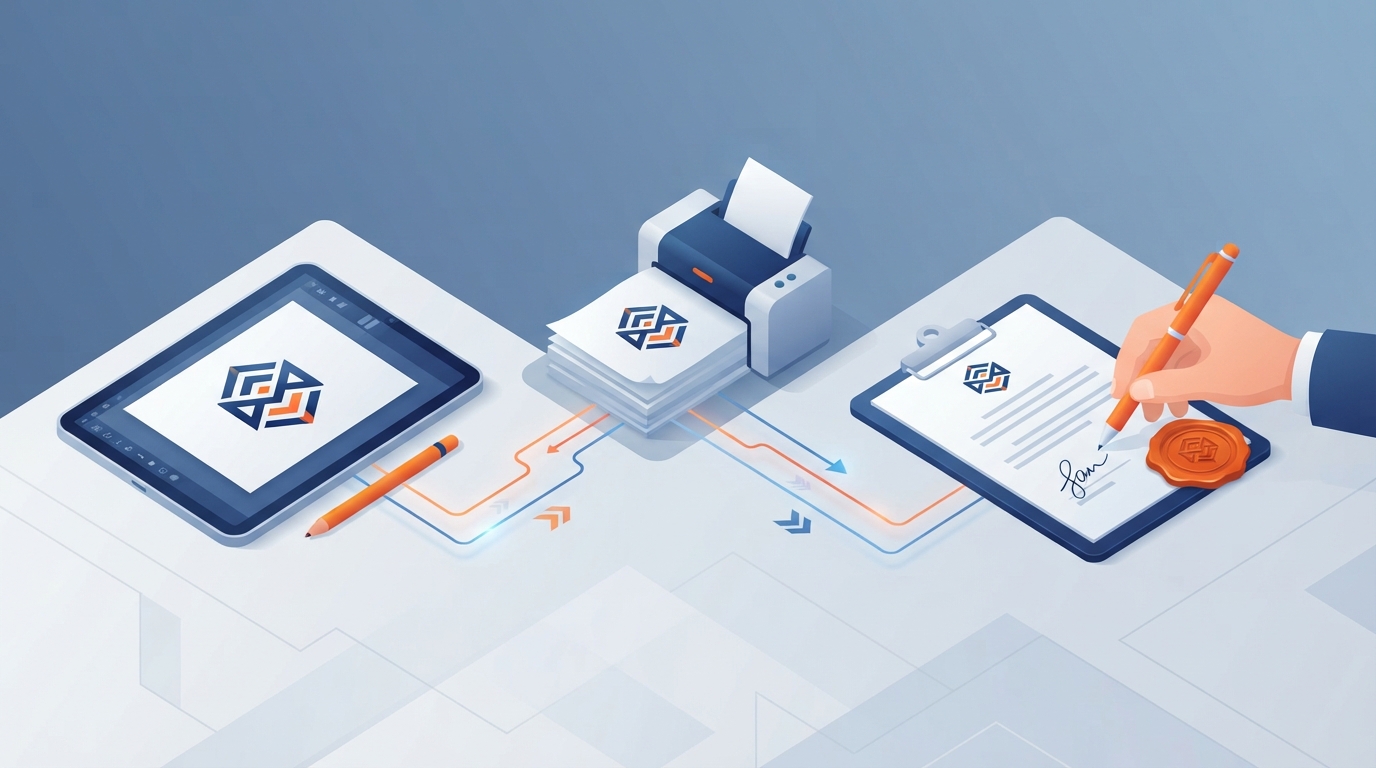
Transitioning from the design phase to the legal framework of intellectual property ensures your logo is a documented, enforceable asset. This progression answers the question of ownership before you initiate commercial filings.
The process is built on four distinct stages that transform a creative file into a corporate asset:
- Strategic Creation: The design phase must include a clearance check. An IP audit confirms your logo does not unintentionally overlap with existing trademarks, preventing wasted investment in a brand that cannot be registered.
- The Assignment: Once the final design is approved, a formal IP assignment agreement must be signed. This document must clearly state the transfer of all economic rights from the designer to your entity. To be robust, ensure the agreement includes: a clear identification of the work, an express “assignment” or “transfer” clause of all intellectual property rights, a waiver of moral rights (where applicable), and a warranty that the designer is the original author and owns the rights being transferred. This creates the necessary chain of title.
- The Brand Audit: Before filing, determine the scope of protection by selecting the correct ‘Nice Classification’ classes—for instance, Class 41 for educational services or Class 25 for fashion—to align with your business activities.
- Formal Registration: The final step is the submission to the relevant office (e.g., EUIPO). While copyright protects the artistic expression, trademark registration provides a certificate of ownership recognized across jurisdictions. This creates a systemic enforcement tool: whereas copyright-based takedowns are narrow and limited to specific image files, trademark registration provides broader protection against third-party use of confusingly similar brands in your market.
By following this sequence, a brand moves from a position of vulnerability to one of control, effectively avoiding the common pitfalls that occur during business scaling.
Expert Warning: The ‘Good Enough’ Trap
Failing to secure formal intellectual property rights beyond holding raw design files often leads to the “Good Enough” trap. Founders frequently mistake original source files for proof of commercial ownership, failing to realize that relying on copyright alone leaves them vulnerable to competitors who secure priority through trademark registration.
Anton Polikarpov’s Insight: A pretty logo you don’t own or cannot protect is just a liability waiting for a lawsuit. In our practice, we have supported businesses forced into total, costly rebranding—often losing significant marketing investment and inventory—because they relied on copyright claims while a competitor secured the visual identity via a trademark filing first.
To avoid this, ensure your transition from design to asset is legally sound by implementing an IP assignment agreement. A robust Chain of Title must include: (1) Explicit Assignment: A clause stating the designer transfers all rights, title, and interest to the client; (2) Waiver of Moral Rights: The designer explicitly waives moral rights to the extent permitted by law; (3) Warranty of Originality: A guarantee that the work is original and does not infringe on third-party rights; and (4) Full Scope Coverage: Specification that the transfer applies globally and across all potential commercial uses.
| Feature | Copyright | Trademark |
|---|---|---|
| Primary Protection | Artistic expression | Commercial monopoly |
| Platform Utility | Requires court order | Standard for brand registries |
Taking Control of Your Brand Assets
Copyright alone is a narrow shield that leaves businesses vulnerable in the “First-to-File” system. Relying on it can leave you exposed, as a competitor’s trademark registration can legally supersede your earlier design work, potentially forcing a costly rebrand. To build a definitive defense, you must move beyond creation and secure commercial protection through formal registration.
To audit your position, use this decision framework:
| Goal | Strategic Requirement |
|---|---|
| Defensive Enforcement | Register in relevant Nice Classifications to secure takedown power on platforms like Amazon. |
| Ownership Clarity | Ensure signed IP Assignment Agreements exist for all external designer contributions. |
| Creative Scope | Consult our guide on freelance IP rights if you lack written transfer clauses. |
Moving from creative ownership to commercial control is the final step in securing your brand. Secure your brand identity today by exploring our EU trademark registration services.
Disclaimer: This content is for informational purposes and does not constitute individual legal advice. Enforcement outcomes and registration success depend on the specific mark and the legal landscape of your target markets.
For help with this task, use the Trademark registration in the EU service.
Frequently Asked Questions
Can I use the ‘TM’ symbol on my logo if I haven’t registered it as a trademark yet?
In many jurisdictions, including various EU member states, you can use the ™ symbol to indicate that you claim the logo as your trademark, even if it is not officially registered. However, it is vital to understand that the ™ symbol provides no legal protection or monopoly rights over your mark.
It acts merely as a notice to competitors that you consider the design to be your brand identifier. In contrast, the ® symbol is strictly reserved for marks that have successfully completed the official Trademark registration in the EU process with the EUIPO. Using the ® symbol on an unregistered mark can be misleading and, in some countries, may lead to legal complications or penalties for deceptive trade practices.
If I register my business name, do I automatically own the copyright to the logo used alongside it?
No. Business registration and intellectual property registration are entirely separate legal processes. Registering a company name (at a trade register) simply provides you with the right to operate under that name; it does not grant you intellectual property rights over the artistic design of your logo.
Copyright in the EU is an automatic right arising from the creation of an original artistic work. Your logo is protected by copyright the moment it is fixed in a tangible form (like a digital file), regardless of whether you have registered a company or a trademark. However, since copyright only covers the visual expression, it does not stop competitors from using a similar-looking logo unless it is identical or causes consumer confusion—which is exactly why trademark registration is the only way to secure a true commercial monopoly.
What happens if a designer uses a stock image or font in my logo without me knowing?
Using third-party assets like stock vectors or non-licensed fonts creates a significant legal vulnerability for your brand. If your logo contains elements from a library, you likely only hold a non-exclusive license to use them, rather than full ownership of the intellectual property.
- The Risk: You cannot effectively register a logo as a trademark if you do not own the full rights to its components. The EUIPO may flag your application if the design is not truly unique or if third-party rights holders object.
- The Solution: Always demand a written guarantee from your designer that all elements are original or appropriately licensed for commercial use with the right to sublicense. If you plan to register your brand, it is essential to perform a design audit to ensure your logo is entirely custom-made and free from external licensing encumbrances.
How does the ‘Nice Classification’ system affect my logo protection?
The Nice Classification system is a standard international classification of goods and services applied to trademark registrations. When you apply for Trademark registration in the EU, you are not protecting your logo in a vacuum; you are protecting it in relation to specific commercial activities.
For example, if you register your logo under Class 25 (clothing), you have exclusive rights to use that mark in the fashion industry. However, another company might be able to register a similar logo in Class 41 (educational services) because there is no market overlap, and thus no consumer confusion. Properly selecting your classes is critical because you can only enforce your trademark rights within the scope of the goods and services you officially registered.
Does my copyright protect my brand if I expand into a new country within the EU?
Copyright protection in the EU is generally harmonized, meaning your artistic rights are recognized across all member states under the Berne Convention and relevant EU Directives. However, relying on copyright to enforce your brand identity across borders is notoriously difficult and expensive, as it requires proving that the infringer copied your specific artistic expression.
A registered EU trademark (EUTM), on the other hand, offers a unitary right. This means a single registration with the EUIPO grants you protection across every member state of the European Union. This makes enforcement significantly easier, as you do not need to fight separate copyright battles in each individual country. If your business has international aspirations, the EUTM is your most powerful tool for cross-border protection.