
Scaling E-commerce: Protecting Your Brand During Expansion
Expanding a brand across EU borders requires a unified EU trademark strategy, proactive monitoring, and compliance with industry-specific regulations to prevent costly infringement litigation. This guide outlines the transition from local selling to cross-border market leadership while securing your digital footprint.
Mapping Legal Risks During Expansion
Scaling beyond your home market increases digital exposure, transforming local naming conflicts into cross-border legal liabilities. We will examine territory-specific vulnerabilities and the actual financial impact of delaying your intellectual property filings.
Identifying Territory-Specific IP Vulnerabilities
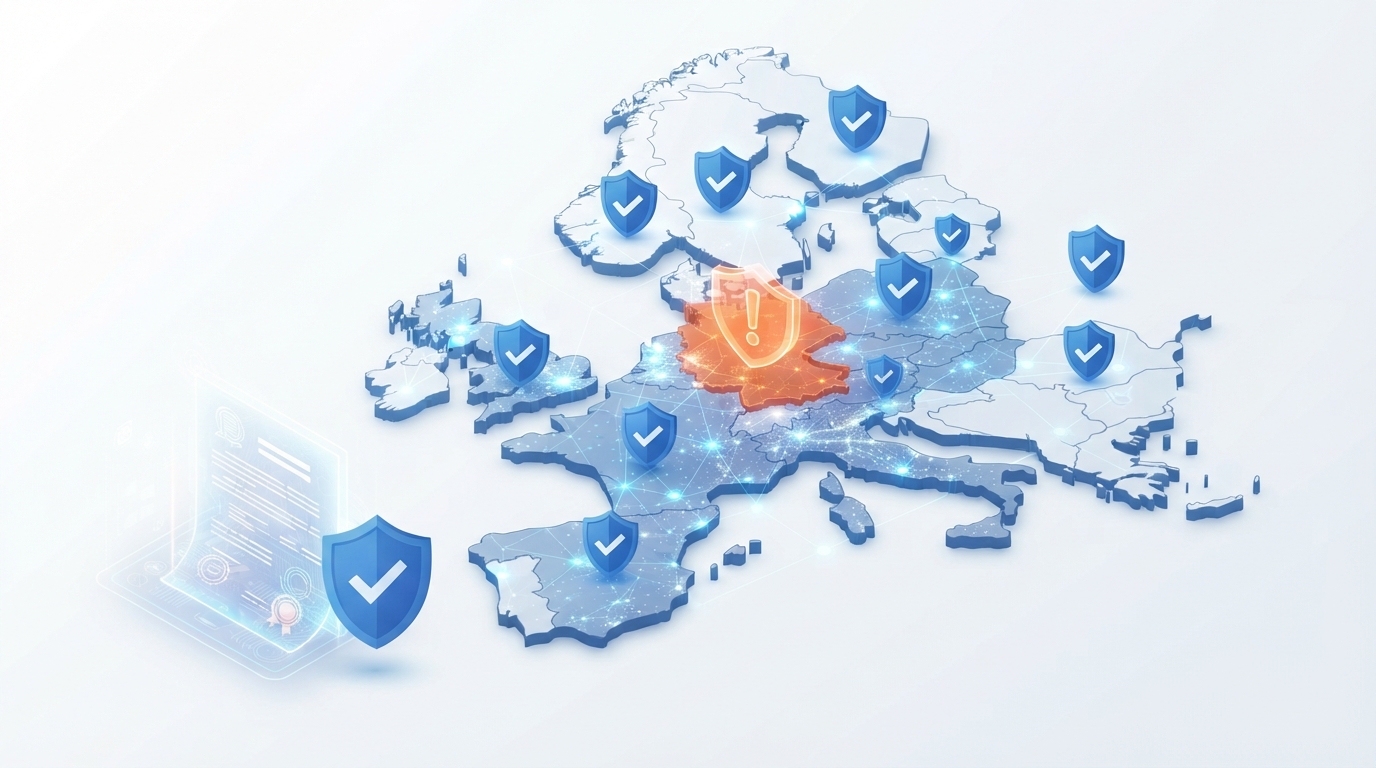
In the fragmented European landscape, a brand name that remains undisputed in one country can trigger immediate opposition in another due to linguistic nuances or prior local rights. While centralized legal registration via the EUIPO provides a framework for broad protection, marketplace enforcement acts as a separate, distinct layer; for instance, a verified trademark allows you to use the Amazon Brand Registry to block copycats across all member states simultaneously. However, without this centralized legal protection, a competitor in a single market like Germany or France can freeze your entire regional ad campaign by filing a localized complaint based on a similar-sounding domestic mark. This is particularly relevant when navigating E-commerce & Industry-Specific Brand Protection in the apparel sector, where aesthetic and naming disputes are common.
Industry-specific risks further complicate this expansion. While apparel brands frequently face disputes over visual logos and aesthetic similarities, companies in the agrochemical or pharmaceutical sectors must navigate strict naming conventions where even a slight resemblance to an existing therapeutic mark can lead to a total sales ban. When protecting e-commerce brands for EU sellers, we observe that the highest vulnerability lies in the transition period—when a seller has high visibility but lacks formal registration in the target country’s language or class. For example, a name that is descriptive and unregistrable in Italy might be highly distinctive and protectable in Sweden, creating a “first-to-file” race that local squatters often exploit.
To mitigate these territory-specific threats, consider the following environmental factors:
| Expansion Factor | IP Vulnerability | Marketplace Impact |
|---|---|---|
| Linguistic Nuance | Translations of your brand may infringe on existing local marks. | Regional listing suppression due to linguistic trademark conflicts. |
| Local Rights | Unregistered prior use in one state can block an EU-wide filing. | Takedown notices from local sellers on regional domains (.de, .fr). |
| Class Overlap | Expansion into new product lines (e.g., from tools to apparel) creates new conflicts. | Platform-specific policy restrictions on unauthorized category expansion. |
Failing to address these localized risks early leads to a much heavier financial burden than simple registration fees.
Related topic reference: E-commerce & Industry-Specific Brand Protection for EU sellers. Disclaimer: This content is for informational purposes only and does not constitute individual legal advice.
The True Cost of Ignoring Registration
Turning IP Protection into a Growth Engine
Ignoring intellectual property registration during expansion often transforms an avoidable administrative expense into a severe financial liability. Rather than viewing brand registration as a sunk cost, forward-thinking leaders treat it as a foundational growth asset. A preventive filing strategy secures exclusive rights across all 27 member states via the EUIPO, allowing you to bypass costly defensive litigation or forced rebranding that would otherwise erode your net returns.
| Risk Vector | Cost of Inaction (Reactive) | Strategic Benefit (Proactive) |
|---|---|---|
| Market Entry | Unforeseen opposition or “troll” registrations blocking access. | Unified EU-wide protection preventing jurisdictional fragmentation. |
| Enforcement | High-cost legal battles to reclaim digital presence. | Direct eligibility for Amazon Brand Registry and eBay VeRO takedowns. |
| Valuation | Forced rebranding and loss of accumulated goodwill. | Asset appreciation through licensable, transferable IP rights. |
Consider a typical scenario where a growing apparel brand enters a new regional market without prior registration. If a local distributor registers the brand name as their own, the original owner faces significant evidentiary hurdles to reclaim their identity. Proactive registration mitigates this by establishing an official priority date, as outlined in the EUIPO guidelines on brand protection. Beyond dispute resolution, a registered portfolio serves as a credibility marker during contract negotiations, as professional distributors typically conduct due diligence to verify that a brand has secured its underlying legal assets.
Strategic Trademarking for E-commerce Scale
Building on the financial necessity of protection, this strategy moves from risk mitigation to the active optimization of your intellectual property portfolio for rapid international scaling. We will examine the correct classification of digital services and the technical methods for securing brand integrity across all European member states.
Prioritizing Classes for Digital Sales

Mastering the Nice Classification system is the engine of scalable e-commerce, as selecting the wrong classes leaves a digital storefront legally exposed, even with a registered mark. While many sellers fixate on the goods they sell—such as Class 25 for apparel—they often overlook the service-based classes that govern the digital shopping experience itself. In the EU, protecting a brand requires a multi-layered approach that secures both your physical inventory and your online retail presence.
For most online businesses, the following classes are essential for comprehensive coverage:
- Class 35: This is the cornerstone for e-commerce, covering retail and wholesale services, online marketplaces, and advertising. Without this, you may not be able to stop a competitor from using your brand name as the name of their shop, even if they sell different goods.
- Class 9: Increasingly vital for brands with a digital footprint, covering downloadable software, mobile apps, and digital assets.
- Class 41: Essential for EdTech and educational services, protecting the delivery of online courses, training materials, and digital content.
- Class 42: Critical for SaaS providers and platforms, covering the technical infrastructure and non-downloadable software services.
Adopt an aggressive classification strategy: over-filing is far more effective than under-filing. While it slightly increases initial fees, it prevents “class-jumping” by competitors who might attempt to register your brand name in a related category to leverage your reputation. This proactive breadth is vital when licensing your brand to a distributor in Europe, as a robust registration provides the legal clarity necessary for a secure partnership. By securing these rights early, you build a versatile intellectual property asset that supports both current operations and future product line extensions without requiring new, costly filings at every turn.
Correct classification ensures your legal standing is unquestionable when you begin the process of monitoring and enforcing your rights across the diverse digital landscape of the Union.
Securing Brand Integrity EU-wide
Standardizing intellectual property through the EUIPO’s unified system is a critical strategy for brands scaling across borders. Under the European Union Trade Mark Regulation (EUTMR), an EU trademark (EUTM) provides a unitary right, ensuring that a single registration is enforceable across all 27 member states. This architecture allows companies to manage a single asset, avoiding the logistical burden of coordinating multiple national applications with varying language requirements and renewal schedules.
For digital merchants, this unified character is essential. Whether you are managing inventory for an Amazon FBA brand in Europe or expanding a drop-shipping store, the EUTM provides a consolidated legal basis for rapid digital takedowns and enforcement actions against infringement across the entire internal market. By securing trademark registration in the EU, businesses establish a centralized ownership proof, which simplifies due diligence when partnering with distributors or logistics providers.
| Feature | EU-Wide Registration (EUTM) |
|---|---|
| Geographic Scope | Single filing covering 27 EU member states. |
| Administrative Burden | One application, one language, and one renewal cycle. |
| Enforcement | Unified standing for marketplace takedowns across the Union. |
Note: Trademark registration success depends on distinctiveness and existing prior rights. This overview is for informational purposes and does not constitute formal legal advice.
Industry-Specific Protection Checklists
Sectors like fashion, electronics, and food face unique counterfeiting risks, necessitating a tailored approach to filing and enforcement to ensure long-term brand integrity across the European Union.
This roadmap details the specific logistical steps required to enter new markets while managing the intellectual property hurdles unique to your niche.
Actionable Steps for Market Entry

Entering a new market requires a structured legal audit to ensure your brand name remains distinct from established local players. Before committing capital to inventory or localized marketing, it is critical to perform a comprehensive clearance search—ideally managed by a qualified trademark attorney—to identify potential conflicts that automated tools might miss. Evaluating whether a similar mark exists is vital, as this is the primary basis for oppositions filed during the registration process.
5-Step Checklist for EU Market Entry
- Clearance Search: Engage legal counsel to conduct a professional search in the TMview database to identify identical or confusingly similar marks across all 27 Member States.
- Classification Alignment: Select primary classes (e.g., Class 35 for retail) and essential defensive classes based on the Nice Classification system.
- Timeline Planning: Factor in the mandatory 3-month opposition period after the initial mark publication to your go-to-market schedule.
- Brand Registry Enrollment: Upon filing, leverage programs like the Amazon Brand Registry to automate the detection of counterfeit listings.
- Proactive Surveillance: Establish ongoing monitoring to identify and challenge infringing third-party filings early.
Typical pitfalls include failing to account for “prior rights” held by local entities—a common oversight that can bypass initial EUIPO automated checks but still result in a block at the national or enforcement level. By aligning your application phase with your operational roadmap, you mitigate the risk of forced rebranding. Each niche also demands specific enforcement: for instance, a clothing brand might prioritize visual similarities in trademark filings, whereas a SaaS platform often faces risks related to overlapping descriptive terms in Class 42.
Managing Industry-Specific IP Challenges
Generic registration approaches often fail to address the specific technical and regulatory nuances of niche markets. Effective brand protection in e-commerce requires more than a standard filing in Class 35; it demands an analysis of how specific industry regulations, consumer perceptions, and competitor behaviors shape the enforcement landscape.
Expert Insight: Sector-Specific Hurdles
In the food and beverage industry, standard brand names often require supplementary protection. Brands may benefit from EU certification marks to guarantee specific characteristics like geographical origin or manufacturing standards. Unlike standard trademarks, these tools protect the integrity of a product’s reputation, preventing competitors from exploiting quality cues they have not earned.
Different sectors face distinct vulnerabilities that can stall market expansion if overlooked. For example, EdTech providers often encounter the “descriptiveness” barrier under Article 7(1)(c) EUTMR, where names are refused for too closely describing the service. Meanwhile, manufacturers of physical goods frequently find that unique product shapes or packaging are being cloned, which may necessitate securing protection through Registered Community Designs (RCD) in tandem with your trademark registration in the EU.
| Industry Sector | Primary IP Vulnerability | Strategic Defensive Action |
|---|---|---|
| Fashion & Apparel | Fast replication of seasonal visual motifs. | Registering visual aesthetics as designs to complement core word marks. |
| Fitness & Wellness | Interface layout imitation and generic slogans. | Focusing on distinctive, non-descriptive taglines and specific app design features. |
| Manufacturing | Distributor “bad faith” registration. | Securing pan-European rights prior to appointing local distribution partners. |
Disclaimer: The success of any intellectual property strategy depends on the distinctiveness of the mark and specific market conditions. This information is for educational purposes and does not constitute legal advice.
Monitoring and Enforcement Tactics
Securing registration is merely the first step; maintaining brand dominance requires proactive oversight. We will examine how systematic monitoring and rapid response protocols protect your market share against emerging infringers and conflicting filings.
Proactive Trademark Monitoring Systems
A registered trademark is not a self-executing shield; it is a legal tool that requires active maintenance. In the competitive European landscape, while the EUIPO performs automated checks and notifies prior rights holders of potentially conflicting applications, it does not prevent them from proceeding to the publication stage. Consequently, the burden of enforcement remains with the brand owner, who must actively monitor the registry to identify and oppose conflicting marks in a timely manner.
Establishing a professional watch service is the only reliable method for protecting an Amazon FBA brand in Europe against “trademark squatters” or competitors who attempt to register confusingly similar names. Effective monitoring systems scan daily publications from the EUIPO and national offices to identify potential threats before they reach final registration. For a digital business, this early detection is vital because it allows for an opposition to be filed while the conflicting application is still pending, which is significantly more cost-effective than attempting to cancel a registered mark later through litigation.
Effective monitoring strategies for e-commerce entities generally focus on three distinct layers of surveillance:
- Registry Monitoring: Tracking new filings in relevant classes (e.g., Class 25 for clothing or Class 35 for retail) to spot direct name conflicts.
- Marketplace Surveillance: Using automated tools to scan platforms like eBay or Amazon for unauthorized sellers using lookalike branding or logos.
- Digital Asset Oversight: Monitoring new domain name registrations and social media handles that mimic your brand’s identity to prevent phishing or consumer confusion.
By identifying these risks in their infancy, a company can leverage its comprehensive brand protection strategy to issue formal warnings before an infringer scales their operations. When these proactive measures identify a clear violation, the next step involves moving from observation to direct legal confrontation.
Handling Infringement Notices Effectively
When monitoring reveals a competitor using a lookalike brand or a similar logo on a major marketplace, the response must be swift and calculated. In the high-stakes world of digital retail, an emotional reaction often leads to avoidable legal complications, such as the risk of being sued for groundless threats in jurisdictions like Germany. Effective enforcement hinges on leveraging your intellectual property assets to clear the market of confusion without disrupting your own operations.
For brands operating on platforms like Amazon or eBay, the most efficient path is utilizing the internal brand protection tools these marketplaces provide. Once a trademark is registered, enrolling in the Amazon Brand Registry or eBay’s VeRO program allows for rapid takedowns of infringing listings. This is particularly critical for protecting a clothing brand name in the EU, where visual similarity in apparel can lead to high return rates and lost consumer trust if counterfeit or copycat goods are allowed to circulate. By presenting a valid registration number, you shift the burden of proof to the infringer, often resulting in the removal of the offending content within 48 to 72 hours.
In cases where the infringement occurs on a standalone website or social media platform, a formal cease-and-desist (C&D) letter drafted by a professional is the standard next step. This letter serves as a legal notice that establishes the priority of your rights and outlines specific demands, such as the cessation of sales or the transfer of a conflicting domain name. For specialized sectors, such as E-commerce & Industry-Specific Brand Protection for digital goods, the C&D must also address the removal of infringing content from servers and the termination of unauthorized distribution licenses.
Enforcement Case: Marketplace Imitation
One of our clients, an online retailer expanding into the French and German markets, discovered a competitor using nearly identical product descriptions and a logo that mirrored their own. Instead of engaging in a public dispute, we utilized their EU trademark registration to file a formal complaint through the marketplace’s enforcement portal. Because the client had correctly classified their goods under Class 35, the platform recognized the infringement immediately. The competitor’s listings were removed across all EU domains, and our client successfully reclaimed their Buy Box position within days, demonstrating that professional legal leverage is more effective than direct confrontation.
The strength of your notice depends entirely on the accuracy of your original filing and the scope of protection you have secured. Ensuring that your trademark covers the correct jurisdictions and classes—such as Class 41 for those trademarking a podcast name in Europe or Class 35 for retail—is what gives these notices their legal teeth. Without a solid registration to back up your claims, an infringement notice is merely a request; with it, it becomes a powerful tool to maintain market exclusivity and protect your brand’s reputation as you navigate a secure digital growth path.
Securing Your Digital Growth Path
Proactive intellectual property management acts as a strategic barrier to entry, shielding your digital storefront from infringement-related disruptions. Beyond initial filings, securing your growth path involves navigating the distinction between generic brand names and enforceable distinctive signs. Before entering new EU markets, conducting a comprehensive trademark availability search is the most critical technical step to identify potential “relative grounds” for refusal. Because the EUIPO does not verify prior existing rights during its initial automated examination, we strongly recommend engaging a trademark attorney to perform a thorough clearance search to mitigate the risk of costly opposition proceedings.
Whether you are expanding your apparel line, launching a subscription service, or refining protection for EU e-commerce, a unified legal strategy prevents costly rebranding. If you are ready to formalize your intellectual property, our team at brandr-legal.eu provides comprehensive guidance on your specific expansion plans. Please note that legal outcomes, including registration timelines and opposition risks, are highly dependent on specific jurisdictional precedents and the unique nature of your mark; this information is for educational purposes and does not constitute individual legal advice.
For help with this task, use the Trademark registration in the EU service.
Frequently Asked Questions
What happens if a trademark application is opposed by a third party during the EUIPO registration process?
When you file for an EU trademark, your application is published by the EUIPO for a period of three months. During this window, any owner of an earlier trademark or a prior right can file an opposition against your registration, claiming that it causes a likelihood of confusion with their existing rights.
If an opposition is filed:
- Cooling-off period: The parties are initially encouraged to reach an amicable settlement. This is a common phase where a professional attorney can negotiate a potential co-existence agreement.
- Adversarial proceedings: If no settlement is reached, the case proceeds to the EUIPO Opposition Division. Both parties must submit evidence and arguments to support their claims.
- Outcome: The EUIPO will issue a decision, which may lead to the total or partial rejection of your application.
Engaging a professional service for Trademark registration in the EU before filing is the most effective way to identify potential conflicts early through a clearance search, drastically reducing the risk of encountering an expensive opposition later.
Is a trademark registered in one EU country automatically valid across the entire European Union?
No. A national trademark registered with a specific member state’s IP office only provides legal protection within the borders of that country. To obtain uniform protection across all 27 EU member states, you must file a single application for an EU Trademark (EUTM) with the European Union Intellectual Property Office (EUIPO).
Key points to remember:
- Centralized filing: A single EUTM application covers the entire internal market.
- Unitary effect: The trademark is indivisible, meaning it cannot be transferred or surrendered for some countries but not others within the EU.
- Strategic necessity: For e-commerce businesses scaling beyond a single domestic market, relying on separate national trademarks is often cost-prohibitive and administratively cumbersome compared to the efficiency of the EUTM system.
Why is the choice of ‘Nice Classes’ critical for e-commerce retailers?
The Nice Classification is an international system used to categorize goods and services. For e-commerce, selecting the correct classes determines the actual scope of your legal monopoly. Choosing the wrong classes can leave your brand vulnerable to competitors in your specific business niche.
Common classifications for e-commerce include:
- Class 35: Essential for online retail services, covering the bringing together and selling of various goods for the benefit of others.
- Class 9: Frequently used for digital products, downloadable software, or e-commerce applications.
- Class 41/42: Crucial for SaaS platforms, educational content, or specialized digital services.
Pro tip: Under-filing (missing a class) means you lack the legal standing to stop infringers operating in that specific category. It is generally recommended to analyze your long-term business roadmap to ensure your trademark registration provides adequate protection as your product range expands.
How do I utilize my trademark to protect my brand on Amazon and other marketplaces in Europe?
Securing a registered trademark is the foundational requirement for gaining control over your brand identity on major e-commerce platforms. Once your trademark is registered or pending (in some jurisdictions), you can access:
- Brand Registries: Tools like Amazon Brand Registry provide you with advanced reporting, automated protection tools, and the ability to proactively remove unauthorized listings that use your trademarked brand name or imagery.
- VeRO Programs: eBay’s Verified Rights Owner (VeRO) program allows rights holders to report listings that infringe on their intellectual property.
- Control over Content: Registration helps you restrict unauthorized resellers, combat counterfeiters, and manage A+ content, which directly protects your brand’s reputation and customer trust.
Without a registered trademark, you are often limited to basic consumer-side reports, which are significantly less effective at removing large-scale infringements.
What is a ‘trademark watch service’ and why is it necessary for a growing business?
A trademark watch service is a proactive monitoring system that scans official databases for new trademark applications that are identical or confusingly similar to your own. Because the EUIPO does not automatically block conflicting applications on your behalf, the responsibility for enforcement lies entirely with you as the brand owner.
The benefits of a watch service include:
- Early warning: You are alerted during the publication phase, allowing you to file an opposition within the strict three-month deadline.
- Cost-efficiency: It is significantly cheaper to prevent a competitor from registering a conflicting mark than it is to invalidate their trademark after it has already been granted.
- Strategic advantage: Monitoring allows you to identify market trends and potential threats in your specific sector, keeping you one step ahead in the competitive landscape.