Essential Rules for Selling Digital Products in the EU
Selling digital assets in the European Union involves navigating a fragmented legal landscape where automatic protection often clashes with strict commercial compliance. Understanding EU copyright laws for freelance creators is the first step toward securing your revenue and defending your work against unauthorized distribution.
Copyright Basics for Digital Assets
Commercializing creative work requires a clear distinction between the inherent rights of an author and the administrative steps needed for market enforcement. We will analyze how moral and economic rights diverge and why licensing differs fundamentally from ownership transfers.
Understanding Moral vs Economic Rights

In European copyright law, creative ownership is split into two distinct categories. Understanding this duality is essential for anyone selling digital assets in the EU, as it dictates what control you retain versus what you can trade. Moral rights—such as the right to be credited (attribution) and the right to object to modifications that could harm your reputation—are considered inalienable in many member states. This means that, unlike economic rights, these personal prerogatives are generally shielded from being fully signed away, though the extent of their exercise can vary significantly depending on local contract laws.
Economic rights, by contrast, function as the commercial foundation of your work. These empower you to authorize or restrict the reproduction, distribution, and public communication of your files, effectively allowing you to monetize your creations through licensing or sales. According to the InfoSoc Directive (2001/29/EC), creators maintain the exclusive right to permit these acts, which is the primary mechanism for generating revenue from online content.
| Feature | Moral Rights | Economic Rights |
|---|---|---|
| Objective | Preserves your reputation and creative integrity. | Facilitates financial gain and commercial distribution. |
| Transferability | Generally non-transferable; inalienable in many EU jurisdictions. | Transferable via assignment or licensing agreements. |
| EU Protection Period | Persists for the author’s life (varies by national law). | Standard term is 70 years post-mortem. |
While copyright offers immediate protection for your creative work, it does not prevent marketplace confusion. If you sell digital products under a specific name or logo, trademark registration provides a necessary layer of protection to safeguard your brand identity and consumer trust. Effectively managing your commercial assets requires a clear strategy for both your copyright-protected content and your registered brand identifiers.
Related topic reference: Do I own the copyright to my logo or just the brand rights?.
Licensing vs. Ownership Sales
When commercializing digital assets within the European market, creators often conflate the sale of a file with the total transfer of copyright. Under the InfoSoc Directive (2001/29/EC), most digital transactions operate as a license grant rather than an absolute assignment of ownership. This distinction is vital: you retain underlying economic rights while granting the buyer conditional usage permissions. Since moral rights—such as attribution—are often inalienable in EU member states, they persist even after a sale, providing a legal basis to challenge unauthorized modifications or misrepresentation of your work.
A robust End User License Agreement (EULA) acts as the primary perimeter for your intellectual property, defining whether a purchase covers personal, commercial, or exclusive usage. While the Digital Content Directive (EU) 2019/770 governs consumer conformity, it does not replace the necessity for a precise IP licensing strategy. Because copyright naturally covers the creative expression but not necessarily the commercial identity of your venture, many creators integrate Trademark registration in the EU to protect the brand names and logos distinguishing their digital storefronts from infringing lookalikes.
Practical Consideration: The “Resale” Trap
A common mistake is failing to define the “scope of transfer.” For example, if you sell a digital design asset, your EULA should explicitly state whether the license is non-transferable. Without this, some jurisdictions may allow the buyer to resell the file as a “second-hand” digital good under specific exhaustion-of-rights interpretations, which can undercut your primary sales channel.
| Feature | Standard Licensing | Ownership Assignment |
|---|---|---|
| Core Ownership | Retained by the creator. | Transferred to the buyer. |
| Usage Scope | Limited by the EULA. | Unlimited (subject to law). |
| Moral Rights | Always retained. | Always retained. |
| Revocability | Conditional on breach. | Generally irrevocable. |
Note: This content is for informational purposes and does not constitute individual legal advice; outcomes depend on the specific jurisdiction and contractual language used in your EULAs.
Protecting Your Brand Assets Locally
Protecting the identity behind your digital catalog is essential for long-term growth and market exclusivity. This section explores why professional trademarks are indispensable for modern creators and details the formal EUIPO registration process.
Why Trademarks Matter for Creators
Securing your brand assets locally ensures that the commercial value of your creations is not undermined by imitators. While copyright protects the content of your art or software, it does not provide an exclusive right to the name or logo used to sell those items. Within the European market, trademark registration is the only definitive way to prevent competitors from using confusingly similar identifiers that could siphon off your traffic and reputation. This is particularly relevant for those owning the copyright to a logo, as having creative rights does not automatically grant the commercial protection needed to block copycats on platforms like Instagram or Amazon.
Many creators find that as their popularity grows, so does the emergence of lookalike accounts and unofficial shops selling counterfeit merchandise. Professional partners and brands often require proof of legal ownership over your identity before entering into lucrative collaboration or licensing agreements.
Case Study: The Cost of Brand Impersonation
One of our clients, a digital illustrator with a significant following in the EU, discovered a third-party seller had registered their brand name as a trademark while the illustrator relied only on copyright. The copycat began filing takedown notices against the original creator on major marketplaces. Because the illustrator lacked formal registration, they were forced into a costly legal battle to prove prior use and cancel the bad-faith filing. This scenario is common for those selling digital assets without a structured brand strategy, often resulting in months of lost revenue and legal fees that far exceed the cost of early registration.
Securing these rights provides a legal basis for enforcement across all 27 EU member states simultaneously. It transforms your brand from a mere name into a transferable corporate asset that can be valued, sold, or licensed. Establishing this foundation is the first step toward the technical requirements of the EU trademark registration process.
The EU Trademark Registration Process
Securing a competitive edge in the European market requires more than just creative output; it demands a structured approach to formalizing your brand identity. While copyright protects the content itself, the European Union Intellectual Property Office (EUIPO) provides the primary mechanism for trademark registration, which effectively creates a legal monopoly over your commercial identifiers across all 27 member states.
- Pre-filing Clearance Search: Before submitting any documents, you must verify that your proposed brand name or logo does not conflict with existing rights. Utilizing the TMview Search Tool or the eSearch plus database is critical to identify similar marks in overlapping classes that could trigger opposition.
- Classification of Assets: You must categorize your offerings according to the Nice Classification system. For instance, software typically falls under Class 9, while digital entertainment services or online training might require Class 41. Selecting the correct classes ensures your protection is neither too narrow to be useful nor too broad to be defensible.
- Application Submission: The process begins with an electronic filing at the EUIPO. At this stage, you define the “representation” of the mark—whether it is a word mark, a figurative mark (logo), or even a multimedia mark for digital interfaces.
- Examination Period: The EUIPO examines the application for absolute grounds of refusal, such as descriptiveness. A name that simply describes the product (e.g., “Digital PDF Creator”) will be rejected for lacking distinctiveness.
- Opposition Window: Once published, third parties have three months to oppose your registration. This is the period where prior rights holders in any EU country can challenge your filing if they believe it causes consumer confusion.
- Registration and Maintenance: If no oppositions are filed or if they are successfully defended, the mark is registered. This grants you a 10-year renewable term of protection, serving as the definitive foundation for navigating EU copyright laws for freelance creators who want to scale into established agencies.
This administrative framework transforms a simple name into a corporate asset that can be licensed, sold, or used to trigger automated takedown tools on major digital platforms. Establishing this level of brand security is a prerequisite for long-term commercial stability before addressing the broader regulatory environment of the single market.
Related topic reference: Navigating EU copyright laws for freelance creators.
EU Compliance for Digital Sales
Digital legal safety is a holistic process, and your protection remains incomplete if your sales operations violate European commerce standards. We will examine the intricacies of VAT MOSS obligations and consumer refund policies.
VAT MOSS and Cross-border Sales
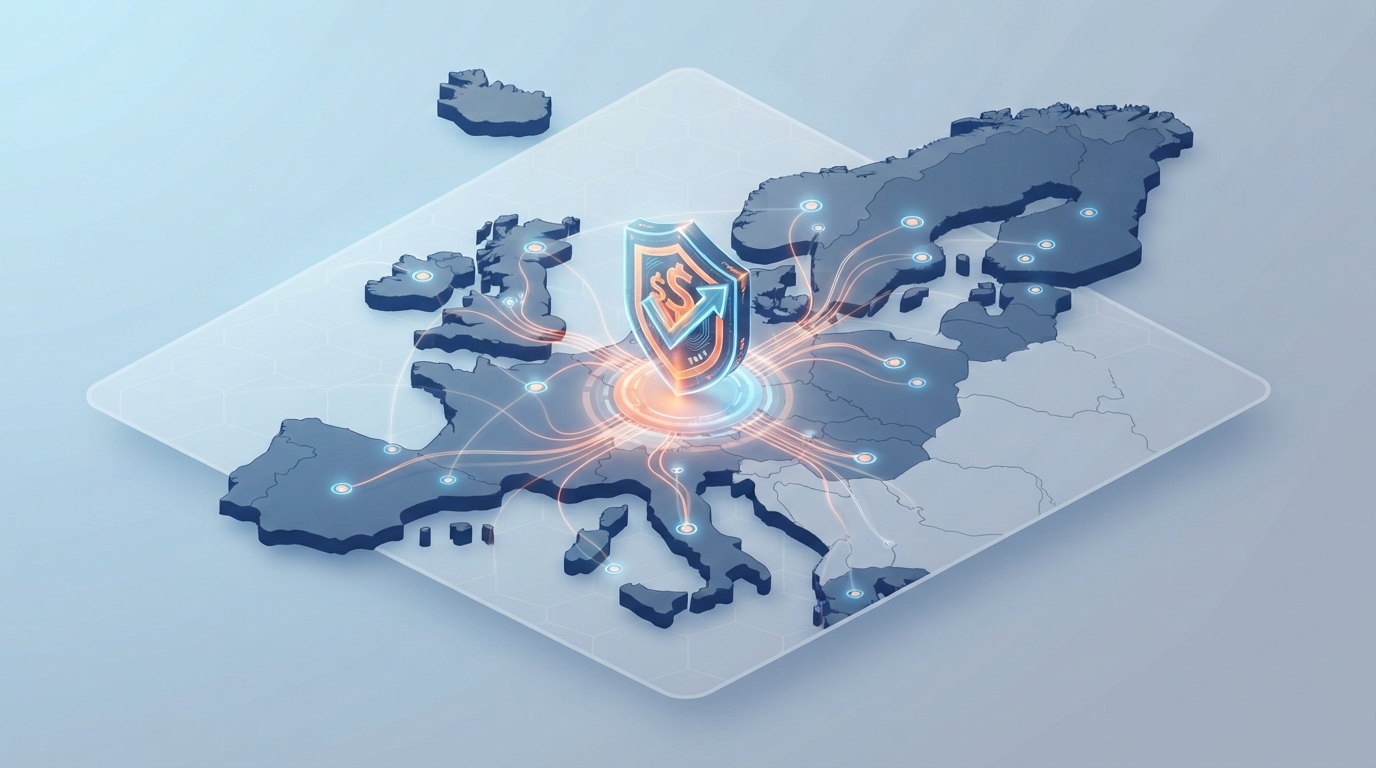
Within the framework of EU compliance for digital sales, tax obligations are determined by the location of the consumer rather than the seller. This principle ensures that the internal market remains fair, but it places a significant administrative burden on creators to correctly identify and remit Value Added Tax (VAT) based on 27 different national rates.
To streamline this process, the EU introduced the VAT Mini One Stop Shop (MOSS), now largely superseded by the broader One Stop Shop (OSS) framework. This mechanism enables businesses to register for VAT in a single member state and report all cross-border transactions through a unified quarterly return. Absent this system, a creator selling an ebook to a customer in France and another in Italy would technically be obligated to manage VAT registration in both jurisdictions.
- Threshold Limits: A micro-business threshold of €10,000 applies to EU-based sellers; below this, you may apply your home country’s VAT rates to cross-border sales.
- Customer Location Evidence: You are required to collect two pieces of non-conflicting evidence to prove where your customer resides (e.g., IP address, billing address, or bank location).
- Digital Service Definition: Ensure your product qualifies as an “electronically supplied service,” which includes automated downloads, streaming, and automated webinars with minimal human intervention.
- Invoice Requirements: Even for digital downloads, your invoices must display the correct VAT rate of the customer’s country once you exceed the threshold.
Failing to comply with these tax rules can lead to audits and penalties that far outweigh the original profit margins of the items sold. Proper fiscal registration ensures that your business remains in good standing with European authorities while you manage the equally strict requirements regarding consumer withdrawal rights.
Consumer Rights and Refund Policies
While managing tax liabilities is essential, the legal relationship with your customers is governed by the EU Digital Content Directive (Directive (EU) 2019/770). This framework mandates transparency regarding product functionality and technical protection measures before transaction completion. Unlike physical goods, selling digital items requires a specific adjustment to the standard 14-day cooling-off period to prevent immediate consumption of intellectual property without payment.
Without explicit compliance, the consumer maintains a right of withdrawal even after accessing files. To mitigate this risk, you must implement a checkout process that captures 1) express consent to start the download and 2) acknowledgment of the resulting loss of the cancellation right. Below is a practical decision framework for maintaining compliance:
| Scenario | Refund Status | Required Action |
|---|---|---|
| Digital content provided immediately | Non-refundable if consented | Double-confirmation checkbox at checkout |
| Digital service/license updates | Variable | Maintain conformity updates per contract |
European consumer law also requires that digital assets remain in “conformity with the contract,” meaning you are obligated to provide necessary security and functionality updates over the lifespan of the purchase. Failure to maintain these assets can lead to price reductions or contract terminations under directive guidelines.
Mitigating Risks of Digital Piracy
While legal compliance establishes the legitimacy of your business, it does not automatically prevent the unauthorized distribution of your digital assets. Proactive defense requires a dual approach: technical safeguards and a robust legal enforcement strategy. Digital Rights Management (DRM) tools—such as encryption, watermarking, and license management—can deter casual infringement, but they are rarely foolproof against determined actors.
When infringement occurs, your most effective defensive mechanism often lies in a pre-established brand identity. By securing trademark registration in the EU, you obtain an enforceable legal monopoly that allows you to demand the removal of infringing content from marketplaces and social media platforms. Unlike copyright, which is often difficult to prove for individual digital files, a registered trademark provides a clear, official basis to issue takedown notices under the Digital Services Act framework. If you suspect an infringement, document the unauthorized use (including URLs and screenshots), verify your ownership of the mark via the EUIPO database, and proceed with formal notice procedures rather than relying on informal communications.
Digital Rights Management Best Practices
Proactive protection within the framework of the European digital market requires a dual-track strategy: technical barriers to discourage casual sharing and legal mechanisms to dismantle professional piracy. While encryption and watermarking serve as the first line of defense, they are often insufficient without a clear legal paper trail. Within the European Union, enforcing your rights depends heavily on the ability to prove ownership and the specific scope of the licenses you have granted to your users.
For creators operating in the EU, the process of removing infringing content is governed by the Digital Services Act (DSA) and the Copyright in the Digital Single Market Directive. Unlike the American DMCA, which many platforms use as a global template, EU-specific takedown notices must strictly adhere to the “notice and action” principle. This requires providing a sufficiently substantiated explanation of why you claim the content is illegal, including the exact location (URL) and evidence of your underlying rights. In many cases, having a registered identifier is the most efficient way to trigger automated protection tools on major platforms like Amazon or Instagram.
When technical safeguards fail, the following legal and administrative actions are essential for mitigating damage:
- Dynamic Watermarking: Embedding buyer-specific metadata into files to trace the source of a leak back to a specific transaction.
- Substantiated Takedown Notices: Utilizing the specific reporting portals of EU-based hosting providers to ensure compliance with the Digital Services Act.
- Platform Brand Registries: Leveraging your status as a rightsholder to gain access to proactive monitoring tools that scan for unauthorized uses of your assets.
- Cease and Desist Orders: Issuing formal legal demands through European counsel to establish a record of infringement for potential litigation.
These measures transform your copyright from a passive right into an active business asset that can be defended in any member state. Establishing these protocols early ensures that when a violation is detected, you can move immediately to the next phase of enforcement.
Actionable Checklist for Infringement
When technical safeguards fail, a structured legal response becomes the primary tool for salvaging your revenue. Detecting an unauthorized copy of your work is the first test of your adherence to local regulations, where the speed of your reaction determines if an infringement is contained. Under the Digital Services Act (DSA), the burden of proof and the initiative to act remain firmly with the rightsholder.
Effective enforcement requires a systematic approach. First, preserve admissible evidence by capturing full-page screenshots that include the system clock, the specific URL, and metadata proving the unauthorized sale, as a simple link is rarely sufficient for substantiating claims under DSA “notice and action” procedures. When submitting takedowns, clarify whether you are asserting economic or moral rights; note that while economic rights are often transferable, moral rights may persist in many EU jurisdictions, requiring careful attention to local contractual nuances.
You can significantly streamline the removal of pirated content by leveraging platform-specific brand registries. If the infringement persists or involves commercial-scale piracy, consider a formal cease-and-desist letter from a qualified legal professional, which serves as a necessary precursor to potential litigation for damages. Consistent enforcement not only recovers losses but also signals that your portfolio is actively defended, deterring future unauthorized use.
For help with this task, use the Trademark registration in the EU service.
Securing Your Digital Business Future
Long-term commercial success depends on aligning your creative output with a proactive legal strategy that bridges the gap between automatic copyright and formal registration. While navigating EU copyright laws for freelance creators provides the necessary foundation for protecting your original works, only a registered trademark offers the enforceable monopoly needed to scale a brand across 27 member states. By strictly following the selling digital products in EU copyright rules regarding licensing, VAT, and consumer rights, you transform your intellectual property from a vulnerable asset into a resilient digital business. Schedule a consultation to ensure your brand identity is fully secured through our professional trademark registration service.
Frequently Asked Questions
Can I use the copyright symbol on my digital products even if I haven’t registered them?
Yes, in the European Union, copyright protection is automatic upon the creation of an original work. There is no formal registration requirement for copyright to exist, and you may use the © symbol, your name, and the year of publication on your digital assets to assert your claim. However, unlike trademark registration in the EU, which provides an official public record and a stronger legal monopoly, copyright does not provide an official certificate that can simplify disputes in court. Using the symbol serves primarily as a public notice of your rights, deterring potential infringers by signaling that your work is protected.
How does AI-generated content affect my ability to claim copyright in Europe?
This is a rapidly evolving area of law. Under current EU interpretations, copyright protection is generally reserved for works that are the author’s own intellectual creation, reflecting their personality and creative choices. As such:
- Purely AI-generated content: Content created by an AI without significant human intervention often lacks the necessary originality to be eligible for copyright protection.
- AI-assisted content: If you use AI as a tool—much like a brush or a software filter—and make significant creative decisions, edits, or structural changes to the output, you likely retain copyright over the final composition.
Because the legal status of AI content is still being tested in courts, creators should keep documentation of their creative process to prove the human contribution involved in their digital products.
What is the difference between a copyright infringement and a trademark infringement?
While both are forms of intellectual property, they serve distinct purposes:
- Copyright infringement involves the unauthorized use of the expression of an idea (e.g., your digital art, music, or e-book text). It protects the work itself from being copied or distributed without your permission.
- Trademark infringement involves the unauthorized use of a brand identifier (e.g., your shop name, logo, or a unique slogan) in a way that causes consumer confusion in the marketplace.
If a competitor copies your digital design, that is a copyright issue. If a competitor uses your brand name on their own website to sell similar products, that is a trademark issue. For long-term protection, you must secure trademark registration in the EU to enforce rights over your brand identity across all member states.
Does my EU business need to comply with GDPR when selling digital products?
Yes. Even if you are only selling digital files, you are collecting personal data from customers, such as their names, email addresses, IP addresses, and billing information. To remain compliant, you must ensure that:
- You have a clear Privacy Policy that explains what data you collect, why you collect it, and how long you store it.
- You obtain explicit consent for marketing communications.
- You provide users with the ability to request access to their data or request its deletion (the “Right to be Forgotten”).
Failure to comply with GDPR can result in significant fines, regardless of the size of your business.
What steps should I take if I discover my digital product is being sold on a site outside of the EU?
Enforcement becomes more complex when the infringer is outside your jurisdiction. However, you should follow these priority steps:
- Document the infringement: Take screenshots, save URLs, and download copies of the infringing content.
- Identify the Host: Most major platforms (like Shopify, Etsy, or social media sites) have dedicated copyright infringement reporting tools or DMCA-style takedown forms.
- Send a Cease and Desist: If you have identified the infringer, a formal legal letter from an attorney can often resolve the issue without court intervention.
- Consider International IP Protection: If you plan to sell globally, rely on international treaties like the Berne Convention for copyright, but remember that for brand protection, you must specifically register your trademark in the markets where you operate or plan to expand.