Defining Creative Ownership in the EU Digital Landscape
Digital art thrives on visibility, yet the ease of sharing works online creates a persistent risk of unauthorized replication. This guide clarifies how to copyright digital art in Europe by shifting focus from automatic creation to proactive legal enforcement.
The Automatic Nature of EU Copyright
Understanding copyright laws for freelance creators starts with debunking the myth that formal registration is a prerequisite for legal ownership. We will examine the Berne Convention and the distinction between moral and economic rights.
The Berne Convention and Automatic Rights

Under the Berne Convention, the protection of a digital illustration or a graphic design begins the moment the work is created. This international treaty ensures that creators do not have to navigate a bureaucratic maze of registration offices to gain baseline protection. For an artist in Berlin or a motion designer in Paris, the rights are born alongside the pixels, provided the work meets specific legal thresholds. While this automaticity is a powerful shield, it relies on the creator’s ability to prove the date of creation and the originality of the concept if a dispute arises.
To qualify for these automatic protections across the European Union, your digital art must satisfy three fundamental criteria derived from the Berne Convention framework:
- Originality: The work must be the author’s own intellectual creation, reflecting their personal touch and creative choices rather than being a mere imitation or a technical output.
- Fixation: This is the legal act of embodying the work in a stable medium (such as saving a digital file) so that it can be perceived or reproduced. While fixation serves as the legal requirement for protection, maintaining project documentation is a separate, vital step for evidentiary proof of ownership.
- Expression: Copyright protects the specific expression of an idea, not the underlying idea itself, meaning the unique way colors, lines, and shapes are used in your digital canvas.
In the digital landscape, where securing brand assets through trademarking often handles names and logos, copyright remains the primary tool for the art itself. Automatic protection is foundational, but its efficacy depends on your ability to substantiate your claim. Maintaining time-stamped project files, early sketches, and layers in a design program provides the evidence needed to protect your work against infringement. Establishing this foundation of ownership allows you to effectively exercise both the personal and financial control of your creations.
Moral Rights vs Economic Rights
When managing rights for digital art in Europe, it is crucial to recognize that the EU legal framework (often grounded in the principle of droit d’auteur) splits your protection into two distinct categories. While copyright arises automatically upon creation—meeting the requirement of being an original expression fixed in a tangible medium—understanding the divide between moral and economic rights is essential for effective asset management.
The following table distinguishes these categories to help you identify which rights you may trade or license:
| Right Category | Primary Function | Transferability |
|---|---|---|
| Moral Rights | Protect your personal bond to the work (Paternity/Integrity). | Inalienable; generally cannot be sold or transferred. |
| Economic Rights | Enable financial exploitation (Reproduction, Distribution). | Fully transferable, licensable, or assignable to third parties. |
Unlike economic rights, which are easily managed through licensing contracts, moral rights remain with the creator. This means that even if a studio purchases the usage rights to your illustration, they generally cannot strip your name from the work or alter it in a way that harms your professional reputation. For deeper context on how these protections intersect with formal brand safeguarding, consult the EU directive on copyright in the Digital Single Market. As a secondary strategy for broader commercial protection, creators may also consider registering their brand assets as an EU Trademark (EUTM).
Note: While economic rights are standardized to expire 70 years after the author’s death across the EU, moral rights vary significantly by member state, with some jurisdictions granting them perpetual status. Always verify specific protections within the national laws of your target market.
Documenting Originality for Digital Assets
Securing creative ownership in the digital landscape requires moving from automatic rights to concrete evidence. We will examine establishing a creation trail through version logs and utilizing embedded metadata as legal proof.
Step-by-Step Proof of Creation
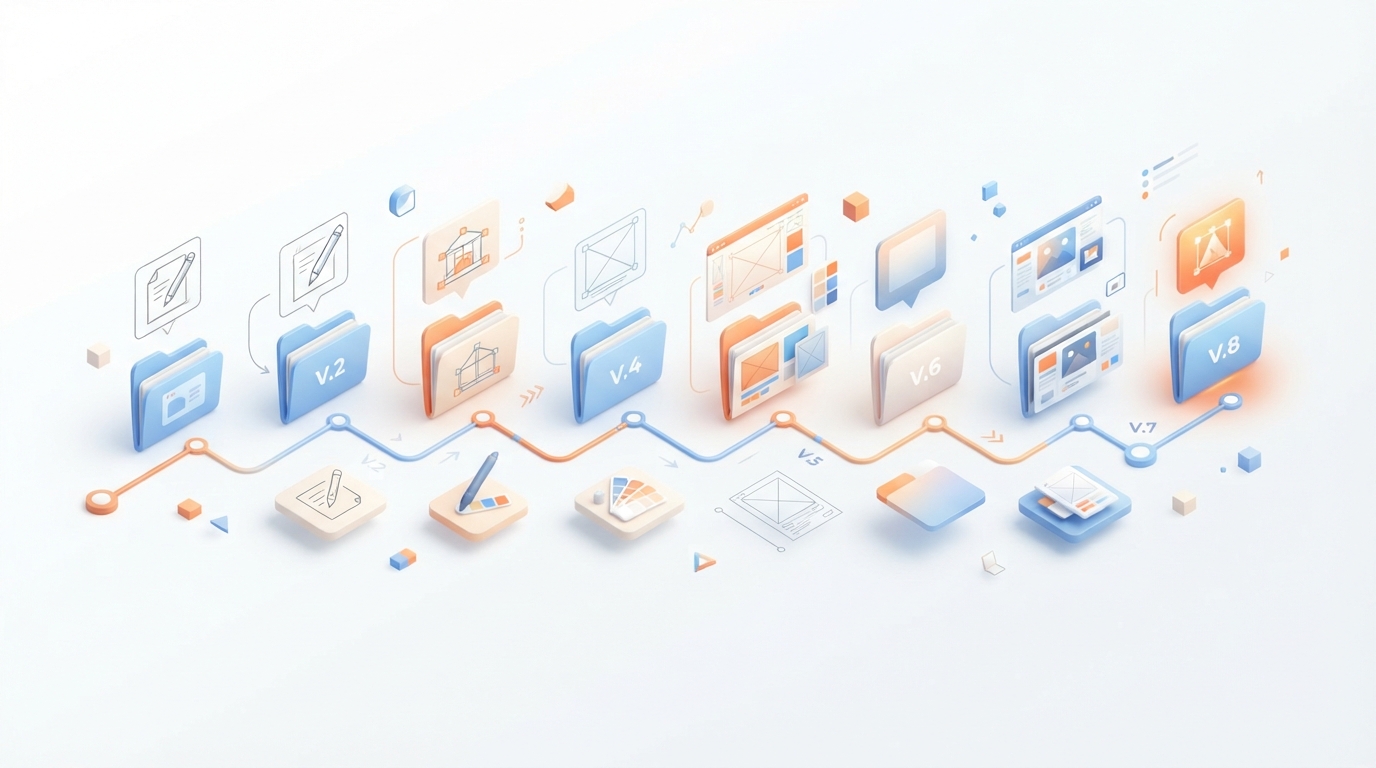
In the event of an infringement dispute, courts do not assume ownership; they require proof of the specific moment your art transitioned from an idea to a fixed expression. Since EU copyright is automatic rather than granted through a registry, building a “creation trail” is your primary defense when managing digital assets. This evidence is crucial, as it establishes the chronological priority of your original design work.
Maintaining a creation trail is about producing a verifiable history that predates any potential infringer’s claims. Demonstrating the evolution of your files serves as objective evidence of your authorship in European copyright disputes.
To ensure your digital assets are defensible, follow these steps to build an evidence log:
- Document Versioning: Retain incremental project files (e.g., v01, v02). These snapshots demonstrate the intellectual labor behind the final design, which is a core requirement for establishing originality under the Berne Convention.
- Preserve Preliminary Assets: Keep sketches, mood boards, and raw wireframes. These early-stage files provide context for your creative process and serve as proof of “fixation” before the final product is published.
- Employ Digital Verification: Use trusted third-party hashing services or time-stamping protocols. While these do not constitute formal copyright registration, they provide an immutable, date-stamped footprint of your work that is often accepted as evidence in legal proceedings.
- Archive Communication Records: Maintain logs of emails, project management entries, or shared files sent to clients. These third-party interactions provide external confirmation of the artwork’s existence at a specific point in time.
Systematically archiving these assets transforms vulnerable digital files into robust evidence. While this documentation secures your copyright claim, note that copyright protection is governed by international principles such as the Berne Convention; other forms of protection, such as those for logos or commercial brands, involve distinct legal frameworks and registration processes.
Using Metadata as Legal Evidence
Beyond structural file histories, technical identifiers embedded in your assets—such as EXIF (Exchangeable Image File Format) and IPTC (International Press Telecommunications Council) data—serve as supplementary documentation in European copyright disputes. While copyright in a work exists from the moment of its “fixation” (the legal act of creating a tangible or digital expression), metadata serves as an evidentiary trail that links that creation to the author. These data packets record the “how” (software and hardware specs) and “who” (authorship and contact details) of a digital file. Under the EU Directive on Copyright in the Digital Single Market, the intentional removal or modification of this Rights Management Information (RMI) can be interpreted by courts as an indicator of bad faith or willful infringement.
While metadata helps establish a timeline of creation, it is not a standalone legal safeguard. Digital art platforms often strip this data during compression, rendering it unreliable for long-term enforcement. Consequently, creators should not rely on file headers alone; effective protection requires a robust backup strategy, such as maintaining secure archives of original, uncompressed source files. Relying on mutable file properties is insufficient; ensuring your intellectual property is documented through redundant storage is essential for maintaining a verifiable evidentiary trail.
Metadata Evidence Checklist
- EXIF (The Provenance Trail): Automatically captured data (software versions, device timestamps) that helps document the technical origin of a file.
- IPTC (The Attribution Trail): Creator-defined metadata (copyright notices, contact info, licensing terms) that provides evidentiary documentation of your claims.
- Preservation Note: Export high-resolution source files directly from your workspace to retain original metadata headers before uploading to public platforms.
Disclaimer: Metadata’s evidentiary weight is subject to judicial discretion; consult with legal professionals regarding your specific enforcement strategy.
Protecting Assets Beyond Simple Copyright
While automatic copyright provides a baseline of protection for your creative expression, commercial success often requires a more aggressive legal shield to prevent competitors from exploiting your brand name or logo. This section examines the transition from protecting art to securing market identity through strategic intellectual property tools.
When Copyright is Not Enough

Copyright is an excellent tool for protecting the specific lines, colors, and brushstrokes of an illustration, but it lacks the administrative speed and broad scope required for commercial brand enforcement. In the competitive EU landscape, relying solely on automatic rights can leave you vulnerable if a competitor uses a similar name or adopts your visual style for their own products. Because copyright requires you to prove authorship and original expression in every instance, the legal burden is significantly heavier compared to the simplified enforcement of a registered right.
For professional creators, the limitation of copyright becomes evident when a copycat doesn’t just steal an image, but attempts to occupy your market position. Copyright does not protect a name or a simple slogan; it only protects the creative execution. If a competitor launches an unofficial shop using your brand identity, proving copyright infringement can be a slow and expensive process involving detailed artistic comparisons. In contrast, having your assets secured via formal registration provides a clear, public record that allows for rapid takedowns on marketplaces and social media platforms without the need for complex creative debates.
Comparison of Enforcement Outcomes
| Scenario | Artist A (Copyright Only) | Artist B (Trademark + Copyright) |
|---|---|---|
| Infringement Type | Competitor opens an Instagram shop using the artist’s logo and name. | Competitor opens an Instagram shop using the artist’s logo and name. |
| Legal Burden | Must provide original project files, sketches, and prove the work is “original.” | Presents a single registration certificate for the brand name and logo. |
| Enforcement Speed | Slow. Platform requires a detailed legal claim; often leads to prolonged disputes. | Fast. Platforms prioritize registered assets for immediate account suspension. |
| Result | The copycat remains active for months while evidence is reviewed. | The infringing shop is removed within days of the first notice. |
This structural difference demonstrates why many professional artists choose to layer their protections, ensuring that their creative work is covered by copyright while their commercial identifiers are shielded by formal registration. Understanding these nuances is the first step toward integrating intellectual property protections for professional artists who intend to monetize their designs across the European market.
Integrating Trademarks for Professional Artists
When the creative execution reaches a level of commercial maturity, relying solely on automatic protection becomes a bottleneck for scaling. While copyright covers the specific arrangement of pixels and colors, it does not prevent competitors from adopting a similar brand identity or stage name that could dilute your market presence. To secure a professional legacy, integrating additional layers of protection is necessary to safeguard the commercial shell of your work.
For artists operating as businesses, registering a name or a signature visual element as an EU trademark provides a defensive perimeter that copyright cannot offer. This transition from protecting a single image to protecting a brand identity is critical when launching merchandise, opening digital storefronts, or negotiating collaborations. Professional creators often discover that without a registered mark, lookalike accounts on social media can impersonate their brand with limited legal recourse, as copyright claims are often processed slower than trademark-based takedowns.
Integrating these rights allows for a more aggressive enforcement strategy against copycats on platforms like Instagram, where a trademark certificate acts as a definitive proof of ownership that platforms prioritize. This approach is particularly effective when selling digital products in EU copyright rules, as it ensures that the brand name under which you sell remains exclusive to you across all member states. By securing the commercial identity, you prevent third parties from registering your name as their own mark—a common risk for growing influencers and independent studios. This strategic layering ensures that your creative assets and your commercial reputation are equally defended as you move toward active enforcement.
Related topic reference: Essential selling digital products in EU copyright rules.
Enforcement Strategies in the Digital Realm
Establishing ownership is only the first half of the legal battle; the second involves actively defending those rights when infringement occurs. We will examine the practical steps for issuing formal demands to infringers and the specific mechanisms available for removing unauthorized content from major European digital platforms.
The Cease and Desist Checklist
Effective digital enforcement requires moving from reactive frustration to a disciplined, evidence-based response. When you identify unauthorized use of your work, the initial 48 hours are critical for securing the data needed for a successful legal claim or platform takedown. A structured approach ensures your communication with the infringer qualifies as a formal notice, which carries significant weight in EU judicial proceedings.
- Document: Secure high-resolution screenshots of the infringing assets, the URL, timestamps, and the profile identity of the party involved.
- Archive: Utilize digital preservation tools to create a permanent record of the live infringing page before it can be modified or deleted.
- Verify: Assemble your original project files, internal metadata, and any prior registration documents to establish your chain of title.
- Contact: Serve a formal Cease and Desist letter that precisely identifies the protected work, specifies the violation, and sets a firm removal deadline.
Following these steps builds a dossier that aligns with the “Notice and Action” directives common across European digital laws, effectively shifting the burden to the infringer. This proactive approach ensures you have the necessary evidence to demonstrate clear authorship and unauthorized usage when pursuing enforcement actions.
Navigating EU Online Platforms
Enforcement in the digital space requires more than just a list of demands; it necessitates a sophisticated understanding of how major platforms process intellectual property claims. In the European Union, this process is governed by specific frameworks that force service providers to take accountability once they are formally notified of a violation.
The EU Copyright Directive has standardized the “Notice and Action” procedures, creating a streamlined mechanism for creators to scrub infringing content from the web. Unlike the US-centric DMCA, European rules place a significant emphasis on the quality of the claim. Platforms are generally not liable for the content users upload, but they lose this immunity the moment they obtain “actual knowledge” of illegal activity. For a digital artist, this means your notification must be legally sound, clearly identifying the work and the nature of the infringement to trigger the platform’s obligation to act.
“The most common mistake I see creators make is prioritizing speed over precision,” says Anton Polikarpov. “While the first 48 hours are vital for evidence, a rushed, poorly documented claim often results in a rejection from the platform’s legal team. You must act fast to preserve data, but you must act correctly to win the case. One well-substantiated notice is worth ten emotional emails.”
When dealing with copycats, especially those operating across borders, understanding copyright regulations for freelance creators allows you to leverage these platform-specific tools effectively. Most major social media and e-commerce sites have dedicated portals for IP owners, but these tools prioritize registered rights. While copyright is automatic, having a clear paper trail or a registered design provides the objective proof that platform moderators require to resolve disputes without a court order.
Mastering these platform-specific nuances ensures that your defensive strategy transitions from mere detection to successful removal and long-term prevention.
Related topic reference: Navigating EU copyright laws for freelance creators.
For help with this task, use the Trademark registration in the EU service.
Taking Control of Your Creative Legacy
While understanding how to copyright digital art in europe provides you with an essential legal shield the moment your pen leaves the tablet, true market dominance requires a more proactive sword. By mastering the nuances of navigating EU copyright laws for freelance creators, you ensure your moral and economic rights are documented, yet only formal registration can transform a creative asset into an enforceable business tool. To fully bridge the gap between artistic creation and commercial security, I invite you to explore our next guide on selling digital products in EU copyright rules to see how these rights function in a live marketplace. Secure your professional legacy now by integrating trademark registration into your workflow, ensuring your brand remains exclusively yours as you scale across the European landscape.
Frequently Asked Questions
Can I copyright AI-generated images under EU law?
Current EU intellectual property law requires a work to be an author’s own intellectual creation to be eligible for copyright protection. This standard necessitates human involvement, intent, and creative choices.
As of now, purely AI-generated outputs created without significant human creative input generally fall into a legal grey area and may not qualify for copyright protection because they lack the required human personality. However, if you use AI as a tool—much like a digital brush—and exert significant creative control over the arrangement, prompt engineering, and post-production editing, the resulting work may be protectable. The burden of proof remains on you to demonstrate your specific creative contribution to the final output.
How does EU trademark registration differ from automatic copyright protection?
While copyright protects the expression of your specific creative work, a trademark protects the brand identity associated with your goods and services. Copyright is automatic, but enforcing it against copycats on digital platforms can be slow and legally complex.
By pursuing Trademark registration in the EU, you gain a powerful, recognized legal title that allows for much faster enforcement on e-commerce sites and social media platforms. Trademarks function as a badge of origin, meaning you are not just proving the work is yours—you are proving that the infringer is misleading consumers by using your brand’s identifiers.
Do I own the copyright to the logo I created for my business?
You generally own the copyright to your logo as soon as it is created, provided it meets the criteria of originality. However, owning the copyright to the logo design does not grant you the exclusive right to use that design in commerce to sell your products; that is the role of a trademark.
Without a trademark, a competitor could theoretically use a logo that is confusingly similar to yours, and you would have to fight a long, costly copyright infringement battle to stop them. A trademark registration provides a clear legal presumption of ownership, making it significantly easier to prevent competitors from using your logo in your specific market category.
What should I look for in a licensing agreement when selling digital products in the EU?
When selling digital assets, you are essentially granting a limited license to the buyer while retaining your underlying economic rights. A robust licensing agreement should clearly specify:
- Scope of use: Is it for personal or commercial use?
- Territory: Is the license valid globally or restricted to specific regions?
- Duration: Is the license perpetual or limited to a specific timeframe?
- Transferability: Can the buyer sub-license or resell the asset?
Always ensure your contract explicitly states that you retain ownership of the Intellectual Property (IP) and that only specific usage rights are transferred. Misunderstanding these terms can lead to the unintended loss of control over your creative assets.
How do I protect my digital designs from copycats on Instagram?
Protecting digital art on social media requires a two-pronged approach: proactive documentation and reactive enforcement. First, always embed your authorship in metadata (EXIF/IPTC) and keep high-resolution raw files (PSD, AI, or project history) as a creation trail.
If you identify a copycat, act within the 48-hour window to preserve evidence. Use the platform’s built-in Report Copyright Infringement tools, providing proof of your original post date and the underlying work. If the platform is slow to respond, having a registered trademark for your brand name or logo can allow you to use faster Trademark Infringement reporting channels, which are often prioritized by platform legal teams.