Securing Your Digital Creativity in Europe
In an era where AI and instant replication threaten the integrity of your portfolio, protecting your digital art in Europe requires a shift from passive ownership to proactive brand registration. This guide outlines how to transform your creative assets into legally enforceable business tools.
Understanding Copyrights in the Digital Age
Navigating the transition from artistic expression to a secured asset requires understanding the EU’s specific legal definitions. We will examine the criteria for originality and the inherent limitations of automatic copyright protections.
Defining Originality for Digital Assets
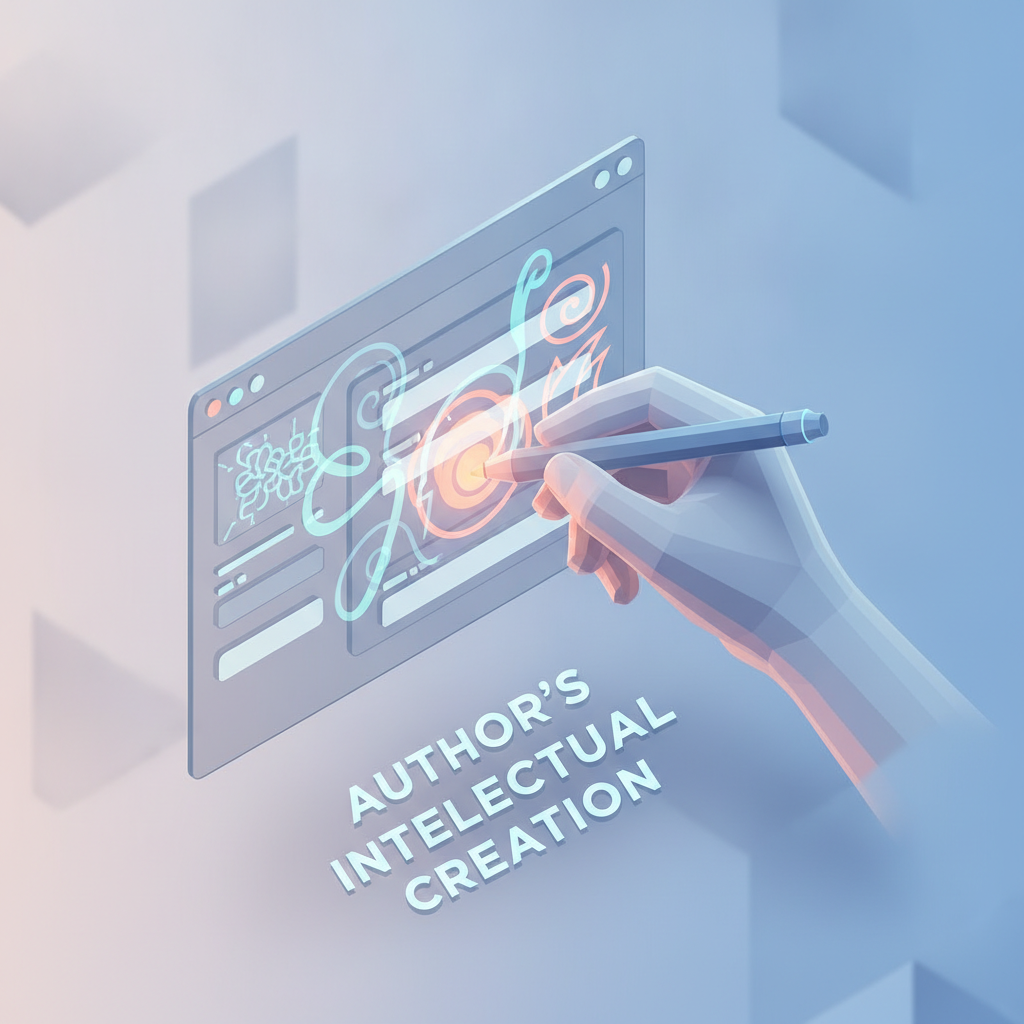
In the European legal framework, protection does not extend to every pixel rendered; it hinges on the concept of the “author’s own intellectual creation.” This means your work must reflect personal touch and creative choices rather than technical necessity or the mere replication of existing motifs. For freelance creators and studios, this distinction is critical because it determines whether an asset can be defended against copycats or if it remains part of the public commons.
To qualify for copyright protection, your digital work must demonstrate a level of free and creative choice that results in a unique expression. Generic icons, standard UI elements, or basic geometric patterns rarely meet this threshold. When building an intellectual property portfolio, it is important to distinguish between copyright—which protects original creative works—and trademark registration, which protects specific brand identifiers like logos. Note that registering a trademark does not automatically resolve copyright infringement issues for standalone illustrations; such cases remain complex legal matters that often require case-by-case litigation.
| Asset Type | Protectable Original Art | Non-Protectable Elements |
|---|---|---|
| Visual Illustrations | Custom characters with unique stylistic traits and color palettes. | Common mythological tropes or generic stick figures. |
| Graphic Design | Intricate, stylised logos reflecting a specific brand identity. | Standard sans-serif fonts or basic geometric shapes (circles/squares). |
| Digital Textures | Hand-painted or uniquely coded procedural shaders. | Photorealistic captures of natural surfaces without modification. |
Understanding these boundaries is the first step toward effective enforcement, particularly when distinguishing between a protected expression and a non-protectable idea. Once you have established that your work meets the EU originality standard, the next challenge is managing the reality of automatic protection and its practical limits in a courtroom.
Automatic Protection and Its Limits
While it is a relief to many creators that rights are technically born the moment a stylus touches the screen, relying solely on this implicit protection is a significant strategic risk. Under the Berne Convention, your work is protected without formal registration, but the burden of proof in an infringement case remains entirely on you. If a competitor claims they created the work first, or if a platform requires verified documentation to take down a copycat, a simple “I made this” rarely suffices in a European court.
To convert your creative output into a defensible business asset, you must understand the practical limitations of automatic rights. For instance, while you may hold the copyright to a specific illustration, this does not prevent others from using the underlying concept or a similar style. If your digital art serves as a brand identifier, such as a high-value logo or a signature character, it is often prudent to consider registering a trademark in the EU to establish statutory evidence of ownership and prevent bad-faith registrations.
Practical Warning: Do not mistake “automatic protection” for “effortless enforcement.” Because there is no centralized government registry for copyright in the EU, you must proactively manage your own private, verifiable, chronological chain of title. Maintaining your own secure records of file creation and iterations is a vital strategy, though it should be distinguished from formal government registrations like trademarks, which provide broader statutory legal protections.
Understanding these limits is the first step toward building a resilient portfolio. By recognizing where automatic rights fail to provide commercial leverage, you can better appreciate the necessity of active documentation strategies. This realization leads us naturally to the concrete mechanisms of proving your status as the original creator.
Essential Steps to Document Authorship
Establishing a legally recognized link between the creator and the work requires moving beyond basic file saving toward a structured evidence-gathering protocol. This stage covers building a robust evidence trail and identifying when copyright alone isn’t enough.
Building a Robust Evidence Trail

In the absence of a mandatory government registry for visual works, the strength of your legal position depends on the quality of your private records. Documentation acts as the “birth certificate” of your digital asset, proving that the work originated from your creative choices at a specific point in time. When you are looking into how to copyright digital art in Europe effectively, you must focus on creating a trail that is difficult for an opposing party to manipulate or discredit.
- Preserve Master Files with Layers: Never delete your working files (PSD, AI, or Procreate formats). The existence of distinct layers and non-destructive edits is the strongest technical proof of original authorship.
- Utilize Digital Evidence Trails: Use timestamping services to record a cryptographic hash of your file. While these methods help establish a chronology of creation, please note that private digital records may not be recognized by all EU courts as equivalent to official notarization or state-sanctioned evidence.
- Maintain an Iteration Log: Save periodic exports of works-in-progress. A sequence of drafts showing the evolution of the piece is far more convincing in a dispute than a single finished image.
- Embed Immutable Metadata: Fill out the IPTC and XMP metadata fields within your files, including your full legal name, contact details, and the “All Rights Reserved” notice, before the work is published online.
- Third-Party Correspondence: If you are a freelancer, ensure your initial pitch emails or client briefs are archived. These communications serve as external, time-stamped evidence of your creative intent.
These private documentation strategies assist in establishing a factual record of your creative process. By treating your art as a legal asset from the first sketch, you significantly lower the cost and complexity of future enforcement actions. However, these private logs are not a substitute for formal registration and have their boundaries when your work begins to function as a commercial brand.
Related topic reference: How to register copyright for music in Europe.
When Copyright Isn’t Enough
While building a solid evidence trail helps prove authorship, copyright law has inherent limitations when digital art transitions into a commercial brand. Copyright protects the expression of an image but does not shield the broader commercial identity—such as a minimalist logo, a specific color scheme, or a stylized character name—that customers associate with your reputation. If a competitor produces a lookalike brand that mimics your aesthetic, copyright may offer no remedy, as it does not protect underlying ideas or styles.
To convert artistic assets into legally robust business capital, creators often distinguish between the creative work itself and the brand identity used to market it. While copyright remains the foundation for your artistic output, trademarking serves as the primary tool for securing the commercial reputation of your studio or persona across the EU.
| Feature | Copyright | Trademark |
|---|---|---|
| Primary Scope | Specific creative expression | Brand identity (names, logos) |
| Enforcement | Manual evidence submission | Automated platform takedowns |
For example, a freelance illustrator may hold copyright over a series of digital stickers, but without a trademark, they may struggle to stop an apparel company from printing those designs on unlicensed merchandise. Registering a brand identifier allows the owner to assert exclusive rights that are recognized by the EUIPO, moving the strategy from passive documentation to active portfolio management.
Commercializing Art and Managing Rights
Securing your portfolio is only the first step; the true value of intellectual property lies in its commercial application. We will now examine how creators navigate licensing agreements and enforce their rights against unauthorized use.
Licensing vs. Assignment of Rights
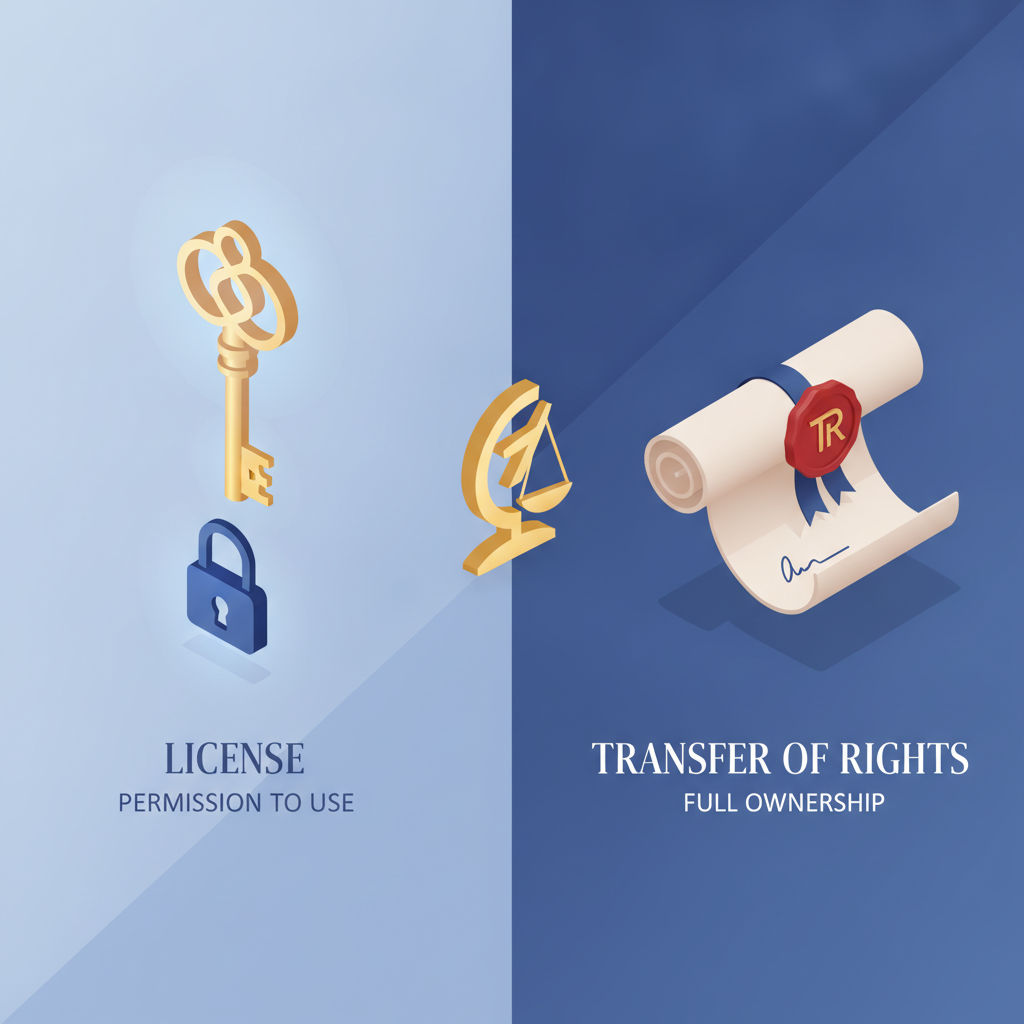
Commercializing digital assets in the EU requires a precise distinction between licensing and the assignment of rights. Copyright protection, as established by the EU Directive 2019/790, grants you automatic rights, but your revenue control is determined by the specific terms of your contracts. It is important to note that copyright protection—which secures the expression of your work—is separate from trademark registration. While copyright is an inherent right, registration of intellectual property assets like brand identity or logos remains a distinct process to prevent unauthorized commercial usage. A license functions as a permission, granting third parties the right to use your work while you retain ownership; an assignment constitutes a transfer of title, often permanently divesting you of your economic rights.
Understanding these trade-offs is essential for sustainable growth:
| Feature | Exclusive License | Non-Exclusive License |
|---|---|---|
| Control | Single licensee; creator may be restricted from own use. | Multiple parties can use the work simultaneously. |
| Revenue | Typically commands higher upfront fees. | Scalable volume via recurring permissions. |
| Best For | Commissioned brand assets or bespoke logos. | Stock digital files, templates, or assets. |
A common pitfall is the “work-for-hire” assumption. Under various EU jurisdictions, moral rights (droit moral) are often inalienable and remain with the creator, meaning you cannot fully waive your identity as the author even if economic rights are transferred. Consequently, we advise professional legal review for any contract involving total assignment or multi-territory exclusivity to ensure your rights remain protected.
Protecting Art from Unauthorized Use
When your licensing strategy or assignment agreements are in place, the challenge shifts from defining rights to enforcing them. In the European digital landscape, unauthorized use often manifests as unofficial merchandise on marketplaces, lookalike social media profiles, or the direct theft of visual assets for commercial advertising. While copyright provides the legal basis for ownership, proactive enforcement requires a structured approach to stop infringers before they dilute your brand’s market value or siphon off your revenue.
Expert Insight: The EU Enforcement Ladder
In Europe, litigation should always be the last resort. Most digital platforms operating within the EU—including Instagram, Amazon, and Allegro—are bound by strict notice-and-takedown procedures. Before engaging external counsel for a lawsuit, creators should utilize official reporting portals. These tools are designed to handle clear-cut copyright and trademark infringements efficiently. However, if the infringer is a competitor or a persistent bad-faith actor, a formal Cease and Desist (C&D) letter drafted by a European attorney is often necessary. A professionally drafted C&D carries significant weight in EU jurisdictions, as it establishes a paper trail of the infringer’s awareness, which is critical if the case eventually moves to a national court.
To manage an intellectual property portfolio effectively, you must monitor digital spaces where your art is most vulnerable. Effective enforcement in the EU involves a combination of platform-specific tools and formal legal notices. Below are the primary channels for reporting unauthorized use without immediate escalation to the judiciary:
- EUIPO IPR Enforcement Portal: A centralized tool that connects rights holders with EU customs and police, allowing for the identification of counterfeit physical goods featuring your digital designs.
- Social Media Brand Protection Tools: Platforms like Instagram and Pinterest have dedicated intellectual property reporting forms. Providing a registration number for your assets—whether it is a design or a logo—dramatically speeds up the removal of copycat accounts.
- WIPO Arbitration and Mediation Center: For disputes involving domain names or international digital conflicts, this provides a cost-effective alternative to multi-jurisdictional litigation.
Establishing these defensive perimeters ensures that your creative output remains an exclusive commercial asset, clearing the way for long-term growth and professional brand management.
For help with this task, use the Trademark registration in the EU service.
Strategic Next Steps for Creators
While automatic protection under the Berne Convention provides a vital safety net for every creator, truly securing your digital art in Europe requires a shift from passive ownership to proactive portfolio management. By moving beyond basic copyright and registering your commercial identifiers as trademarks, you transform your creative output into a structured business asset that is significantly easier to defend against copycats on Instagram and other global platforms. To further expand your expertise in protecting multi-media projects, I recommend exploring our guide on securing music rights within the European market. Take the final step in safeguarding your professional future by contacting Brandr-Legal for a bespoke intellectual property audit to ensure your brand remains entirely under your control.
Frequently Asked Questions
If my art is used on merchandise by a third party, does my copyright allow me to stop them?
Yes, as the copyright holder, you hold the exclusive right to authorize or prohibit the reproduction, distribution, and communication of your work to the public. If a third party uses your art on merchandise without your permission, they are likely infringing on your economic rights under the EU Copyright Directive.
However, copyright enforcement can be legally complex. To effectively stop infringement, you should:
- Gather evidence: Save high-quality screenshots, purchase receipts if applicable, and archival copies of your original files.
- Issue a Cease and Desist: A formal letter, ideally drafted by legal counsel, signals your intent to protect your assets and often resolves the issue before it reaches court.
- Use Takedown Portals: Most major e-commerce and social media platforms have dedicated Intellectual Property (IP) reporting portals where you can submit your copyright proof to have the infringing merchandise removed.
Can I use the copyright symbol (©) on my digital art in Europe to ensure protection?
While you do not need to use the copyright symbol to be protected—as copyright arises automatically upon the creation of an original work—affixing the © [Year] [Author Name] notice is a highly recommended best practice. It acts as a clear warning to potential infringers that you are aware of your rights and intend to enforce them.
Using this notice is particularly effective when combined with:
- Watermarking your visual assets.
- Including copyright information in the metadata (EXIF/IPTC data) of your files.
- Maintaining a dated archive of your design process (e.g., layered project files or version history) to substantiate your claim if challenged.
Why would I need Trademark registration in the EU if I already own the copyright to my logo?
Copyright and trademarks serve fundamentally different legal functions. While copyright protects the artistic expression of your logo, it does not prevent others from using a similar logo in a way that causes confusion in the marketplace. Trademark registration in the EU provides you with a monopoly over your brand identifier in specific commercial classes.
Registering your logo as a trademark allows you to:
- Prevent competitors from using identical or confusingly similar signs in commerce.
- Build legally defensible brand equity that is separate from individual artistic works.
- Easily initiate takedowns on platforms like Amazon or Instagram by providing an official trademark registration number rather than arguing the nuances of artistic copyright.
Does EU law distinguish between professional and personal use of digital art?
EU copyright law focuses primarily on the act of reproduction and communication, but there are exceptions for personal use. Generally, individuals are permitted to copy works for private, non-commercial purposes under certain conditions. However, once you use digital art to sell products, promote a brand, or generate advertising revenue, the ‘commercial use’ threshold is crossed.
For entrepreneurs and SMBs, the distinction is critical: commercial usage requires a higher standard of due diligence. If you are operating a business, you must ensure you have valid licenses for all assets used in your marketing, as ‘innocent infringement’ is rarely a valid legal defense in commercial disputes.
How do I prove that I created a digital file first if it is contested?
Because copyright in the EU does not require a formal registration system, the burden of proof rests on the creator. You must build a credible trail of evidence that demonstrates prior art. Effective documentation strategies include:
- Versioning: Keeping dated backups of your working files (e.g., .psd, .ai) that show the progression of the design.
- Time-stamping: Using third-party secure cloud services or blockchain-based notarization tools to timestamp your final assets.
- Public Disclosure: Establishing a clear publication history on your professional portfolio or social media pages, which provides a public record of your ownership.
Consulting with an IP attorney early on can help you establish an internal documentation protocol that serves as a robust defense should your authorship ever be questioned.