Navigating EU Copyright Risks for Digital Sellers
The digital marketplace offers unprecedented scale, yet many entrepreneurs face hidden traps when selling digital products in EU copyright rules. This guide explores essential compliance steps, defensive strategies, and the leverage provided by formal brand registration.
Copyright Basics for Digital Assets
While initial copyright provides basic protection, commercializing digital assets in the European Union requires a more robust strategy. We will now examine the nuances of EU ownership and the necessary documentation for your portfolio.
Understanding Ownership in the EU

In the European Union, copyright law follows an author-centric model where protection arises automatically upon the creation of an original work. Crucially, owning a digital file—or even funding its development—does not automatically transfer the underlying copyright. Under the InfoSoc Directive (2001/29/EC), while economic rights are transferable, moral rights often remain anchored to the individual creator and may not be fully waivable in many member states.
Digital entrepreneurs frequently conflate possession with ownership, leading to risks when scaling. For example, a business commissioning a digital logo from a freelancer without a formal “assignment of rights” agreement often lacks the legal standing to license or enforce that design. While copyright protects the creative expression itself, trademark registration serves a different, complementary purpose: it protects your brand identity and market source, providing the proactive enforcement capabilities necessary for e-commerce.
| Feature | Copyright | Trademark |
|---|---|---|
| Scope | Protects the original creative expression. | Protects brand identity, names, and logos. |
| Requirement | Automatic upon creation. | Requires registration (e.g., via EUIPO). |
| Enforcement | Requires proof of authorship. | Provides clear, renewable legal leverage. |
Disclaimer: This content is for informational purposes only and does not constitute individual legal advice. Ownership rights are subject to specific contract terms and national variations across EU member states.
Essential Copyright Documentation Checklist
Establishing the legal foundation of your work is the first step, but the actual strength of your position depends on the quality of your paper trail. In a landscape where rights are often challenged, having a systematic approach to archiving evidence ensures that your creative assets remain defensible against unauthorized use or ownership disputes.
- Creation Logs and Drafts: Retain dated versions of your project, from initial sketches to final digital assets. These serve as primary evidence of the independent creative process.
- Digital Timestamps: Utilize trusted third-party timestamping services or blockchain-based registries to provide immutable proof that a specific file existed at a certain point in time.
- Formal Transfer Agreements: If you use subcontractors, ensure you have signed written contracts explicitly transferring all economic rights to you; otherwise, the original freelancer might still legally own the asset.
- Publication Evidence: Save screenshots and URLs of the first time you made the product available online, as this often defines the start of your protection period.
- License Metadata: Embed your copyright information directly into the metadata of files (images, audio, or code) to provide clear notice to potential users and automated scrapers.
By maintaining this documentation, you significantly lower the threshold for legal action if someone attempts to misappropriate your intellectual property. While copyright provides automatic protection, the lack of an organized record can complicate the process of defending your designs from social media copycats and other bad actors. Once your internal records are secure, the next stage of brand management involves addressing the professional consequences of failing to implement active legal safeguards.
Risks of Selling Without Legal Protection
Neglecting formal intellectual property strategies exposes digital entrepreneurs to aggressive legal threats and financial liabilities. This section previews the dangers of copycat retaliation and the risks associated with third-party digital assets.
The Danger of Copycat Retaliation
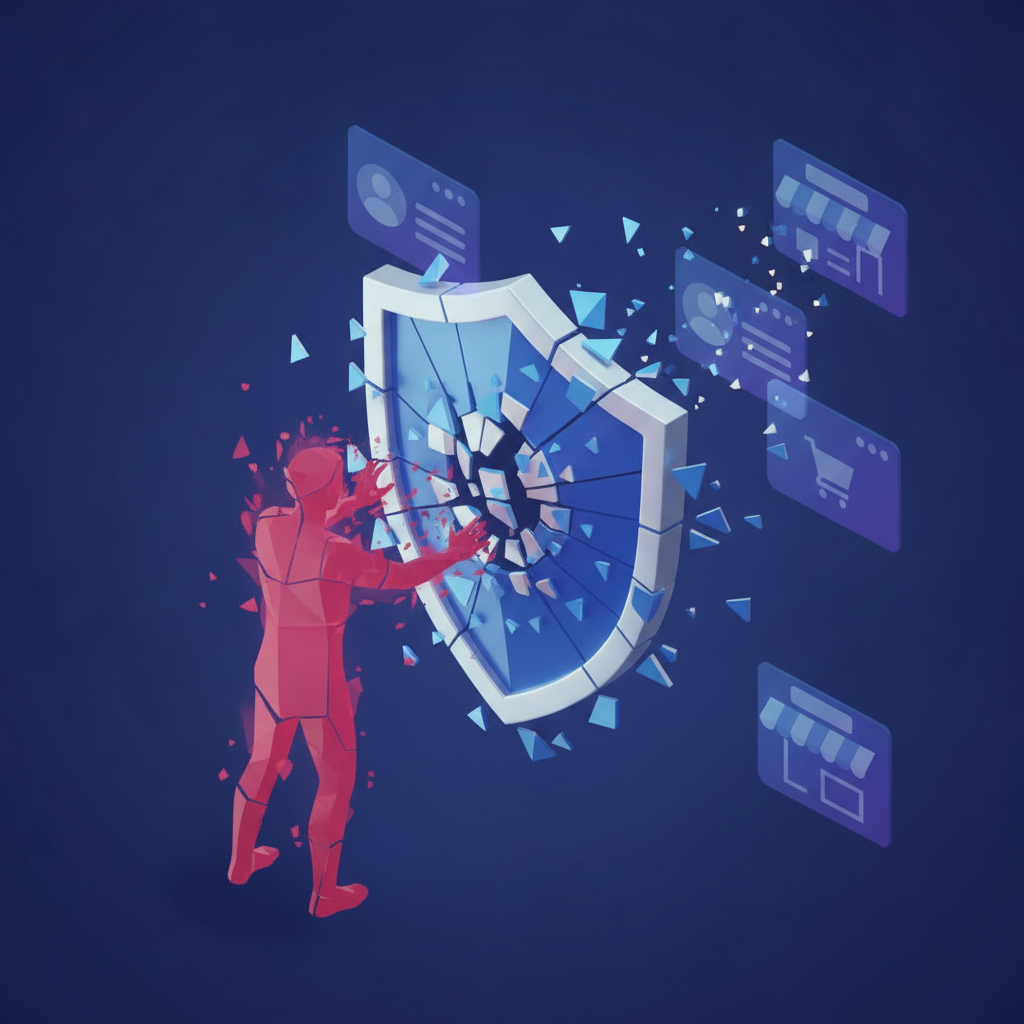
A critical risk for digital entrepreneurs is “reverse infringement,” where a bad-faith actor monitors your progress, registers your brand elements as their own, and subsequently uses that registration to issue takedown notices against you. Under the EUIPO guidelines, having a registered trademark allows the rights holder to utilize automated enforcement tools on major platforms, effectively turning the legal system against the original creator if they lack a prior registered claim.
“I have seen creators lose their entire digital footprint because they ignored the paperwork. A cease-and-desist letter from a bad-faith registrant can force you into a defensive position where you must prove your prior usage, a process that is significantly more expensive and uncertain than securing Trademark registration in the EU proactively.” — Anton Polikarpov
Risk Assessment: Why Prioritization Matters
- Without Protection: You rely on “unregistered rights,” which require proving extensive continuous use and public recognition in specific EU member states to challenge a third party.
- With Protection: You hold a presumption of ownership. You can flag unauthorized listings in the Amazon Brand Registry or Meta’s Rights Manager without needing to prove your creative history from scratch.
- The “Bad-Faith” Trap: Copycats often target names that are active but unregistered. They leverage the 3-month opposition window and initial application processing to claim rights before you do.
While copyright protects your original work, enforcement in a decentralized digital market is challenging because it lacks a formal, centralized registry system. Proactive trademark filing creates a clear, portable, and legally recognized asset that serves as your primary shield when selling digital products in accordance with EU copyright regulations. Always verify your brand’s availability via search tools like TMview before committing to a commercial rollout.
Liability for Digital Third-Party Assets
Beyond the risks of copycat retaliation, digital entrepreneurs often face invisible legal traps within their own creative workflow. Many creators assume that purchasing a font or a stock illustration provides total freedom of use, but EU copyright enforcement frequently focuses on the specific scope of these licenses. If your digital product incorporates third-party elements without the precise commercial permissions required for resale or high-volume distribution, you remain liable for infringement, regardless of whether you paid an initial fee.
Mismanaged licensing agreements can lead to devastating financial consequences, especially when a digital product scales rapidly across different EU jurisdictions. The complexity of these rules often catches freelancers off guard when they realize that a “personal use” or “standard” license does not cover the right to bundle an asset into a product for sale.
- Inadequate Font Licensing: Using a font in a static logo is vastly different from embedding that same font file into a web application or an editable template, which often requires a more expensive developer license.
- Restrictive Stock Terms: Many stock platforms prohibit using their elements as a primary component of a product intended for resale, such as digital planners or art prints, without an “Extended License.”
- Chain of Title Gaps: When a product changes hands or a business is sold, the lack of documented proof that every third-party asset was properly licensed can devalue the entire brand or trigger audits.
- Territorial Licensing Limitations: Some licenses are restricted by geography; using an asset licensed only for a specific market when selling across the entire EU can violate the terms of the original creator.
While managing these assets requires diligence, the most robust way to secure your commercial future is to transition from defending individual elements to owning the overarching brand identity through formal registration.
Strategic Trademarking to Secure Sales
Transitioning from basic creative rights to professional brand protection is essential for growth. We will now examine why formal registration serves as the ultimate shield for digital businesses and the roadmap for securing these rights.
Why Trademarks Trump Copyrights Online
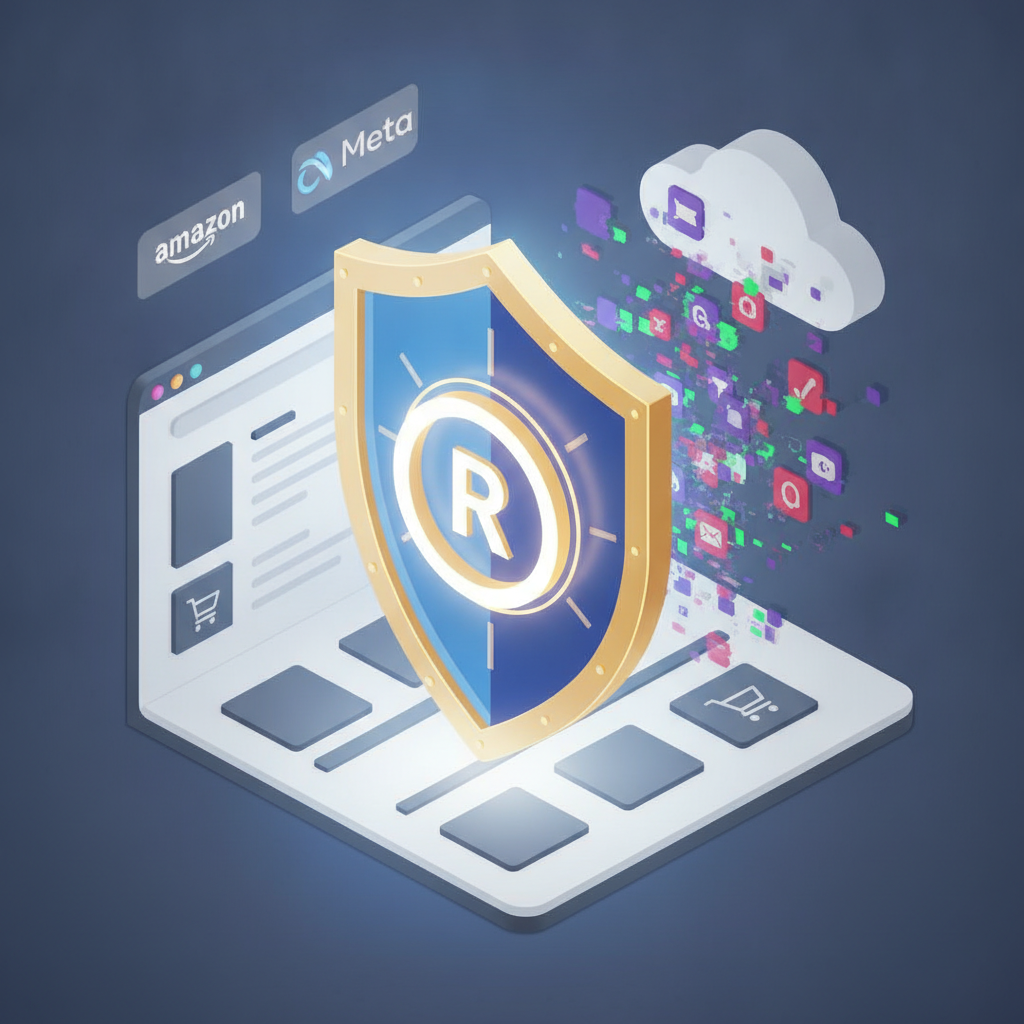
While copyright protects your creative output, trademarks are the essential tool for protecting your brand identity. Unlike copyright, which is inherent but reactive, a registered trademark provides a verifiable, proactive right that major platforms like Amazon, Meta, and Etsy prioritize for rapid enforcement.
The primary advantage of a trademark lies in its administrative clarity. A trademark registration provides a public, searchable right to an identity, allowing platforms to resolve disputes through automated systems rather than manual legal debates over authorship. This distinction is critical for digital sellers, as it allows for the use of specialized tools to remove infringing listings that threaten your store’s traffic and reputation.
| Enforcement Metric | Copyright-Based Claims | Trademark-Based Claims |
|---|---|---|
| Platform Recognition | Requires manual review and evidence of authorship. | Instant recognition via registration numbers (e.g., Amazon Brand Registry). |
| Average Takedown Speed | Days or weeks; often requires back-and-forth communication. | Hours or days; often automated through dedicated IP portals. |
| Proof Required | Extensive paper trail, creation logs, and drafts. | A single certificate of registration from the EUIPO. |
| Global Reach | Subject to varying national interpretations of “originality.” | Uniform protection across all 27 EU member states. |
Understanding these distinct advantages is the first step toward building a resilient business model. Once you recognize the need for this level of protection, the next priority is mastering the official path to registration to ensure your application is successful from the start.
The EU Trademark Registration Roadmap
Securing a trademark provides distinct legal tools for brand enforcement that complement, rather than replace, copyright protection. While copyright automatically protects the original creative expression of your digital assets, a registered trademark safeguards the commercial identity of your brand, granting you exclusive rights to your name, logo, or slogan across the 27 member states of the European Union.
The process of obtaining protection through the European Union Intellectual Property Office (EUIPO) is designed for efficiency, offering a single application that covers the entire territory of the Union. For an entrepreneur, this serves as a proactive defense system recognized by major online platforms to protect your brand’s reputation. The journey from application to registration follows a structured path:
- Clearance Search and Classification: Before filing, you must use tools like TMview or eSearch plus to ensure your brand name or logo doesn’t conflict with existing rights. You will also need to select the correct categories of goods and services using the Nice Classification system, ensuring your digital products are accurately represented.
- Examination and Publication: Once the application is submitted, the EUIPO examines it for absolute grounds for refusal (e.g., if the name is too descriptive). If cleared, the trademark is published in the EU Trade Marks Bulletin, triggering a three-month opposition period where owners of earlier marks can raise objections.
- Registration and Maintenance: If no oppositions are filed or if they are successfully resolved, the mark is registered. This grant provides you with a renewable 10-year term of protection, making it significantly easier to join programs like the Amazon Brand Registry or use Meta’s automated takedown tools.
This roadmap ensures that your brand identity remains exclusive, preventing others from capitalizing on the reputation you have built. Transitioning to this level of legal certainty shifts your status from a vulnerable creator to a protected business owner, ready to handle the complexities of a competitive landscape.
For help with this task, use the Trademark registration in the EU service.
From Vulnerable Creator to Protected Brand
Securing your creative output requires transitioning from a reactive stance to a proactive legal strategy that addresses the specific hurdles of selling digital products in EU copyright rules. By shifting focus toward registered protections, you gain the necessary enforcement leverage to handle copycats and secure your market position against bad-faith actors. To ensure your assets are fully immunized, I recommend reviewing our guide on protecting digital designs from social media infringement. Our team is ready to provide a comprehensive legal assessment of your portfolio to determine the most efficient path toward long-term brand security. In our upcoming analysis, we will explore the evolving legal frontier of AI-generated authorship and how it impacts digital ownership across the European Union.
Frequently Asked Questions
Can I use the copyright symbol (©) on my digital products without registering them?
Yes, in the European Union, copyright protection is automatic upon the creation of an original work. You do not need to register your digital art or designs with a government body to claim copyright; the moment your work is fixed in a tangible (or digital) medium, it is protected under the Berne Convention.
However, while the © symbol serves as a useful notice to potential infringers that you are asserting your rights, it is not a substitute for legal registration in the context of brand protection. While copyright protects the expression of your work, it does not protect the brand identity behind it. For that, you should look into Trademark registration in the EU to secure the names, logos, and slogans associated with your digital business.
Does owning a copyright in the EU prevent others from selling similar-looking digital products?
Copyright law only protects the specific expression of your work—not the underlying idea, style, or genre. If a competitor creates a similar product independently, without copying your specific files, code, or visual elements, they are generally not infringing on your copyright.
This is where creators often find copyright insufficient for long-term business security. If your brand relies on a distinct aesthetic or specific product line, copyright will not stop competitors from selling similar items. Trademark registration, by contrast, prevents competitors from using confusingly similar brand names or logos, effectively securing your market position in a way that mere copyright cannot.
How do EU courts determine if a digital product is ‘original’ enough for protection?
The Court of Justice of the European Union (CJEU) applies the standard of the author’s own intellectual creation. To qualify for copyright protection, your digital product must reflect your personality, which is demonstrated by making free and creative choices during the production process.
If a work is entirely dictated by technical considerations, rules, or constraints (such as simple database structures or standardized file formats), it may fail to meet the threshold of originality required for copyright. This is a critical distinction for creators: functional or purely technical elements are often ineligible for copyright, whereas a unique digital illustration or a custom font clearly meets the criteria. Always consult with a legal professional to evaluate the copyrightability of your specific commercial assets.
What happens if I inadvertently use a ‘royalty-free’ asset that turns out to have a restrictive license?
Using a asset labeled as ‘royalty-free’ does not automatically grant you the right to use it in commercial digital products. Many ‘free’ licenses are restricted to personal use or include clauses that prohibit the resale of the asset as part of a digital template, software, or design bundle.
Failure to comply with these terms can lead to legal action from the original rights holder, regardless of your intent. To mitigate this risk, you should:
- Maintain a centralized log of all licenses for fonts, stock photography, and plug-ins used in your products.
- Prioritize commercial-use-specific licenses that explicitly allow for digital redistribution.
- Audit your assets regularly to ensure that you possess the documentation required to prove your right to use third-party elements in your commercial projects.
Why is it difficult to enforce copyright on international marketplaces compared to trademarks?
Enforcing copyright across different jurisdictions is notoriously complex and resource-intensive, often requiring individual takedown requests for each platform (e.g., Etsy, Amazon, Instagram) and sometimes even local court orders in the country where the infringer is based.
Trademarks offer a superior enforcement mechanism. Because a registered trademark is a public, verifiable government record, major marketplaces maintain Brand Registry programs. These programs allow rights holders to initiate automated takedowns of infringing listings much faster than the manual, often ambiguous, process required for copyright disputes. By pursuing Trademark registration in the EU, you gain access to these streamlined enforcement tools, effectively shifting the burden from you to the platform to prove why a listing should stay up.