Navigating the Freelance Creative Legal Landscape
Freelance creatives in Europe often struggle to balance artistic production with the legal vulnerabilities of a digital marketplace where ideas are easily exploited. This guide provides a strategic roadmap for navigating eu copyright laws for freelance creators, transforming automatic rights into professional brand protection.
Understanding Logo Ownership and Brand Rights
Securing your work involves more than just a timestamp; it requires distinguishing between the artistic expressions you create and the commercial identifiers used to market them. This section introduces the core differences between automatic authorship and registered protection, while explaining how specific contract terms can inadvertently strip a creator of their valuable intellectual assets. Understanding these foundations is essential before exploring the technical nuances of how to copyright digital art in Europe or manage multi-layered brand rights.
Copyright vs Trademark Distinctions Explained

In the European legal framework, many creators mistakenly assume that ownership of a design’s copyright automatically grants exclusive rights to use that design as a commercial brand. While copyright arises automatically upon creation to protect the specific artistic expression, it does not inherently prevent competitors from using similar names or concepts in trade. For freelance designers and illustrators, navigating copyright laws applicable to freelance creators is vital: your copyright protects against unauthorized copying of your work, but it does not stop a competitor from using a similar logo for their business without a registered trademark. Furthermore, unlike the US “work for hire” doctrine, the transfer of economic rights in the EU varies significantly by jurisdiction—such as between Germany, France, or Ireland—requiring specific contractual clarity for each engagement.
Failure to register a brand identifier often leads to significant revenue loss when copycats emerge. Without a registered trademark, removing infringing accounts or unofficial shops is notoriously difficult, as platform administrators typically require proof of registration. By integrating trademark registration in the EU into your business strategy, you move from a defensive posture to an active commercial one, allowing you to license your brand and take down imitators with legal certainty. This dual-protection strategy ensures that both your artistic vision and your commercial reputation remain under your control.
| Feature | Copyright Protection | EU Trademark Rights |
|---|---|---|
| Acquisition | Automatic upon creation. | Requires formal registration (EUIPO). |
| Primary Focus | Author-centric; artistic expression. | Brand-centric; commercial identity. |
| Enforcement | Harder to prove without certificates. | High; supported by official databases. |
| Monetization | Selling usage licenses for specific works. | Building and selling a brand or franchise. |
Note: While economic rights can be transferred via contract, moral rights remain tethered to the creator under EU law. For a deeper dive into these nuances, see our analysis on whether I own the copyright to my logo or just the brand rights?
Understanding these definitions is only half the battle; the real risk often lies in the fine print of the agreements you sign with your clients.
Related topic reference: Do I own the copyright to my logo or just the brand rights?.
Contractual Clauses That Kill Ownership
While understanding the formal boundaries between trademarks and copyright is essential, the real-world erosion of a creator’s rights usually happens in the fine print of a service agreement. Many freelancers sign contracts assuming that standard industry terms protect them, only to discover they have inadvertently signed away their entire portfolio’s future utility.
In the European legal space, the concept of “Work for Hire” does not operate with the same automaticity as in the US. However, sophisticated clients often insert specific language into contracts that bypasses protections afforded by copyright laws applicable to freelance creators. Because the transfer of economic rights is governed by varying national regulations across EU member states—ranging from strict author-protective laws in countries like France and Germany to more flexible frameworks elsewhere—you must be vigilant for “Red Flag” clauses that effectively strip you of your intellectual assets without fair compensation or future leverage.
- “All-Encompassing Transfer”: Avoid phrases like “exclusive, perpetual, and irrevocable transfer of all rights now known or hereafter existing.” This language often attempts to seize rights for technologies that haven’t been invented yet, leaving you unable to control your work in new digital formats.
- “Total Waiver of Moral Rights”: Since moral rights are deeply personal in Europe, a clause demanding you “waive all moral rights to the fullest extent permitted by law” is a direct attempt to stop you from claiming authorship or preventing the mutilation of your designs.
- “Buy-out without Residuals”: Be wary of contracts that offer a one-time fee for the delivery of digital assets while simultaneously claiming ownership of all preliminary sketches and discarded concepts. The EU Digital Single Market Directive emphasizes fair remuneration; you should focus on transferring rights only to the final delivered asset, ensuring you retain the rights to your underlying creative process.
- “Non-Compete in Perpetuity”: Some clauses prevent you from working for any competitor in the same industry. For a specialist creator, this can be a career-killing restriction that extends far beyond the scope of a single logo or campaign.
Identifying these traps early allows you to negotiate for limited licenses rather than total assignments. Safeguarding your creative autonomy ensures you retain the power to repurpose your underlying techniques and styles for future clients across the Union.
Related topic reference: how to copyright digital art in europe.
Managing Economic and Moral Rights
Professional creators must look beyond basic ownership to master the dual system of economic exploitation and moral protection. This framework covers the non-transferable nature of European moral rights and strategies for fair assignments.
The Nature of European Moral Rights

European intellectual property logic is rooted in the droit d’auteur tradition, which treats a creative work as an extension of the author’s personality. Under the Berne Convention, economic rights—the power to monetize—are distinct from the author’s personal rights. The EU Digital Single Market Directive further clarifies the remuneration of authors by ensuring they receive appropriate and proportionate compensation, reinforcing the importance of clear contractual terms for freelancers operating across the bloc.
As IP attorney Anton Polikarpov notes: “Moral rights are the eternal bond between the creator and their work; they are the legal soul of the asset that remains with the author long after the check has cleared.”
For freelance creators, this legal reality serves as a powerful negotiation tool. Rather than attempting a total, potentially unenforceable waiver of moral rights, freelancers can negotiate a “consent not to enforce” agreement. This structure grants the client the commercial flexibility they need while keeping the creator’s legal link to the work intact.
| Right Type | Scope of Transfer | Freelancer Action |
|---|---|---|
| Economic | Fully transferable | Define scope (usage, duration, territory). |
| Moral | Protected | Grant “consent not to enforce” for specific commercial uses. |
Pro Tip: If a client demands total control, consider securing your professional brand identity through formal registration (such as an EU trademark via the EUIPO), which offers a distinct layer of protection that copyright alone does not cover.
Note: Enforceability of moral rights waivers varies significantly across EU member states; always consult local legislation when drafting binding agreements.
Structuring Fair Rights Assignments
While moral rights provide a defensive shield for your reputation, economic rights are the engine of your freelance business. Simply relying on the default protections of European copyright laws for creative professionals is rarely enough when high-value commercial assets are involved. To avoid a total surrender of your work, you must structure assignments that define exactly what the client is buying—and what stays in your portfolio.
- Define the Scope of Use: Specify whether the rights are for a single campaign, a specific geographic region, or a limited timeframe. Avoid “all media now known or hereafter devised” unless the compensation reflects that level of access.
- Retain Rights to Source Files: Explicitly state that you provide the final asset (e.g., a flattened .PNG or a high-res .PDF) while retaining ownership of preliminary sketches, layers, and project files unless a separate buyout fee is paid.
- Limit Transfer to the Final Deliverable: Ensure the assignment only triggers upon full payment. This prevents a client from using your concepts or draft versions if the project is cancelled mid-way.
- Address Sublicensing: Clarify if the client has the right to resell your work to third parties. Restricting sublicensing ensures you remain the primary contact for future adaptations.
- Portfolio Rights Reservation: Always include a clause that allows you to display the work in your professional portfolio and on social media, even if the economic rights have been transferred.
By treating the assignment as a granular exchange rather than a blanket giveaway, you maintain the leverage needed to monetize your skills across multiple projects. This strategic approach to contracts ensures that selling digital products under EU rules remains a sustainable business model rather than a one-time liquidation of your intellectual property. Proper contractual hygiene is the first step toward transforming individual creations into a scalable commercial brand.
Related topic reference: Essential selling digital products in EU copyright rules.
Scaling Protection Through Trademark Registration
Systematic registration simplifies the management of creative assets by converting individual copyrights into a unified corporate identity. This section outlines how formalizing your brand identity through EU trademark law provides a definitive legal foundation for long-term commercial growth.
Why EU-Wide Registration Matters Now
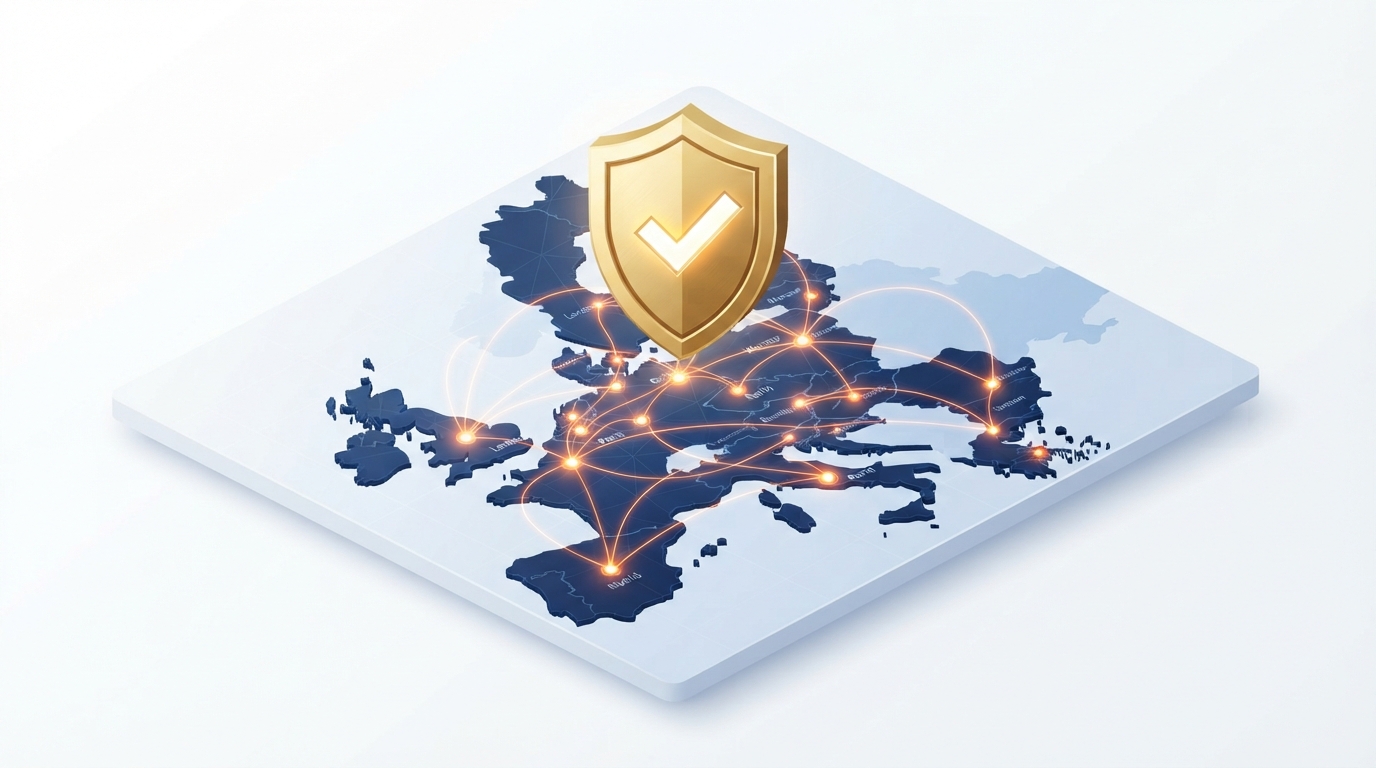
Scaling protection through trademark registration marks a shift from shielding individual creative assets to guarding your entire professional brand identity. While copyright protects the expression of your work, a registered trademark is essential to prevent others from using your brand name or logo to sell similar services across the EU. For a creator operating in the digital single market, relying on fragmented national protections is a strategic vulnerability; as noted by the European Union Intellectual Property Office (EUIPO), a unified registration is the most effective way to establish definitive legal priority across all 27 member states.
Operational Risk: The Fragmentation Trap
Consider a graphic designer based in Poland who registered their brand name only locally. When a competitor in Germany began using an identical name to target the same client base, the designer discovered that their Polish trademark offered no enforcement powers across the border. Without a centralized EUTM, the designer faced the prospect of navigating distinct legal systems in multiple jurisdictions to prove brand reputation—an expensive and time-consuming alternative to unified protection. Taking the step to secure your portfolio through the EUIPO simplifies this process into a single administrative procedure.
For modern freelancers, a registered trademark serves as a primary tool for content moderation and intellectual property enforcement on social media platforms. Platforms often require proof of registered rights to process takedown requests effectively against infringing accounts.
Timeline of the Registration Process
Securing protection across all 27 Member States converts a creator’s brand into a legally recognized asset, providing a defensive perimeter against unauthorized use. Understanding the operational workflow of the European Union Intellectual Property Office (EUIPO) allows you to synchronize brand expansion with realistic expectations for legal reviews and potential oppositions. The process follows a standardized cycle:
- Classification and Submission: You must categorize your services or goods using the Nice Classification system. Proper selection is critical, as it defines the scope of your legal monopoly.
- Examination: EUIPO examiners review the application for technical compliance and ensure the mark satisfies “absolute grounds” for registration, such as distinctiveness.
- Publication: The application is published in the EU Trade Marks Bulletin, initiating a three-month window during which third parties may challenge the registration.
- Opposition Phase: If an existing brand owner believes your mark causes confusion with their prior rights, they may file an opposition, leading to a cooling-off period for potential settlement.
- Registration: Provided no successful objections are filed, the office issues a certificate of registration, granting you exclusive rights to the mark across the bloc.
Navigating these regulatory milestones is essential for freelancers moving from informal creative work to professional brand management. This administrative certainty acts as the foundation for enforcing your rights in a digital marketplace, ensuring your business identity remains protected as it scales.
For help with this task, use the Trademark registration in the EU service.
From Freelance Creator to Protected Brand
Transitioning from a freelance creator to a commercially viable brand requires moving beyond the automatic protections provided by eu copyright laws for freelance creators to a more proactive legal strategy. While your creative expression is secured at the moment of creation, long-term business scaling depends on distinguishing your intellectual property from your brand identity and ensuring that economic transfers are handled through airtight contracts rather than informal handshakes. Failing to formally register your trademark in the EU often results in the loss of enforceable assets, making it impossible to stop copycats or secure high-value collaborations. Audit your current contracts and secure your professional future today by consulting with a specialist to ensure your work remains your most valuable asset.
Frequently Asked Questions
Can I copyright AI-generated images under current EU law?
Under current European Union intellectual property law, copyright protection is granted only to works that are considered original creations of the author. This requires the work to reflect the author’s own intellectual creation and personal touch.
As of now, the following distinctions apply:
- Human Authorship: AI-generated content produced solely by an algorithm without significant human creative input generally does not qualify for copyright protection.
- Human-Assisted Creation: If a human creator uses AI as a tool—similar to a brush or software—and exercises creative control, selects the output, and makes significant modifications that reflect their unique artistic choices, that specific resulting work may be eligible for copyright.
It is important to note that the EU position continues to evolve. For now, you cannot simply copyright raw AI outputs. If you are building a commercial brand based on AI-assisted assets, focusing on Trademark registration in the EU is a more reliable way to protect your brand identity, as a trademark protects the commercial source of your work rather than the aesthetic expression itself.
What happens if I don’t register my logo as a trademark?
If you rely solely on copyright for your logo, you are leaving your business vulnerable. Copyright protects the artistic expression of the logo, but it does not protect your commercial rights to use that logo to sell products or services in a specific market.
Without a registered trademark:
- Lack of Exclusivity: You cannot easily stop competitors from using a similar logo in your industry, as you would have to prove ‘copying’ rather than simply proving ‘likelihood of confusion.’
- Geographic Limitations: Copyright protection is fragmented across different EU member states. If you expand your business into a new country, a competitor might register a trademark that is confusingly similar to your logo, effectively blocking your entry into that market.
- Asset Valuation: Registered trademarks are formal legal assets that increase the valuation of your business. Copyright is much harder to audit or transfer during a business sale or investment process.
How does the Nice Classification system affect my registration strategy?
The Nice Classification is an international system used to classify goods and services for the purposes of trademark registration. When you apply for an EU trademark, you must specify exactly which classes your business falls under.
This is critical for two reasons:
- Scope of Protection: Your trademark only provides protection in the classes you register for. If you register your logo for ‘clothing’ (Class 25) but do not include ‘retail services’ (Class 35), you might not be able to stop others from using a similar mark in the retail sector.
- Strategic Filing: Over-filing can be expensive and may lead to ‘non-use’ challenges, while under-filing leaves gaps in your protection. Expert guidance is essential here to ensure your Trademark registration in the EU is broad enough to cover your current and future business activities without incurring unnecessary filing fees.
Are ‘Work for Hire’ contracts valid in European countries?
The short answer is: No, the US-style ‘work for hire’ doctrine does not exist in the same way within European legal systems. In the EU, copyright is fundamentally tied to the individual creator.
When working with clients in Europe, you must be aware that:
- Inalienable Moral Rights: Even if you sign a contract that claims to transfer ‘all rights,’ your moral rights (the right to be identified as the author and the right to object to derogatory treatment) often remain with you as the creator.
- Explicit Transfer Requirements: Economic rights (the right to sell or reproduce the work) must be explicitly transferred through a written agreement that clearly defines the scope, duration, and geography of the usage.
- Country Nuances: Countries like France and Germany have particularly strict regulations protecting authors, meaning ‘sweeping’ assignment clauses in contracts are often unenforceable or interpreted very narrowly by courts.
How long does a trademark registration in the EU last?
An EU trademark (EUTM) registration is valid for an initial period of 10 years from the date of filing. The great advantage for business owners is that it can be renewed indefinitely for further 10-year periods, provided that the renewal fees are paid on time.
This provides permanent protection for your brand identity, unlike copyright, which eventually expires (usually 70 years after the death of the author). Because trademark registration is essentially a perpetual asset, it serves as the foundation for long-term business security. For freelancers transitioning into brand owners, securing this registration is the single most effective way to ensure your brand remains your own as you scale across the 27 EU member states.