Protecting Your Clothing Brand in the EU
The European fashion market is intensely competitive, where a lack of formal protection leaves your brand vulnerable to copycats and unauthorized listings. Establishing a solid legal foundation now is the most effective way to protect my clothing brand name in eu and secure your long-term retail success.
Why Trademark Class 25 Matters
Securing exclusive rights to your apparel brand requires a strategic focus on the Nizza classification system, which serves as the backbone for your IP portfolio. Understanding how to navigate these categories is the next step before we examine the specifics of Class 25 scope and potential branding pitfalls.
Defining Nizza Class 25 Scope
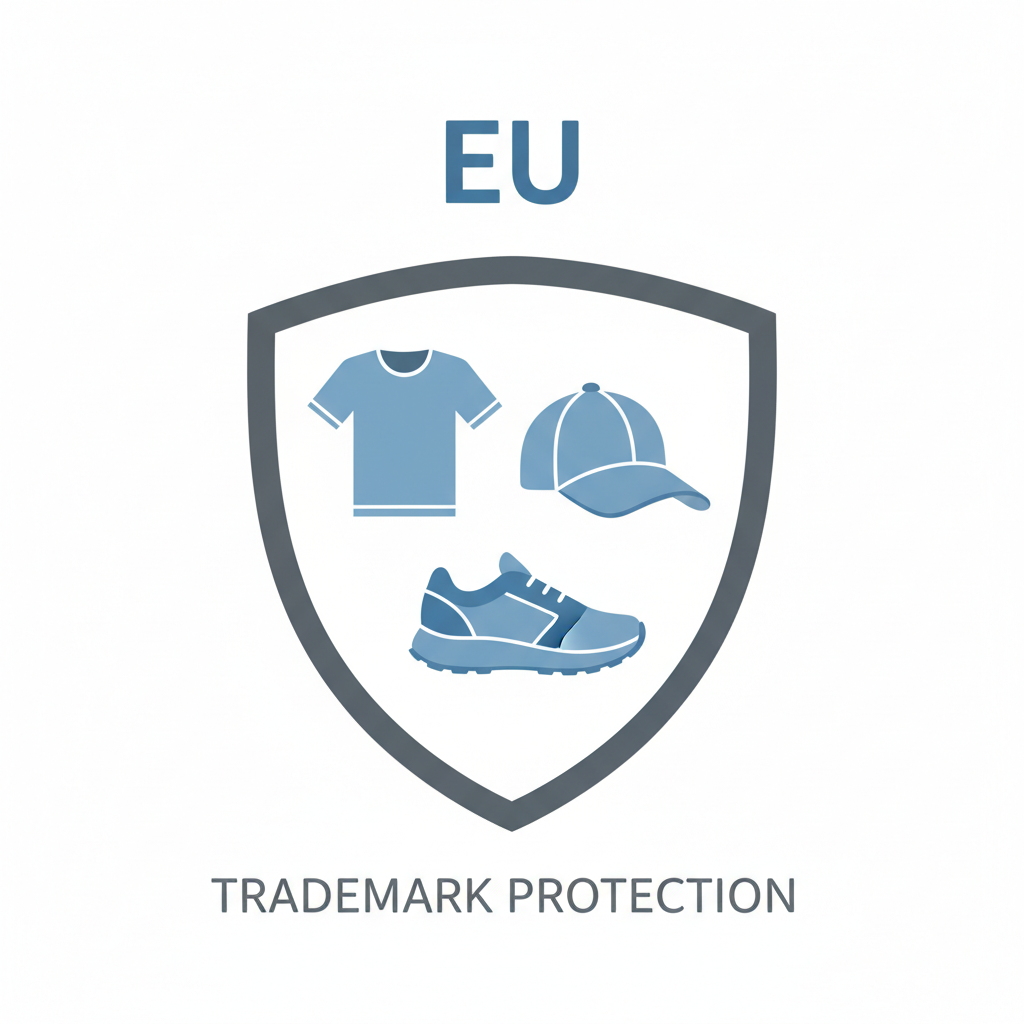
Defining your scope through the Nice classification is critical for your EU brand. Class 25 is specifically designed to cover the fundamental categories of apparel, providing the primary protection for your goods against unauthorized usage.
Specifically, this class encompasses:
- Clothing: Ready-to-wear items, sportswear, and undergarments.
- Footwear: Shoes, boots, sandals, and slippers.
- Headgear: Hats, caps, and beanies.
Failing to accurately define your product list can leave significant gaps in your protection, often requiring professional trademark registration support to ensure every item in your collection is accounted for under your filing. A precise description acts as a shield when you need to enforce your rights against marketplace imitators or copycats.
Common Pitfalls in Apparel Branding
Defining Nizza Class 25 as the fundamental legal classification for your apparel is only the first step. To effectively secure your brand identity across the European Union, you must navigate the nuances of trademark law, as the most common pitfalls often stem from a misunderstanding of what is legally registrable versus what is merely descriptive.
Danger Checklist: Common Branding Pitfalls
- Choosing descriptive names: Selecting a brand name that merely describes your product (e.g., “Soft Cotton Tees”) often leads to rejection under Article 7(1)(c) of the EU Trademark Regulation, which prohibits the registration of marks that lack distinctiveness.
- Ignoring prior art: Proceeding without a thorough clearance search risks infringing on existing rights. This can lead to costly opposition proceedings or forced rebranding after you have already invested in inventory and marketing.
- Over-broad filing: Failing to clearly specify your goods within Class 25—such as listing broad categories like “clothing” without identifying specific items—can make your mark more vulnerable to non-use revocation actions by third parties.
In our practice, we have observed that many promising labels falter by viewing trademark registration as a generic administrative box to check. A legally defensible brand relies on inherent distinctiveness; if your name is simply a synonym for the item you sell, you are building your business on shifting sand.
Avoiding these traps requires a shift from viewing your label as a simple product to treating it as a unique asset that requires deliberate clearance. By prioritizing trademark registration in the EU, you create the structural support needed to defend your IP.
Performing a Robust Availability Search
Having established the legal boundaries for your textile and apparel identity, we must now confirm that your chosen name is truly available to register as a trademark for ecommerce in Europe. This stage moves beyond general filing requirements into the tactical execution of detailed, expert-led clearance to identify potential conflicts and protect your brand’s future viability.
Search Tools vs Expert Due Diligence

The search phase is where many business owners underestimate the complexity of European intellectual property. While digital databases provide a starting point, relying solely on DIY tools can lead to significant oversight, especially when navigating the phonetic and conceptual similarities that often trigger refusal at the EUIPO.
| Search Methodology | Risk Assessment | Capability |
|---|---|---|
| DIY Database Search (e.g., TMview) | High – Misses phonetic variations | Identifies identical names only |
| Expert Due Diligence | Low – Covers linguistic and phonetic nuance | Detects conflicting concepts and market presence |
Professional due diligence accounts for the fact that a name does not need to be spelled exactly the same to be considered confusingly similar. Software is literal, but European examiners are comprehensive; they assess how consumers perceive names in different member states, where similar sounds or meanings can create insurmountable barriers to entry. By utilizing expert-led clearance, you move beyond simple matches and uncover potential hurdles related to reputation and existing market footprint before you commit to the filing process. This analytical rigour is the only reliable way to anticipate how to proceed when handling similar existing trademarks effectively.
Handling Similar Existing Trademarks
When our due diligence reveals a potential conflict with an existing sign, you are effectively standing at a crossroads. Before assuming the worst, it is essential to distinguish between a fatal legal obstacle and a negotiable market presence. The likelihood of confusion is the core metric used by the EUIPO; it assesses whether the public might believe that your goods and those of the earlier mark originate from the same source, based on visual, phonetic, and conceptual similarities.
If you encounter a conflicting trademark, you generally face two primary tactical paths:
- Co-existence Agreements: If the goods or target audiences are sufficiently distinct—even within Class 25—you may negotiate a private contract where both parties consent to use their respective marks. This requires precise legal drafting to ensure your future expansion plans remain unrestricted.
- Strategic Rebranding: If the conflict is direct and the earlier mark is strong, attempting to register will likely result in a costly opposition or refusal. In such cases, pivoting to a legally available name early in your development cycle is the most efficient use of resources, preventing expensive disputes after you have already invested in marketing.
By assessing these options early, you secure a more stable foundation, ensuring your path to ownership is not blocked by preventable hurdles.
Related topic reference: Protecting amazon fba brand in europe.
Navigating the EUIPO Registration Process
With your brand name vetted and potential conflicts addressed, you are prepared to secure legal ownership through the official EUIPO registration process. We will now outline the necessary administrative milestones and how to manage the mandatory opposition window that follows your application.
The Step-by-Step Filing Roadmap
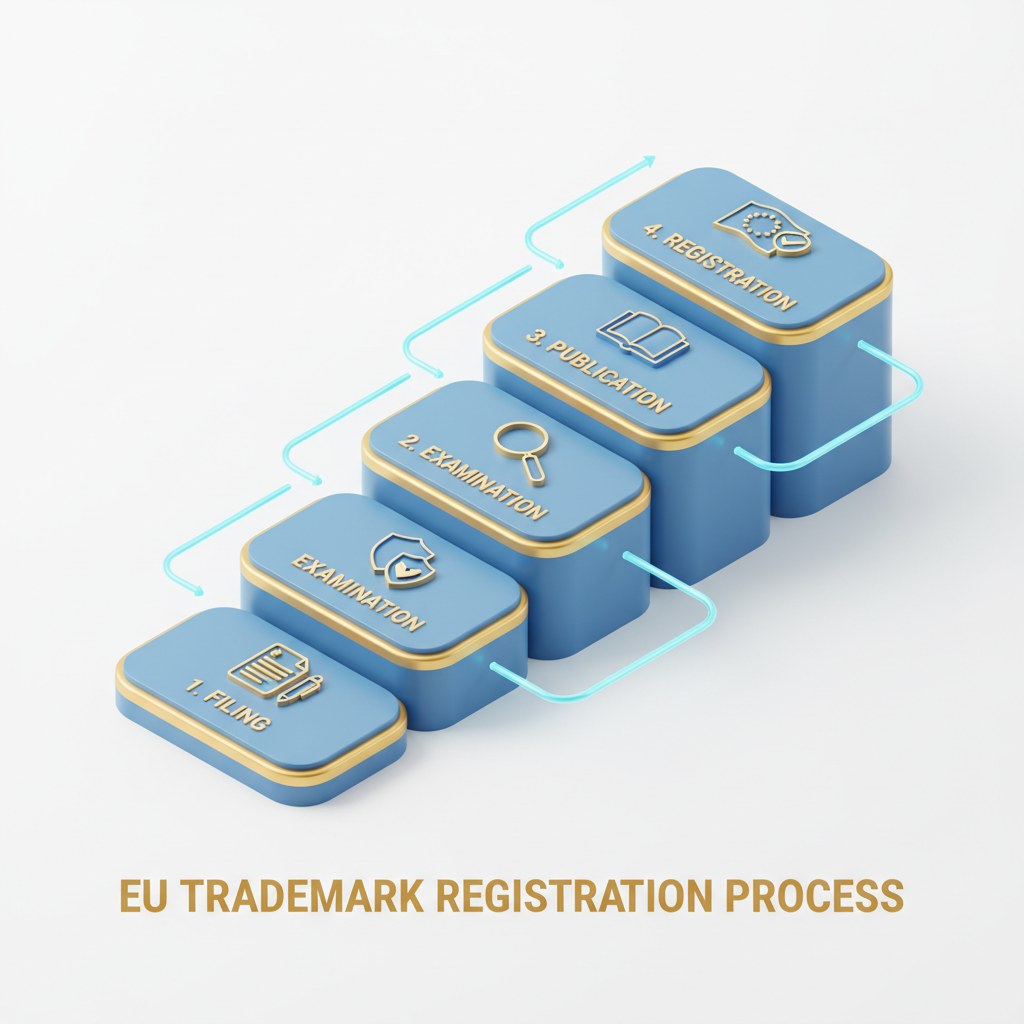
The registration process is a structured sequence designed to transform your brand from a commercial idea into an enforceable asset. To successfully navigate this, you must follow the formal stages required by the EUIPO, ensuring that your application is crafted to withstand scrutiny.
- Filing: The application is submitted, and the EUIPO conducts a formal examination to ensure all classifications and formalities are met.
- Examination: Officials verify that your mark complies with absolute grounds for refusal, such as inherent distinctiveness.
- Opposition Period: Once published, the application enters a three-month window where third parties may file an opposition based on prior rights.
- Registration: If no successful challenges arise, your trademark is officially registered and protected across all 27 EU Member States.
Engaging professional expertise throughout these stages allows you to register a trademark for ecommerce in Europe with confidence, as we ensure that every form is prepared to minimize the risk of formal objections.
Handling Potential Opposition Procedures
To illustrate the importance of early intervention, consider a common scenario: a brand owner proceeds with heavy investment in inventory and marketing under a chosen name, only to face an unexpected opposition from a competitor. Had they conducted a comprehensive pre-filing conflict search, they could have identified the risk and pivoted their identity or adjusted their filing strategy in advance. This avoids the scenario where a brand becomes ‘dead-on-arrival’ due to an unaddressed legal dispute.
If an opposition is filed, the EUIPO may grant a ‘cooling-off’ period—a window intended to facilitate out-of-court settlements, such as co-existence agreements that delineate the scope of each party’s usage. The following table outlines the key stages of managing such disputes:
| Stage | Objective |
|---|---|
| Notification | Assess the validity of the challenger’s claims (often citing EU Regulation 2017/1001). |
| Cooling-off | Negotiate terms or co-existence to avoid costly proceedings. |
| Proceedings | Submission of evidence and legal arguments if negotiation fails. |
For help with this task, use the Trademark registration in the EU service.
Securing Your Clothing Brand’s Future
Viewing your intellectual property as a strategic business asset rather than a sunk cost is the fundamental shift required to scale successfully in the European market. Proactive registration transforms your brand from a vulnerable target into an enforceable asset, allowing you to secure your long-term expansion while managing the complexities of the 27-country market. For a comprehensive approach to the fiscal and operational strategy of your business, I recommend you review our guide on how to register a trademark for ecommerce in Europe to ensure your backend infrastructure is as protected as your storefront.
Once your core identity is secure, the next logical evolution in your growth strategy involves licensing your brand to a distributor in Europe, a move that leverages your registered rights to enter new markets with legal security and minimal overhead. If you are ready to fortify your position, consider our professional support for trademark registration in the EU to effectively protect your clothing brand name in EU jurisdictions and maintain a competitive edge.
Frequently Asked Questions
What is the difference between a registered community design and a trademark for my clothing brand?
While both are forms of intellectual property, they protect different aspects of your business. A trademark protects your brand identity—such as your logo, brand name, or slogan—which helps consumers identify the source of your clothing. In contrast, a registered community design protects the actual visual appearance, shape, or ornamentation of the clothing items themselves.
For a comprehensive legal strategy, many fashion brands utilize both: trademarks to prevent others from using a confusingly similar brand name, and design registrations to prevent competitors from copying the specific aesthetic or unique cut of their best-selling products.
Does my EU trademark protect me against sellers on Amazon FBA based outside of Europe?
A European Union Trade Mark (EUTM) provides you with exclusive rights across all 27 EU member states. If a seller is using your this machine to sell products on an amazon.de, amazon.fr, or other EU-based marketplace, your registration gives you the legal standing to file an intellectual property complaint via the Amazon Brand Registry.
Even if the seller is based outside the EU, the infringing activity occurs within the EU market, meaning you can enforce your rights through EU courts or by requesting that the platform removes the unauthorized listings. Professional trademark registration support is highly recommended to ensure your brand is correctly linked to your digital storefronts for seamless enforcement.
I am using a drop shipping model. Is it worth registering a trademark if I don’t manufacture the clothing?
Yes, trademark registration is arguably more critical for drop shipping businesses than for traditional retailers. Because drop shippers often sell products from various suppliers, their this equipment is the only asset that builds long-term customer trust and equity. Without a registered trademark, you are vulnerable to two major risks:
- Brandjacking: Competitors could register your the selected option first, essentially forcing you to cease operations or rebrand under legal pressure.
- Liability: If you sell goods under a brand you do not own, you lack the legal control required to defend your store if a third party claims your products infringe on their existing intellectual property.
What happens if I try to register a trademark that is already partially used by a small local shop in one EU country?
The EU operates on a ‘first-to-file’ basis, but prior use by a local entity can still pose a significant hurdle. Under EUIPO regulations, the holder of an earlier right—even a local, unregistered one—may have the grounds to file an opposition against your EU-wide application if that local right provides them with the power to prohibit the use of a subsequent trademark in that specific territory.
You may be able to resolve this through a co-existence agreement, where you and the local owner define the geographical or sectoral limits of your respective brand uses. However, engaging an attorney to perform a prior art search is the only way to identify these ‘hidden’ local conflicts before you invest in the full filing process.
Can I trademark a specific clothing design pattern or print?
Generally, a trademark is intended for brand identifiers like names, logos, or slogans. If your ‘design’ is a repeating pattern or a unique graphic print, it may be difficult to protect via trademark unless that pattern has acquired ‘distinctiveness’ in the eyes of the public (i.e., consumers immediately associate that pattern with your specific brand).
If your goal is to protect the creative output rather than the brand identity, you should explore Community Design protection. This is specifically designed for the fashion industry to cover the ‘get-up’ or look of a product, providing a more robust legal framework for prints, fabric patterns, and fashion silhouettes.