Beyond Copyright: Scaling Your Creator Identity
While understanding how to secure rights for your compositions is a vital first step, treating your creative output as a business entity requires moving from passive protection to active brand management. We will explore how to transition your artistic assets into a legally fortified professional portfolio.
Why Copyright Alone Is Insufficient
Relying solely on automatic protection leaves significant gaps in your commercial defense strategy. We will examine the functional differences between creative and commercial rights, as well as the risks of maintaining a vulnerable digital identity.
Copyright vs Trademark Fundamentals
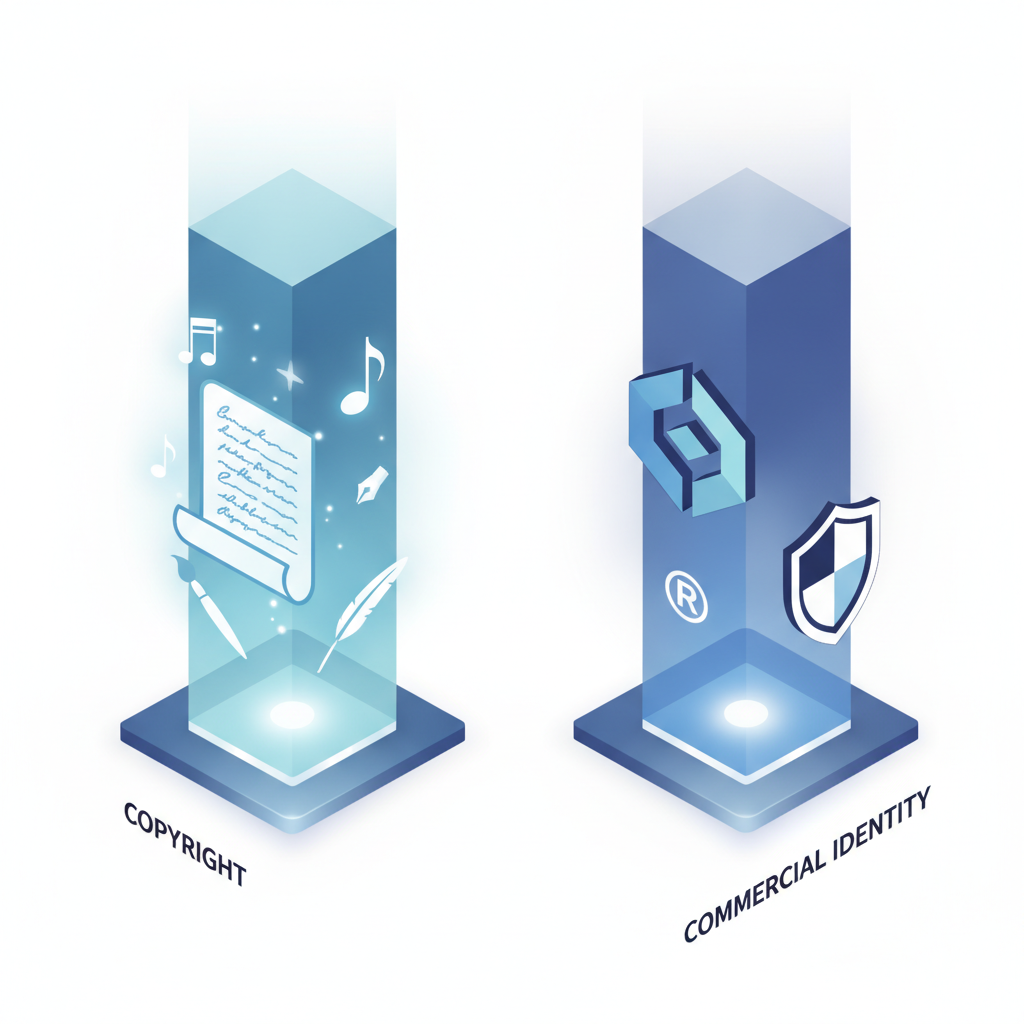
The distinction between a work of art and a commercial identity marks the transition from a hobby to a scalable business. Copyright automatically secures your creative output—such as a digital painting or a melody—while trademark law is required to protect the brand identifiers used to market those works, like your stage name or logo. Understanding this difference is essential for securing your market position and preventing brand impersonation.
| Feature | Copyright | Trademark |
|---|---|---|
| Object of Protection | Original creative works (art, music, text). | Commercial identifiers (names, logos, slogans). |
| Source of Rights | Automatic upon creation of the work. | Formal registration with an office like the EUIPO. |
| Business Utility | Prevents direct copying of the asset. | Prevents market confusion and identity theft. |
Integrating these protections transforms your creative output into a structured asset, facilitating secure long-term collaborations and professional growth.
The Trap of Creative Vulnerability
Relying solely on the automatic nature of creative protection often leaves a professional’s market presence in a legal gray area. While the basic framework of EU copyright laws for freelance creators provides an immediate shield for the work itself, it remains silent regarding the commercial shell that houses that work. According to the European Commission, copyright protects the expression of an idea—such as a piece of art or music—but does not extend to the brand names, trade names, or commercial identifiers used to market those works.
A copyright protects your melody, but a trademark protects the entity selling it.
This gap between creative authorship and commercial authority is where copycats exploit professional brands. For example, a creator might find their original digital assets protected under copyright, yet struggle to stop an infringer who registers a near-identical social media handle or store name. Because copyright does not safeguard business identifiers, such infringers can siphon off audience trust without reproducing a single copyrighted file. To close this gap, professional trademark registration in the EU functions as the primary solution, transforming a brand name into a legally enforceable asset.
Operational Checklist: Protecting Brand vs. Content
- Prioritize Trademark Filing: When launching a stage name, logo, or studio brand that you intend to use for merchandise or client services.
- Leverage Copyright: For individual creative outputs (e.g., specific files, tracks, or designs) to claim original authorship.
- Monitor Digital Platforms: Use registration numbers rather than creative portfolios in takedown requests; platforms like Amazon or Instagram prioritize IP registration certificates to verify commercial identity.
Disclaimer: This information is for educational purposes and does not constitute individual legal advice. Trademark outcomes, including eligibility and enforcement, depend on specific filings, jurisdiction, and official EUIPO examination.
Mapping Your Identity Assets
Effective protection starts with identifying every commercial element of your work. We will now explore creating a comprehensive inventory and uncovering hidden risks within your creative brand.
Creating Your IP Inventory Checklist

Transforming your creative output into a scalable business requires viewing your identity as a distinct asset class. Rather than seeing a name or a logo as just a label, you must treat them as high-value intellectual property that dictates your market position across the European Union.
- Stage Names and Aliases: Your professional pseudonym is the primary link between you and your audience; it requires protection to prevent domain squatting and name conflicts.
- Logos and Visual Marks: Your logos and visual marks are core brand assets. While copyright protects the original design, trademark registration is the standard legal mechanism to secure exclusive rights and simplify enforcement against brand impersonation on social media platforms.
- Signature Slogans: Catchphrases or mission statements used in marketing that distinguish your services from other freelancers.
- Unique Visual Identifiers: Specific color palettes, custom fonts, or recurring graphic elements that signal your brand’s presence to the consumer.
Conducting this audit allows you to see where your creative work ends and your brand begins. By cataloging these items, you can systematically address the most dangerous gaps in your defense strategy.
Once you have identified these assets, the next step is determining which of them are currently most vulnerable to exploitation by competitors.
Identifying High-Risk Identity Gaps
Gaps in your legal perimeter often remain invisible until a competitor exploits them. While an IP inventory identifies your existing assets, a vulnerability assessment reveals what you lose by relying solely on copyright. Under EU intellectual property frameworks, copyright protects original works of authorship but does not grant monopoly rights over brand names or social media handles. Consequently, a third party may register your alias as a trademark, effectively blocking your ability to use that identifier in trade.
The Cost of Inaction: A Vulnerability Scenario
| Factor | Before Proactive Registration | After Proactive Registration |
|---|---|---|
| Brand Identity | Vulnerable to third-party filings | Legally fortified |
| Market Access | Risk of “Cease and Desist” for merchandise | Exclusive rights to trade under your name |
| Platform Enforcement | Limited recourse via platform policy | Verified status via registration number |
Consider a creator who builds an audience under a specific name. Without a registered trademark, they may find their chosen name claimed by an entity in another sector—such as apparel—effectively barring the creator from launching their own branded merchandise line in the EU. Remedying such a scenario via cancellation proceedings is significantly more complex than the preventative step of securing your trademark in the EU before conflict arises.
Identity protection is fundamentally about commercial reputation. Major digital platforms typically prioritize registered trademark certificates over copyright claims when processing takedown requests for impersonation or unauthorized brand usage. A formal registration number functions as a primary evidentiary tool, enabling faster resolution in disputes where creative portfolios are often insufficient for platform administrators.
Note: This information is for educational purposes and does not constitute legal advice. Outcomes for trademark enforcement and registration depend on the distinctiveness of the mark, prior conflicting rights, and the specific categories of goods or services defined under Nice Classification standards.
Related topic reference: How to register copyright for music in Europe.
Strategic Expansion in the EU Market
Securing your brand requires a transition from local content protection to a centralized European strategy. We will now explore how unified registration and the specific advantages of the EU market support creator longevity.
Unified Protection via EUIPO
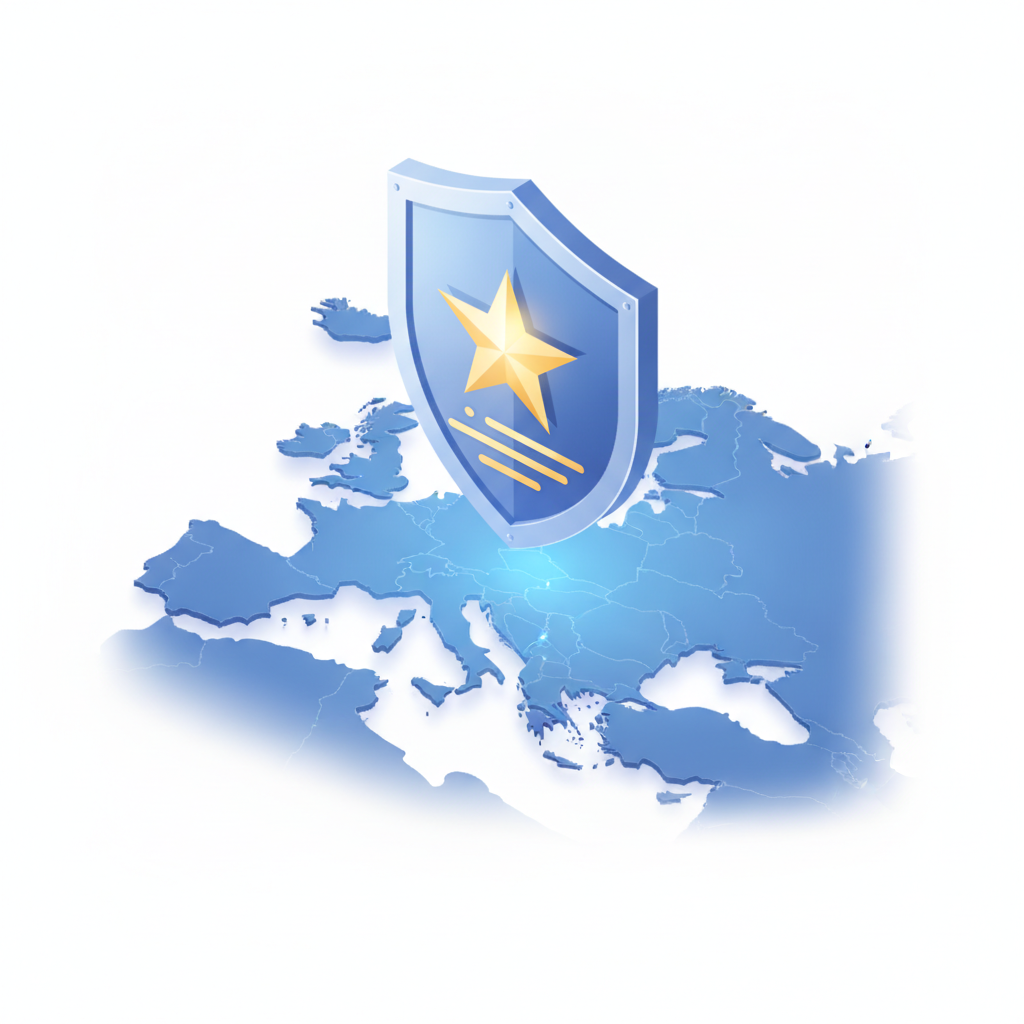
Expanding into the European Union requires a shift from fragmented, country-by-country filings to a more efficient, unified system. For creators who distribute digital art or music, the ability to secure a single title that covers all 27 member states is the only viable way to scale without drowning in administrative costs or conflicting legal standards across borders.
The European Union Intellectual Property Office (EUIPO) provides a streamlined path for this protection through a predictable 4-stage flow:
- Search: A comprehensive clearance search in the EUIPO database to ensure no similar names or logos already exist.
- Filing: Submitting a formal application specifying the correct classes of goods and services.
- Examination: A review by EUIPO experts to verify the mark’s distinctiveness and compliance with legal requirements.
- Registration: After a successful opposition period, the certificate is issued, granting exclusive rights across the entire Union.
This unified approach is particularly beneficial when managing musical IP assets in Europe, where a single registration can protect a stage name or a label logo from the Baltics to the Mediterranean. By consolidating your rights through a single office, you eliminate the risk of leaving “blind spots” in specific European territories where your audience might grow unexpectedly. This structural efficiency is one of the primary reasons the EU has become a preferred hub for global talent.
Understanding the mechanics of the EUIPO sets the stage for why so many international creators are now prioritizing the European market for their primary brand headquarters.
Why Global Creators Choose EU
Expanding a creative footprint into the European market is a milestone that requires moving beyond the automatic protections afforded by standard authorship rights. While many artists assume their work is sufficiently shielded by these automatic moral and economic rights, professional creators recognize that the European Union’s unified legal framework offers a form of administrative security unavailable in fragmented markets. This centralized system, including services like brandr-legal.eu, acts as a bridge between your creative vision and the commercial reality of a 27-country trading bloc.
The primary appeal for global talent lies in the peace of mind that comes with a single, clear registration. In the digital landscape, where lookalike accounts and copied identities appear frequently, possessing a centralized certificate from the EUIPO provides the necessary evidence to resolve disputes. While copyright is the standard mechanism for protecting original content, a trademark is often essential for protecting your commercial identity. Many creators discover too late that their name or handle has been registered by an opportunistic third party, leaving them locked out of their own brand in Europe. Securing professional trademark registration in the EU provides the evidence required to reclaim your digital territory.
By formalizing your identity within the single market, you gain access to several critical advantages:
- Marketplace Authority: Platforms generally process intellectual property complaints more efficiently when official registration numbers are provided alongside evidence of copyright infringement.
- Partnership Credibility: Major brands and agencies are more inclined to collaborate with creators who can demonstrate clear, secured rights to their identity assets.
- Asset Growth: As a personal brand evolves, registered names and logos become property that can be licensed, sold, or used to support professional development.
While default provisions protect specific illustrations or videos, they often leave the commercial identity—the soul of the brand—vulnerable. Professional registration ensures that as your audience grows, your legal standing remains as robust as your creative output, allowing you to focus on innovation while the administrative framework supports cross-border enforcement.
For help with this task, use the Trademark registration in the EU service.
Securing Your Legacy Today
Transforming your creative output into a resilient intellectual property portfolio requires a strategic shift from passive reliance on eu copyright laws for freelance creators toward active brand registration. While you may already know how to protect your original compositions or digital artworks, securing your commercial legacy demands the formal registration of your identity assets to prevent impersonation and market fragmentation. Once you have established a solid creative foundation, the logical progression is to consolidate your visual and digital assets into a unified business strategy that facilitates international growth. Your identity is your most valuable asset; let’s secure it today.
Frequently Asked Questions
What happens if I discover someone else has already registered my brand name as a trademark in the EU?
If you find that your brand name, logo, or handle is already registered by a third party, you face a significant hurdle known as a prior right. The European Union Intellectual Property Office (EUIPO) operates on a first-to-file basis, meaning the first person to formally register the trademark generally gains the exclusive legal right to use it in commerce within the EU.
If this occurs, you may need to pursue the following avenues:
- Opposition Proceedings: If your brand has significant prior usage in the market, you may be able to oppose their registration, though this requires substantial evidence of your prior rights.
- Cancellation Actions: If the trademark was registered in bad faith or has not been put to genuine use within five years, you may apply to have it revoked or declared invalid.
- Negotiated Settlement: In many cases, consulting with an IP attorney to discuss a coexistence agreement or a purchase of the trademark rights can be more cost-effective than prolonged litigation.
Engaging in Trademark registration in the EU early is the only true way to prevent these adversarial situations.
Is it possible to trademark a slogan or a social media handle?
Yes, but with specific conditions. A trademark must be distinctive and capable of distinguishing your goods or services from those of others.
- Slogans: These can be trademarked if they are seen as a badge of origin rather than just an advertising message. For instance, a slogan that describes the quality or function of your product is unlikely to be registered, while a unique, arbitrary phrase is highly registrable.
- Social Media Handles: While the platform URL itself cannot be trademarked, the name associated with your account can be protected if it is used to conduct business. However, trademarking a handle does not grant you the right to force a platform to hand over a username unless that user is infringing on your registered trademark rights.
How long does the trademark registration process typically take in the EU?
The timeline for EU trademark registration is generally predictable but depends on whether your application faces any opposition. The standard stages are as follows:
- Examination Phase: After submission, the EUIPO checks for formal requirements and absolute grounds for refusal (like lack of distinctiveness). This typically takes a few weeks.
- Publication and Opposition: Once accepted, the mark is published in the EU Trade Marks Bulletin. This starts a three-month opposition period during which third parties can challenge your application.
- Registration: If no oppositions are filed, or if they are successfully resolved, your trademark is registered.
In total, a straightforward, uncontested application can be completed in approximately 4 to 6 months. Delays often occur if there are objections from the examiner or third parties, which is why a thorough pre-filing search is essential.
Does my EU trademark protection extend to the UK or the United States?
No. A trademark registration via the EUIPO covers all 27 member states of the European Union, but it does not cover the United Kingdom or other countries outside the EU block. Since Brexit, the UK requires a separate filing with the Intellectual Property Office (UK IPO).
If you intend to operate on a global scale, you must consider an international filing strategy, often managed through the Madrid System. This allows you to extend your protection to dozens of other countries via a single application. If your primary market is the European Union, prioritizing your trademark registration in the EU provides a robust, unified shield for your most critical customer base before you look into further international expansion.
Can I protect a color or a sound as part of my creator identity?
Yes, the EU allows for the registration of non-traditional trademarks, including sounds, colors, and even motion marks, provided they meet the criteria for graphical representation and distinctiveness.
- Color Marks: You must prove that the color has acquired distinctiveness through extensive use and is recognized by the public as representing your specific brand.
- Sound Marks: These must be submitted in an audio format that allows the sound to be clearly identified.
These assets are powerful, but they are significantly harder to register than standard word marks or logos. They require a compelling legal case demonstrating that the public automatically associates the sound or color with your specific products or services.