Why Copyright and Trademarks Are Not the Same
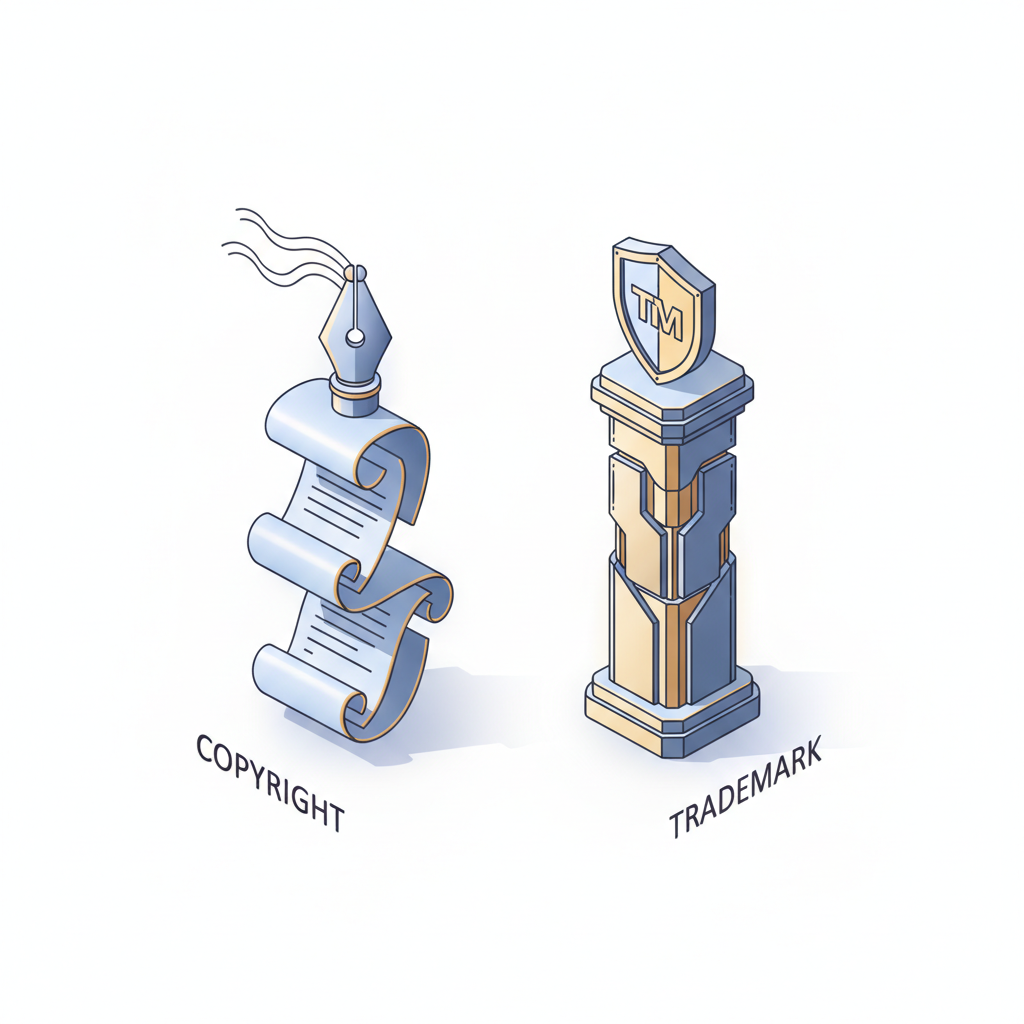
While many creators believe their work is safe the moment they finish a sketch, the reality of the European market often proves otherwise. I will explain why the answer to whether you own the copyright to your logo is only the first step in a much larger strategy for commercial brand security.
Understanding how these two distinct legal pillars interact is essential for any entrepreneur looking to scale across the EU without facing debilitating copycat risks.
Copyright vs Trademark: Fundamental Differences
Relying on a single layer of protection often leaves a brand vulnerable when it enters a competitive marketplace. We will explore the automatic nature of artistic ownership and why registration serves as a proactive commercial weapon.
The following sections will detail the specific roles of artistic copyright and the enforcement power gained through formal trademark rights.
Defining Artistic Copyright for Logos

In the legal framework of the European Union, copyright arises automatically the moment an original work is fixed in a tangible form. Whether you have saved a vector file or sketched a concept, the law recognizes you as the author of that specific artistic expression. However, for a business owner, this ownership is often insufficient to prevent competitors from using similar brand symbols in a commercial context.
Copyright protects the “expression”—the specific arrangement of lines, colors, and shapes—rather than the underlying commercial idea. While this helps against literal design theft, it often fails to provide protection against competitors who use a different drawing to represent the same brand concept. To qualify for protection, your design must meet the threshold of originality, and in many EU jurisdictions, the burden of proving authorship falls on the creator during a dispute.
For those utilizing modern tools, the landscape is shifting; for instance, the rules for authorship of AI-generated visuals are increasingly complex and, depending on the level of human creative control, may result in limited or no copyright protection. This makes the transition from purely artistic ownership to enforceable legal tools a necessity for market sustainability.
Because copyright is inherently limited as a defensive tool, registration of trademarks is recommended to secure stronger, proactive protection.
Related topic reference: Defining authorship for AI generated images in the EU.
Trademarks as Commercial Market Weapons
While copyright provides a baseline layer of protection for the specific artistic expression of your logo, it often leaves businesses vulnerable in competitive environments. In the European Union, trademarks serve as strategic market assets, transforming a mere design asset into a robust property right that can effectively block competitors from using confusingly similar identifiers. This shift from passive authorship to proactive market control is the natural next step for scaling brands.
Unlike copyright, which requires proof of creation and authorship to challenge infringement, a registered trademark grants the owner an exclusive right to prevent third parties from using similar signs for related goods or services [Source: EUIPO – What is an EU trade mark?]. For growing enterprises, the question of whether a logo is sufficiently protected becomes secondary to the commercial reality: can you stop a rival from operating under a name or identity that siphons your customers? By pursuing trademark registration in the EU, you secure a unified legal standing across all 27 member states, bypassing the fragmented process of proving copyright ownership in individual jurisdictions.
Consider the strategic edge this proactive approach provides:
- Platform Enforcement: Major digital marketplaces and social media channels provide advanced take-down tools—such as Brand Registry programs—that are typically reserved for registered trademark holders, making the removal of infringing content far more efficient than copyright litigation.
- Asset Liquidity: A registered mark is a verified business asset. Unlike unregistered copyright, which is often difficult to value or transfer, a trademark can be formally licensed, sold, or used as collateral for business growth.
- Deterrence Through Visibility: Your registration enters the official EUIPO database, acting as a public warning that appears in the mandatory clearance searches of other companies, often preventing conflicts before they arise.
Disclaimer: Trademark rights depend on the successful completion of the registration process, including the selection of appropriate Nice Classification categories. Outcomes vary based on existing prior rights and the distinctiveness of the mark.
Why Your Copyright Is Often Incomplete
Relying solely on artistic rights often creates a false sense of security for business owners. We will now examine the specific limits of copyright protection and review a case study where assets fell short.
The Limits of Copyright Protection
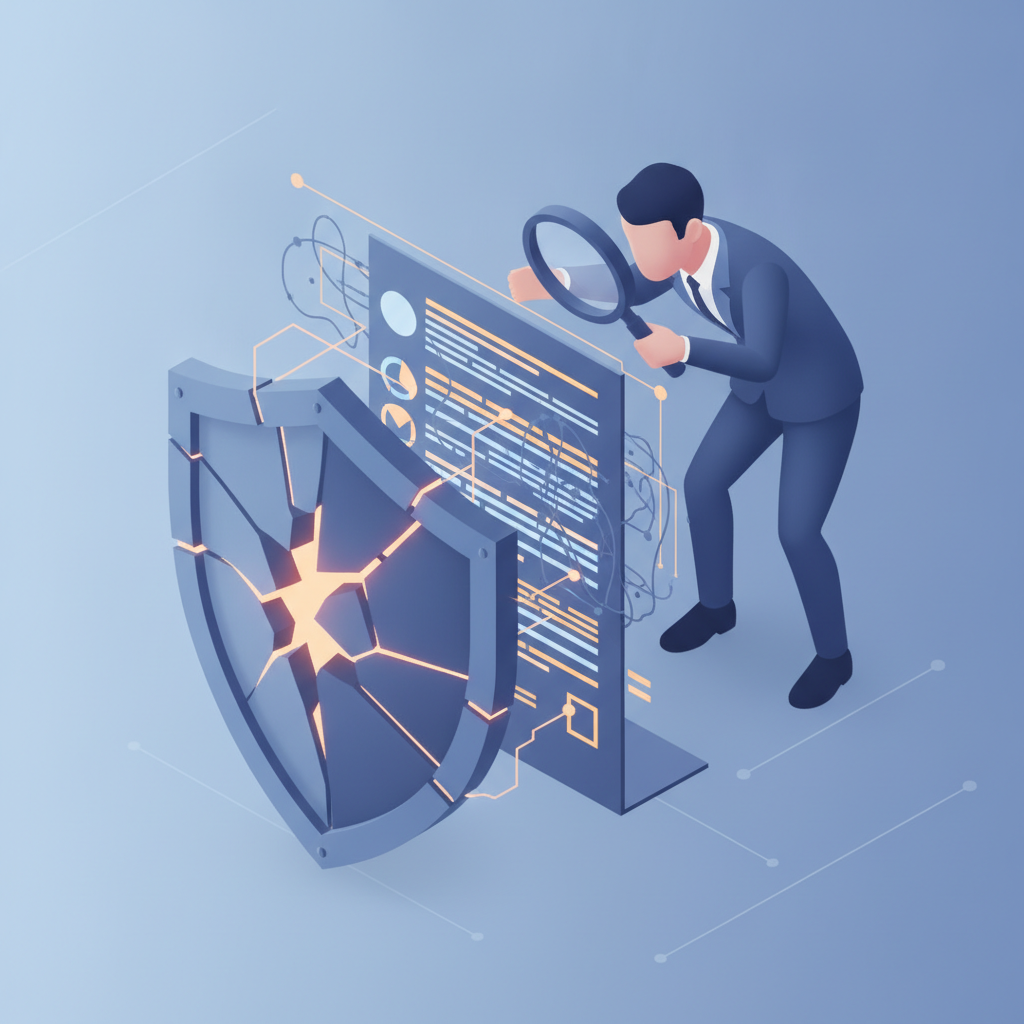
The common assumption that “creation equals total protection” frequently collapses when faced with the realities of European market competition. While your creative work is technically yours from the moment of fixation, the legal burden of using that right against a sophisticated copycat is often prohibitively high for a developing business. In many commercial disputes, copyright fails to provide a swift resolution because it was never designed to regulate market competition or consumer confusion. For instance, protecting your designs from copycats on Instagram requires more than just showing you drew the logo first; you must navigate complex evidentiary requirements that many entrepreneurs are unprepared for.
The following scenarios illustrate where standard copyright typically fails to stop a determined competitor:
- The Burden of Access: To win a copyright infringement case, you must often prove the infringer actually saw your work. If a competitor claims they “independently created” a similar logo, the legal battle becomes an expensive search for proof of contact.
- Concept vs. Expression: Copyright does not protect ideas, only their specific execution. A competitor can often take your brand’s “vibe,” color palette, and general concept, redraw it slightly, and remain completely outside the reach of copyright law.
- Name Protection Gaps: You cannot copyright a brand name or a short phrase. If a rival uses your exact brand name but a different font or symbol, your artistic rights to the logo provide zero protection against their use of the name.
- Authorship Disputes: Without a registration certificate, you must provide a chain of title—contracts, invoices, and design files—to prove you own the rights. Any gap in this paperwork can be used by an infringer to freeze your enforcement efforts.
Note: This information is for educational purposes and does not constitute formal legal advice.
Related topic reference: Protecting my designs from copycats on Instagram and beyond.
Case Study: When Design Assets Fall Short
While copyright offers a foundational layer of protection for artistic expression, its utility in a commercial dispute is often defensive rather than proactive. In the competitive European market, relying solely on your status as the creator is rarely sufficient to prevent a competitor from occupying your market niche under a similar brand identity. (Note: This content is for informational purposes only and does not constitute legal advice.)
Case Study: The Gap Between Artistic Ownership and Market Rights
In our practice, we observed a scenario where a boutique design studio faced a significant setback regarding their brand identity. The studio had developed a distinctive visual style for a digital product, relying on the principle of automatic copyright protection. When a competitor launched a similar service using a confusingly similar name and modified graphics, the studio attempted to intervene.
The legal limitations were stark: while the studio held the copyright to the artwork, the competitor correctly argued that the brand name remained unprotected. Because the studio had not secured Trademark registration in the EU, they lacked the “absolute right” provided by the EU Trade Mark Regulation (EUTMR) to prevent the use of similar signs for related services, as detailed under Regulation (EU) 2017/1001.
Comparison: Copyright vs. Trademark Enforcement
| Feature | Copyright | Trademark |
|---|---|---|
| Primary Goal | Protects artistic expression | Protects commercial source |
| Enforcement | Defensive (Proof of authorship) | Proactive (Exclusionary rights) |
| Market Use | Cannot stop similar brand names | Prevents consumer confusion |
Ultimately, the studio faced an expensive rebranding process. This confirms that securing copyright for creative assets is merely a foundational step; the strategic imperative is verifying that you hold the registered authority to exclude competitors from your marketplace.
Strategic Steps to Secure Brand Identity
Securing your brand requires a transition from passive authorship to active market protection. We will now explore the practical requirements for EUIPO filings and how to integrate your artistic rights into a broader legal strategy.
Essential Trademark Registration Checklist
Moving beyond the question of whether you own the copyright to your logo involves navigating the specific technical requirements of the European Union Intellectual Property Office (EUIPO). A successful filing is not merely about submitting a file; it is about defining the exact perimeter of your commercial monopoly across 27 member states.
The registration process demands a meticulous approach to classification and distinctiveness. If a brand name or logo is too descriptive of the services provided, the EUIPO may issue an absolute grounds refusal. Furthermore, the selection of Nice Classification classes determines the future of your enforcement capabilities. Over-filing leads to unnecessary costs and potential vulnerability to non-use cancellation, while under-filing leaves gaps that competitors can exploit. Professional oversight ensures that your application is strategically drafted to survive the opposition period and provide a scalable asset for your business.
To ensure your brand is fully prepared for the European market, you should verify that your assets meet the following criteria before submission:
- Clearance Search: Utilize the eSearch plus database to ensure no prior identical or similar marks exist that could trigger an opposition.
- Distinctiveness Assessment: Confirm the logo or name does not merely describe the goods or their quality, which is a common cause for application rejection.
- Accurate Classification: Use the TMclass tool to align your goods and services with the official EU standards to prevent future litigation gaps.
- Proof of Representation: Ensure the visual representation of your mark meets the technical standards for a clear and precise entry in the public register.
Once these administrative hurdles are cleared, the focus shifts to how these registered rights work in tandem with your existing creative protections to form a comprehensive shield.
Integrating Copyright in Legal Strategy
Establishing a robust paper trail transforms your claim to ownership into a verifiable legal fact, providing a fallback if your registered trademark is ever challenged or if you need to demonstrate prior use against a third-party filing.
Because there is no centralized EU-wide copyright registry, you should treat your design history as evidence. Maintain chronological records such as raw design files (AI, PSD, or Figma), early sketches, and correspondence with collaborators. These serve as the foundation for proving your claim should you ever need to challenge bad-faith registrations or unauthorized use of your visual assets.
To ensure your intellectual property foundation is secure, focus on these three practical steps:
- Preserve Design Evolution: Retain original, timestamped iterations that demonstrate the creative progression of your logo.
- Secure Clear Ownership: If you work with external designers, ensure you have a signed agreement that explicitly transfers all economic rights, clarifying that you—not the creator—possess the copyright to your logo.
- Timestamping Assets: Utilize digital techniques, such as blockchain-based timestamping or qualified electronic signatures, to fix the date of your final design files, providing an objective record of existence before public release.
By documenting your creative journey as rigorously as you approach your administrative filings, you create a dual-layer defense that protects your identity in a competitive digital landscape.
Aligning Your Legal Assets for Growth
To scale your brand effectively, you must align your legal assets by bridging the gap between artistic creation and market exclusivity. While your logo is protected by copyright from the moment of creation, formal registration through the European Union Intellectual Property Office (EUIPO) is the essential step to securing a commercial monopoly across all 27 member states. This strategy transforms your design into a robust, enforceable business asset.
Modern digital entrepreneurs must be wary of common alignment pitfalls, such as failing to secure a written transfer of economic rights from freelance designers or neglecting to archive proof of original authorship. For those ready to formalize their market presence, our team provides expert assistance with Trademark registration in the EU to navigate distinctiveness requirements and classification complexities. To learn more about securing your visual assets against copycats, explore our parent article on protecting designs. Stay tuned for our next piece on the specific copyright risks associated with digital products.
For help with this task, use the Trademark registration in the EU service.
Frequently Asked Questions
How can I prove that I am the original creator of a digital logo or design?
While copyright arises automatically upon the creation of a work, proving authorship in a dispute often requires a verifiable audit trail. To establish your position as the rightful owner, you should maintain a organized repository of your creative process:
- Version Control: Keep dated native project files (such as .PSD, .AI, or .SKETCH files) that contain layers and history logs, which serve as forensic proof of creation.
- Dated Documentation: Export intermediate versions of your designs and save them in cloud storage with time-stamped logs.
- Written Agreements: If a freelancer created the design for you, ensure you have a written contract explicitly stating the transfer of economic rights. Without this, the freelancer may legally retain the copyright even if you paid for the logo.
- Public Disclosure: Keeping a record of your first publication date on your website or social media profiles can establish the timeline of your work in the public domain.
Does registering a trademark at the EUIPO automatically give me copyright over my logo?
No, these two legal concepts operate independently under different legal frameworks. A trademark registration in the EU is a commercial right that protects your brand identity—such as your logo, name, or slogan—from being used by others in a way that creates consumer confusion.
Copyright, by contrast, is an intellectual property right that protects the original artistic expression of your design. Registering your trademark does not change your copyright status, but it provides a much more powerful and efficient tool for enforcing your rights in the marketplace. While copyright is often difficult and expensive to litigate in court, a trademark registration provides you with an official entry in the EUIPO database, which acts as a clear, enforceable boundary that third parties are legally expected to respect.
Can I use the TM symbol for my logo before I have finished my trademark registration?
You can use the ™ (Trademark) symbol at any time to signal that you claim a mark as your brand identifier, even if your application is still pending. It functions as a public notice to competitors that you are actively protecting your brand identity.
However, once your registration process is successfully completed with the EUIPO, you are legally entitled to use the ® (Registered Trademark) symbol. This symbol is highly significant because it serves as official notice that your mark is protected across all 27 EU member states, providing a major deterrent against copycats and making it significantly easier to enforce your rights on digital marketplaces and social media platforms.
What happens if someone registers my logo or a similar one in another EU country?
If you have not secured an EU-wide trademark, you are vulnerable to local competitors. Because the EU consists of 27 distinct markets, a competitor could potentially register a confusingly similar mark in a country where you have no active protection. This can effectively lock you out of those markets or force you to conduct costly rebranding.
By opting for trademark registration in the EU, you create a single, unified block of protection. This makes it impossible for others to register an identical or confusingly similar mark in any of the member states after your filing date. If you discover a competing mark, your EUIPO registration grants you the standing to file an opposition, preventing the competitor from finalizing their registration and potentially forcing them to abandon their efforts.
Is it worth trademarking my logo if I am just starting out as a small business?
Many entrepreneurs wait until they are ‘big enough’ to protect their intellectual property, but this is often a strategic error. The cost of a potential rebranding or legal defense during a dispute typically far exceeds the investment of early registration.
Securing your trademark early offers three primary benefits:
- Asset Valuation: A registered trademark is an intangible asset that increases your business’s value, which is crucial if you ever plan to seek investment or sell your brand.
- Platform Enforcement: Most e-commerce and social media platforms require a valid trademark registration to process intellectual property infringement reports. Without it, getting a copycat account removed is significantly more difficult.
- Certainty: It provides the clarity needed to invest in marketing, signage, and packaging without the looming risk that a third party might force you to change your brand identity later.