Why IP Protection is a Startup’s Foundation
Startups often romanticize the sprint to market, yet ignoring the fragility of their intangible assets leaves them exposed to aggressive competitors. Proactive measures turn ideas into defensible equity, securing the foundation necessary for long-term scalability.
IP as Your Startup’s Competitive Moat
Viewing your brand as a strategic asset class allows you to build a competitive moat that discourages copycats. We will now examine how to quantify these assets for investors and mitigate the risks of marketplace dilution.
Valuing Intangible Assets for Investors

For venture capital firms, a startup’s valuation is intrinsically linked to the clarity and enforceability of its proprietary rights. Investors perform rigorous due diligence not merely to audit assets, but to leverage a robust IP portfolio as a mechanism that secures a startup’s market position and mitigates capital risk. When an enterprise can prove it has achieved trademark registration in the EU, it provides investors with tangible evidence of an exclusive, protected brand footprint across the Member States.
During the audit process, investors examine key documentation to assess the integrity of a startup’s IP portfolio:
- Clearance Search Reports: A pre-filing assessment demonstrating that the brand does not infringe on prior rights, effectively mitigating future litigation risks.
- Formal Certificates of Registration: Official documentation establishing priority and ownership under the governing EU trademark framework.
- Chain-of-Title Documentation: Executed IP assignment agreements from founders or contractors to the corporate entity, preventing ownership disputes that could stall investment cycles.
Disclaimer: This information is for educational purposes only and does not constitute legal advice. IP strategies and registration outcomes under Regulation (EU) 2017/1001 vary based on specific jurisdictional requirements.
Preventing Market Confusion and Dilution
When intangible assets are documented, they serve as a primary defense against market dilution. Clear legal ownership separates a defensible enterprise from a vulnerable venture, ensuring that your brand identity remains protected rather than becoming public property that invites competitors to adopt lookalike naming conventions or copy visual cues.
To illustrate the reality of operating without this barrier, consider the contrast between an unprotected brand and one that has secured its position through proactive registration.
| Brand Element | Unprotected Identity | Registered Trademark Status |
|---|---|---|
| Market Perception | Easily confused with competitors using similar names. | Exclusive right to use the brand name across the EU. |
| Platform Takedowns | Difficulty proving rights to Amazon or Meta support teams. | Expedited takedown requests for copycats and infringers. |
| Growth Potential | High risk of forced rebranding during cross-border scaling. | Clearance-backed expansion into new European markets. |
| Asset Value | Low valuation during due diligence. | Legally isolated, sellable, and licensing-ready equity. |
Even in niche sectors, competitors are constantly monitoring new market entries. If your identifiers remain unregistered, you face not only the loss of customer trust through brand confusion but also the practical nightmare of being blocked from advertising channels or marketplaces that require proof of trademark registration in the EU to resolve disputes. Proactive registration is essential to maintain your brand’s authority and market positioning.
The Strategic Cost of Ignoring IP
Procrastination in securing your legal position often transforms manageable administrative tasks into existential business threats. We will now examine the typical legal risks for startups and the financial impact of litigation.
Typical Legal Risks for Startups
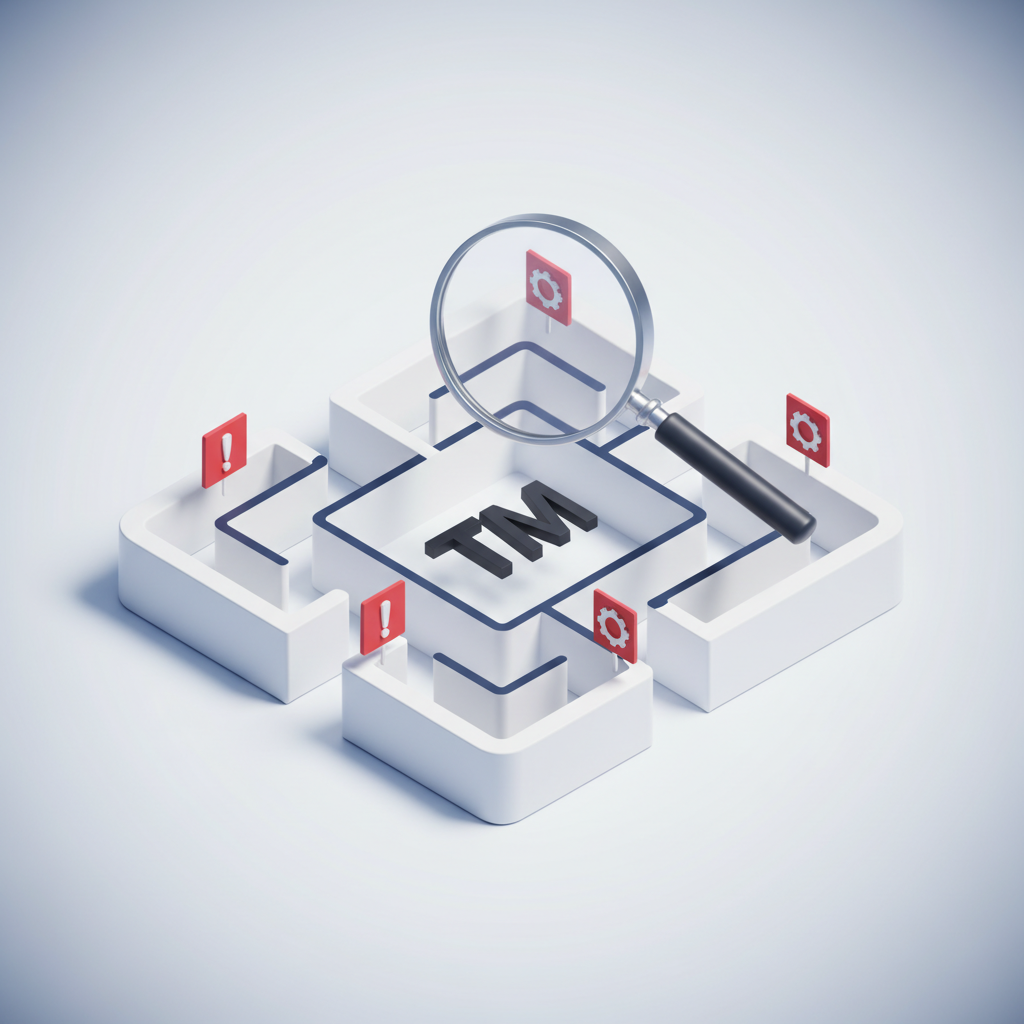
Establishing a competitive moat requires confronting the reality that legal oversights often surface during pivotal growth phases. Startups frequently assume their brand identity is inherently protected, yet this vulnerability creates significant risks that can jeopardize fundraising or international scaling.
- Public disclosure: Disclosing a design or invention before formal filing may negate novelty requirements in many jurisdictions, effectively blocking your ability to secure rights.
- Trademark squatting: Neglecting to register a trademark for your brand in the EU allows third parties to secure your mark, potentially barring your entry into the European market.
- Scope misalignment: Selecting incorrect Nice Classification classes can leave your primary commercial activities unprotected.
- Clearance failures: Proceeding without conducting a comprehensive search via tools like the EUIPO’s eSearch plus significantly increases the risk of infringing on prior rights, often necessitating expensive rebranding.
- Ownership gaps: Failure to document the transfer of IP rights from founders or contractors via written assignment agreements can leave your core assets in legal limbo.
These pitfalls represent operational hazards that lead to unnecessary financial exposure. Carefully managing your intellectual property is essential to maintaining commercial continuity. Disclaimer: This content is for informational purposes only and does not constitute legal advice.
Financial Impact of Litigation
When startups overlook the necessity of securing their core brand, the financial consequences often manifest as a sudden, aggressive drain on their operational runway. Beyond the immediate legal fees required to respond to infringement claims, the hidden cost of defensive litigation includes the potential for mandatory rebranding, which can effectively erase the value of cumulative marketing efforts. While some founders view Trademark registration in the EU as a bureaucratic formality, it serves as a critical defensive mechanism that preserves liquid capital for core business activities rather than reactive dispute resolution.
Founders should consider the real-world impact of litigation through documented cases of “trademark squatting,” where third parties register a brand name ahead of the legitimate owner. According to EUIPO guidance, failing to establish priority early can lead to expensive opposition proceedings or the forced abandonment of a trademark in the European market. Litigation risks include:
- Direct Legal Expenses: Fees for counsel to manage cease-and-desist responses or administrative opposition proceedings.
- Opportunity Costs: Diversion of executive focus and internal resources away from product development and growth milestones during the dispute process.
- Brand Depreciation: Costs associated with forced rebranding, notifying distribution partners, and the loss of consumer recognition if an infringement claim succeeds.
- Market Access Restrictions: Potential court-ordered injunctions that may force a startup to withdraw products from specific EU regions, nullifying localized marketing campaigns.
Mapping Your IP Registration Roadmap
Transitioning from the theoretical risks of inaction to a structured defense requires a clear, actionable plan. We will now outline how to organize your assets and navigate the path toward full legal security.
Prioritizing Your IP Portfolio Assets

Building a robust defense for your startup begins with categorizing your assets by their commercial value. Not every element of your business requires immediate formal registration, but your primary revenue-driving identifiers must be secured to mitigate risk. Note that this information is for educational purposes; legal outcomes are subject to official examiner review as detailed in Regulation (EU) 2017/1001.
| Asset Category | Decision Criteria | Strategic Priority |
|---|---|---|
| Core Revenue Drivers | Is the mark essential to your primary sales or service delivery? | High |
| Public-Facing Identity | Does it appear prominently on your primary storefront or digital platforms? | Medium |
| Proprietary Processes | Is the asset a technical trade secret better managed via internal non-disclosure agreements? | Low |
Prioritizing assets helps you allocate your budget efficiently. Establishing ownership early is critical, as delaying protection for a brand name that has already gained market traction increases the risk of encountering opposition from existing rightsholders.
Navigating the European Registration Flow
Transitioning from strategy to execution requires precise engagement with the European Union Intellectual Property Office (EUIPO). Navigating this landscape effectively—often by utilizing professional trademark registration in the EU—helps minimize procedural risks such as adverse office actions or scope-of-protection errors.
To navigate the registration lifecycle, consider the following decision aid for common operational scenarios:
| Phase | Key Decision Point | Risk to Mitigate |
|---|---|---|
| Clearance | Reviewing TMview results | Likelihood of confusion with existing marks |
| Classification | Selecting Nice Classes | Overly broad or narrow scope of protection |
| Opposition | Monitoring publication (3-month window) | Third-party claims against your mark |
A frequent error for startups is assuming that local trademark rights automatically grant coverage across the EU. Under Regulation (EU) 2017/1001, an EU trademark provides a unitary right, but it must be robustly drafted to withstand scrutiny. For instance, a clothing brand might focus on specific Class 25 descriptors, whereas an e-commerce platform requires a wider set of classes to cover digital services and logistics. Professional counsel helps calibrate these specifications to match your commercial reality while mitigating potential refusals based on absolute grounds, such as lack of inherent distinctiveness. Please note that filing outcomes depend on the specific mark and commercial circumstances; this information is for educational purposes and not a substitute for individual legal advice.
Related topic reference: Intellectual Property Protection & Registration in the European marketplace.
Securing Your Future Through IP
Transforming your venture into a high-value entity requires moving beyond operations to proactive asset management, as early investment in legal certainty serves as a foundational defense against market dilution and litigation risks. To understand this process, we invite you to explore our comprehensive guide on Intellectual Property Protection & Registration in the European marketplace, which outlines the essential steps for establishing your rights. As your company scales, consistent oversight of your assets remains vital; we encourage you to continue refining your strategy by managing your growing intellectual property portfolio. If you are ready to secure your brand identity, our experts are available to assist with the complexities of trademark registration in the EU to help you maintain a sustainable competitive position.
For support with this process, please explore our Trademark registration in the EU service.
For help with this task, use the Trademark registration in the EU service.
Frequently Asked Questions
How does EU trademark registration protect an Amazon FBA brand specifically?
When operating an Amazon FBA store in Europe, a registered trademark is your primary tool for brand control. Under the EU Trademark Regulation (EU) 2017/1001, an EU-wide registration provides a unitary right that grants you exclusive usage across all member states.
For Amazon sellers, this offers two distinct advantages:
- Brand Registry Access: Amazon requires a government-registered trademark to enroll in Brand Registry, which allows you to lock your product detail pages, access enhanced A+ content, and utilize automated brand protection tools to report counterfeit listings.
- Enforcement Against Infringers: If a competitor attempts to hijack your product listing or sell counterfeit goods using your brand name, an EU trademark serves as the legal evidence required for Amazon’s Notice and Takedown procedures. Without this registration, enforcing your rights against unauthorized sellers becomes exponentially more difficult and expensive.
What is the difference between registering for e-commerce and a standard clothing brand?
While both require filing with the EUIPO, the distinction lies in the Nice Classification, which determines the scope of your legal protection. Choosing the wrong classes can leave your brand vulnerable.
- Clothing Brands: Primarily focus on Class 25 (clothing, footwear, headgear). However, successful apparel brands often expand into Class 35 for retail store services, which protects the branding of the shop itself, not just the physical garments.
- E-commerce/Drop-shipping: For online marketplaces, Class 35 is essential, as it covers the retail services involved in bringing together various goods for the benefit of others.
Expert Note: An effective trademark registration in the EU strategy considers both your current product range and your projected growth, ensuring you are not required to file new, expensive applications every time you add a new category to your catalog.
Can I trademark a podcast name in Europe, and is it worth it?
Yes, podcast names can be trademarked, provided they are distinctive and not merely descriptive of the content. A trademark protects your brand identity across specific services, typically falling under Class 41 (entertainment services, production of podcasts).
Registering a podcast name is highly recommended if you intend to:
- Monetize through merchandise (which would require additional classes, such as Class 25).
- License your content or seek sponsorship deals, as professional partners require proof of ownership of the intellectual property.
- Prevent third parties from creating derivative works or copycat shows that aim to confuse your audience.
What specific risks do drop-shipping stores face regarding intellectual property?
Drop-shipping stores are uniquely exposed to two main risks: unintentional infringement and lack of asset value. Because you do not manufacture the goods, it is easy to accidentally sell items that infringe on another company’s trademark or design rights.
To mitigate these risks:
- Conduct Clearance Searches: Before launching a store, perform a comprehensive EUIPO database search to ensure your store name does not conflict with existing brands.
- Protect Your Brand, Not Just the Goods: While you may not own the rights to the products themselves, you must own the brand name of your storefront. If you scale your business, your store’s reputation is an asset. If your store name is not trademarked, you have no legal basis to stop a competitor from cloning your brand identity.
What should I know before licensing my brand to a distributor in Europe?
Licensing your brand allows you to expand into new European markets without the operational burden of managing local logistics. However, your Intellectual Property rights must be ironclad before entering these contracts. Essential steps include:
- Formalize the License Agreement: Never proceed on a verbal handshake. You need a written agreement that defines the geographical territory, the specific timeframe, and, crucially, a quality control clause that allows you to withdraw the license if the distributor damages your brand’s reputation.
- Maintain Direct Ownership: Ensure the agreement explicitly states that the licensee is using your trademark for your benefit and does not acquire any ownership interest in the mark itself.
- Record the License: You have the option to record the license in the EUIPO register, which serves as public notice that the licensee is authorized to use the mark, providing further transparency and protection for your brand.