Introduction: EU Trademark Due Diligence
Ideas are only assets if they are legally defensible, yet many businesses rush into filing without realizing that an EU trademark requires clearing 27 jurisdictions simultaneously. Rigorous due diligence prevents costly opposition from existing brand owners and ensures your identity stands on a solid legal foundation before you invest in the trademark registration in the EU.
Why SMEs Must Assess Trademark Risks
Filing a brand name without a technical risk assessment often leads to immediate legal pushback from established European competitors. We will examine the financial impact of these oversights and the specific challenges of navigating 27 distinct national legal landscapes.
Financial Risks of Ignoring Due Diligence

Ignoring due diligence creates significant financial exposure for small businesses entering the European market. Filing an application for trademark registration in the EU without a professional clearance search often leads to avoidable opposition proceedings. Under Regulation (EU) 2017/1001, a successful opposition by a prior rights holder forces the applicant to absorb the loss of filing fees, legal defense costs, and the potential necessity of a total brand pivot—including inventory disposal and digital asset redesign. These reactive costs frequently exceed the investment in an initial professional risk assessment by an order of magnitude.
The technical core of this risk is the “likelihood of confusion” as defined in Article 8(1)(b) of the EUTMR. This standard evaluates the phonetic, visual, and conceptual similarity between proposed signs and existing entries across the Nice Classification system. A robust risk-mitigation audit analyzes the commercial proximity of your goods and services to those of established competitors, allowing for strategic adjustments before publication triggers a challenge.
| Phase | Proactive Screening Impact | Reactive Correction Impact |
|---|---|---|
| Budget Allocation | Predictable fixed fees for expert analysis. | Unpredictable legal defense and refiling costs. |
| Operational Control | Strategic adjustment of brand identity/scope. | Mandatory marketing downtime and asset disposal. |
| Legal Standing | Demonstrates “good faith” and due diligence. | Risk of infringement claims and potential damages. |
Example: Consider a startup launching a software service in Class 42. A diligent search might uncover a phonetic equivalent in a neighboring EU member state. By identifying this early, the SME can modify its brand or narrow its claim to mitigate the likelihood of confusion, thereby avoiding an EUIPO opposition that could tie up the registration process for 12 to 24 months.
The 27-Country Jurisdictional Challenge
A European Union trademark operates as a unitary right, meaning it stands or falls as a single legal entity across the entire European Union. While this provides streamlined protection, it also introduces a significant risk: a valid legal objection in just one member state can result in the total rejection of the EU-wide application.
For small businesses, the challenge often lies in “hidden” prior rights that do not appear in a standard search of the EUIPO database. An experienced EU trademark lawyer for SMEs must look beyond registered marks to identify localized threats that could trigger an opposition. These pitfalls frequently include:
- National Common Law Rights: In jurisdictions like Ireland or Malta, unregistered trademarks that have acquired goodwill through use can be used to block a new EU filing.
- Company Names and Trade Names: Local commercial registers in countries like Germany or Austria may contain business names that, while not registered as trademarks, possess prior rights under national law.
- Linguistic Barriers: A brand name that is perfectly distinctive in English might be descriptive or offensive in another official EU language, leading to an absolute refusal by the examiner.
- Geographical Indications: Protection for regional food, wine, or craft products can prevent the registration of trademarks that even vaguely hint at a protected origin.
To mitigate these risks, it is essential to conduct a comprehensive audit that covers both the EUIPO records and national registers. This dual-layer check ensures that your brand does not accidentally collide with a local player in a market you haven’t even entered yet. By identifying these conflicts during the due diligence phase, you can adjust your branding strategy before significant capital is committed to a pan-European launch.
Understanding these cross-border jurisdictional hurdles is only the first step in a technical risk assessment; the next phase involves breaking down the specific legal categories of refusal used by examiners.
Related topic reference: Trademark search for conflicting names in Europe.
Categorizing Trademark Risks for Brands
Professional risk assessment involves distinguishing between inherent brand flaws and external conflicts with existing rights. This section examines the technical differences between absolute and relative grounds for trademark refusal.
Absolute Grounds: The Inherent Weakness

When defining a brand’s protectable identity, the first hurdle is ensuring the name possesses inherent distinctiveness. The European Union Intellectual Property Office (EUIPO) applies strict absolute grounds for refusal to prevent companies from monopolizing common terms that competitors need to describe their own goods or services.
A name that lacks a unique “source-identifying” character will be rejected during the initial examination phase, regardless of whether a similar brand already exists. For instance, attempting to protect a term like “Ultra-Strong Steel” for hardware products or “Organic Cotton” for apparel is a high-risk strategy because these marks are considered descriptive or generic. As an EU trademark lawyer for SMEs, I often see startups invest heavily in marketing a descriptive name only to find it legally indefensible across the European Union.
- Descriptive terms: Names that directly state the kind, quality, quantity, intended purpose, or geographical origin of the product.
- Generic nomenclature: Signs or indications that have become customary in the current language or in the bona fide and established practices of the trade.
- Linguistic pitfalls: A name that is descriptive in even one of the 24 official EU languages—such as a German word for an application filed in Spain—will trigger an absolute refusal.
- Functional shapes: For manufacturing firms, the shape of a product that results from the nature of the goods themselves or is necessary to obtain a technical result cannot be protected as a trademark.
Avoiding these “weak” marks requires a strategic shift toward suggestive or arbitrary naming, which provides a much broader scope of protection. While a descriptive name might seem easier for customers to understand initially, it creates a permanent vulnerability that allows competitors to use similar terminology with impunity. This inherent brand strength must be verified before moving to external conflict assessments.
Relative Grounds: Assessing Existing Conflicts
Even an inherently strong and distinctive brand name can face total application failure if it conflicts with earlier rights held by third parties. The EUIPO does not automatically reject applications based on existing trademarks; instead, it is the responsibility of the prior right holders to file an opposition, making a proactive due diligence search an essential defensive measure for any growing enterprise.
In these disputes, authorities apply the “likelihood of confusion” test. This assessment is not limited to identical matches; it evaluates phonetic, visual, and conceptual similarities to determine if the average consumer might believe that the goods or services come from the same or economically linked undertakings. For example, a retail brand using a name that sounds identical to a famous fashion house, even if spelled differently, remains at high risk of an opposition that could block its entire EU expansion.
Furthermore, the scope of any clearance search must extend beyond the EUIPO register to account for the unitary nature of EU trademarks. A single valid objection based on a national trademark in just one member state—or even unregistered rights such as a local trade name in jurisdictions like Germany—can cause an entire application to collapse. Given the complexity of identifying these diverse rights, SMEs are strongly advised to consult with professional legal counsel, as automated tools like TMview or eSearch are insufficient for conducting a comprehensive risk assessment of unregistered common law rights.
Once the technical risks of both absolute and relative grounds are identified, the focus shifts to the practical execution of a clearance strategy.
Step-by-Step Trademark Due Diligence Protocol
Implementing a structured risk assessment allows small businesses to navigate the complex EU intellectual property landscape with confidence. This practical protocol covers defining your commercial territory and maintaining a clear documentation trail.
Mapping Your Commercial Territory
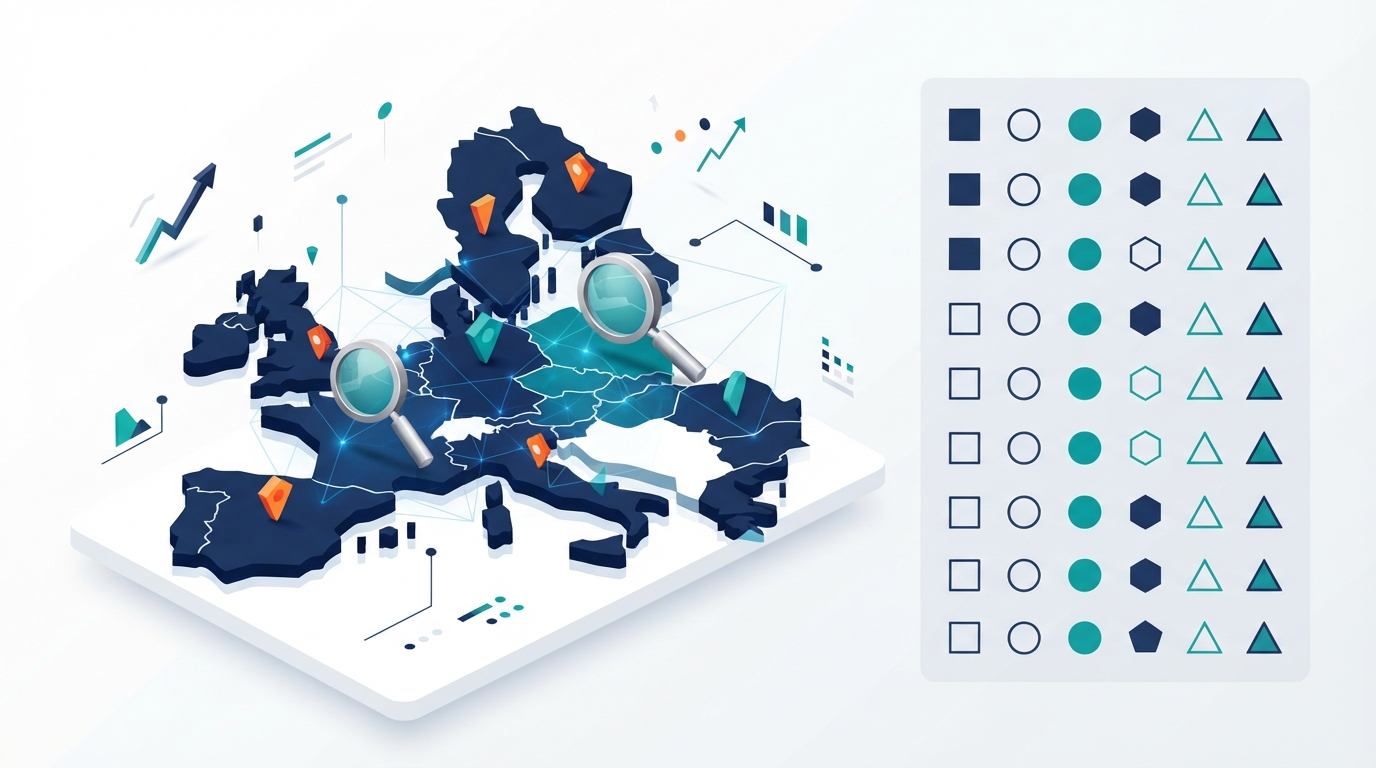
Efficiently securing a brand across the EU market requires a surgical approach to classification, ensuring that the scope of protection aligns with current operations and realistic five-year expansion plans. Over-claiming classes leads to unnecessary official fees and increases the surface area for potential oppositions from established players in unrelated fields. Conversely, an overly narrow application leaves a business vulnerable to competitors who might occupy adjacent commercial niches using a similar identity.
To navigate this, companies must map their activities to the Nice Classification system—a globally recognized framework of 45 classes (34 for goods and 11 for services). While the EUIPO allows for a broad description of goods and services, precise terminology is vital because EU law mandates that a mark can be revoked if it is not put to genuine use within five years of registration. This makes it imperative to select only the most relevant categories during the initial filing phase to avoid future enforcement challenges.
| Business Activity | Primary Nice Class | Key Protection Area |
|---|---|---|
| Selling physical products (e.g., clothing, electronics) | Classes 1–34 | Protects the brand on the product, packaging, and labels. |
| Operating an e-commerce platform or retail store | Class 35 | Covers the service of bringing together goods for consumers to view and buy. |
| Software as a Service (SaaS) and IT solutions | Classes 9, 42 | Covers the digital product (9) and the ongoing technical service (42). |
| Manufacturing services for third parties | Class 40 | Essential for B2B entities that produce goods but do not own the end brand. |
For many small businesses, the challenge lies in deciding whether to file in the region where the headquarters is located or to seek EU-wide coverage immediately. While a national registration might seem cost-effective initially, scaling across borders requires a thorough risk assessment. Strategically identifying these commercial territories ensures that the legal budget is spent on protection that actually supports the company’s revenue streams rather than theoretical markets. Professional guidance from an experienced trademark attorney for European SMEs is essential, as they can identify potential conflicts, including unregistered rights that automated databases may overlook, and prevent the common mistake of choosing the wrong class, which often results in a permanent loss of priority for the correct one.
Once the commercial territory is defined and the classes are selected, the focus must shift to creating a defensible record of the preliminary investigations conducted.
Documenting Your Search Trail
Beyond identifying your commercial territory, establishing a persistent search trail is critical for long-term IP management. In the event of opposition proceedings, maintaining a detailed record serves as evidence of bona fides—demonstrating that you conducted due diligence to identify and avoid conflicting prior rights across the European Union. This administrative documentation captures the snapshot of the registers at the time you evaluated your mark.
To effectively perform preliminary searches via TMview or the EUIPO’s eSearch database, your documentation must bridge the gap between initial discovery and legal defense. While a search does not guarantee registration, it is the primary method to mitigate the risk of “willful infringement” claims. When you seek professional Trademark registration in the EU, these logs allow counsel to cross-reference your internal findings against established legal standards.
| Audit Component | Strategy Note |
|---|---|
| Query Parameters | Record exact wildcard strings and selected Nice Classes to replicate results later. |
| Exclusion Rationale | Document why similar marks were deemed non-conflicting (e.g., distinct goods/services or target audiences). |
| Temporal Validity | Archive the timestamped results; the register is fluid, and a mark not present today may appear tomorrow. |
Common Pitfall: A frequent error is limiting searches to identical matches. Effective due diligence must assess conceptual and phonetic similarity. For instance, a mark containing a common English term may encounter local language equivalents across the European Union. Failing to document this assessment means you lack the evidentiary record required to justify your filing strategy if an incumbent rights holder initiates a dispute.
For help with this task, use the Trademark registration in the EU service.
Securing Your EU Brand Identity
Rigorous due diligence transforms a vulnerable brand name into a resilient corporate asset, ensuring that your commercial expansion remains undisturbed by costly legal disputes or sudden rebrands. As an attorney with over two decades of experience, I have seen numerous SMEs lose their market presence because they bypassed the technical phase of identifying conflicting trademarks before filing. Protecting your identity requires more than a simple search; it demands a strategic assessment of potential risks across the entire 27-country jurisdiction. To begin your own preliminary screening, consult our comprehensive guide on EU search tools, or reach out to our team for a professional risk evaluation that secures your long-term stability.
Frequently Asked Questions
What is the core difference between an EU trademark and a WIPO international registration?
While both systems provide paths to international brand protection, they serve different strategic functions:
- EU Trademark (EUTM): This is a unitary right managed by the EUIPO. A single application grants protection across all 27 EU member states. Because of its unitary nature, if your mark is refused or opposed in just one member state (e.g., due to a local prior right), the entire EU-wide application is at risk.
- WIPO (Madrid System): This is a centralized filing system that allows you to bundle multiple national or regional trademark applications into one. It is essentially a ‘post office’ for international filings. It does not create a single ‘international’ trademark, but rather a bundle of independent national rights.
For an SME, the EUTM is generally more cost-effective for unified market entry, whereas the WIPO system is preferred when targeting a mix of EU and non-EU countries (like the US, UK, or China).
How does the post-Brexit landscape affect my EU trademark registration?
Since the UK’s departure from the European Union, the EUIPO no longer holds jurisdiction over the United Kingdom. If you are filing for an EU trademark, it will not cover the UK.
To obtain protection in the UK, you must file a separate application with the UK Intellectual Property Office (UKIPO). Many businesses now adopt a dual-filing strategy: an EUTM for the EU market and a UK trademark for the British market. It is important to note that your search protocol must now include both EUIPO and UKIPO databases to ensure full coverage across Europe.
What does a US-based company need to know before registering a trademark in the EU?
US companies often assume that their domestic trademark registration grants international rights, but this is a common misconception; trademark rights are territorial. To register a trademark in the EU as a US company, you must:
- Appoint a Representative: If you do not have a principal place of business or a real and effective industrial or commercial establishment within the European Economic Area (EEA), the EUIPO requires you to be represented by a professional representative (an EU trademark attorney).
- Mind the Language Requirements: Your application must be filed in one of the official EU languages, and you may need to provide a second language (English, French, German, Italian, or Spanish) for opposition proceedings.
- Ensure ‘Genuine Use’: Even if you are a foreign entity, your mark is subject to EU use requirements. You must be prepared to demonstrate that you are using the mark in commerce within the EU within five years of registration to avoid revocation proceedings.
Why should I consider finding a trademark attorney in Madrid?
Madrid is home to the European Union Intellectual Property Office (EUIPO), the agency responsible for managing EU trademark registrations. Working with a trademark attorney based in Madrid can offer unique advantages:
- Proximity to Examiners: Local legal experts often have a nuanced understanding of the internal practices and evolving jurisprudence of the EUIPO.
- Procedural Efficiency: Madrid-based firms frequently interact with EUIPO officials and stay updated on the latest administrative guidelines in real-time.
- Strategic Insight: If you are dealing with complex opposition proceedings or appeal cases (often heard at the Boards of Appeal in Alicante), local counsel provides a centralized point of contact for navigating the specific procedural requirements of these bodies.
What are the specific benefits of an EU trademark for a small business or startup?
For SMEs and startups, the EUTM offers several business-critical advantages:
- Simplified Portfolio Management: Instead of managing 27 separate national registrations, you maintain one central registration, one renewal date, and one set of administrative fees.
- Market Scalability: An EUTM allows you to expand into new EU member states (such as entering the Polish or Swedish markets) without needing to register separately in those countries later.
- Investment Readiness: Investors typically view registered intellectual property as a de-risked asset. A registered EUTM proves you have established legal ownership of your brand, which increases the valuation of your company and strengthens your position during potential acquisitions or partnerships.
- Customs Enforcement: An EUTM gives you the power to request that customs authorities stop the import or export of counterfeit goods bearing your mark at the external borders of the EU.