Instagram Copycats: Protecting Your Creative Assets
Discovering your unique creative work on a stranger’s profile is a frustrating reality for many creators today. While the platform serves as a vital portfolio, protecting my designs from copycats on Instagram requires a proactive legal strategy to manage your digital art rights effectively.
Why Instagram Is A Legal Minefield
High visibility on social media often invites unauthorized use, making it vital to understand the difference between inspiration and infringement. We will now examine common theft methods and the limitations of platform-specific terms of service.
Common Ways Designs Are Stolen

The speed at which visual content goes viral on social media creates a significant risk for creators. Unlike traditional galleries, the digital landscape allows for near-instantaneous reproduction, often moving much faster than the original author can detect. This vulnerability is especially acute for those who rely on visual identity to build their brand in the European market, where trademark registration in the EU provides a critical layer of defense against commercial exploitation.
- Reposting without credit: The most common form of theft, where accounts share your work to gain engagement without attributing the original authorship.
- AI-scraping: Emerging digital technologies allow bots to harvest massive datasets of images, often ignoring eu copyright laws for freelance creators to train generative models.
- Unauthorized commercial printing: Malicious actors scrape high-resolution designs to sell them on third-party marketplaces through print-on-demand services without a licensing agreement.
Many creators mistakenly believe that these actions are covered by the platform’s internal community guidelines, but legal reality is often more complex. When a design is shared, it enters a space where technical ease of copying frequently clashes with the legal protections outlined in the parent guide on how to copyright digital art in Europe effectively. Understanding these threat vectors is the first step toward securing your intellectual property.
The assumption that social media platforms automatically guard your rights is a dangerous misconception that often leads to lost revenue and brand dilution.
The Fallacy Of Platform Terms
Many creators assume that a platform’s community guidelines serve as a substitute for enforceable legal rights. While Instagram provides reporting tools for harassment or impersonation, these internal mechanisms are administrative, not judicial; they do not adjudicate ownership or provide statutory protection against infringement.
Platform rules are not intellectual property rights; they are merely the terms of a private contract that can be changed or revoked at any time without your consent.
While authorship protection under the Berne Convention arises upon creation, the technical act of uploading to a social media server does not provide the robust, verified evidence required for litigation. Instagram’s Terms of Service grant the platform a broad license to host and distribute your content, which is fundamentally different from holding the exclusive, transferable rights that come with formal Trademark registration in the EU.
Common Enforcement Pitfalls:
- Reliance on Timestamps: A platform upload date is easily contested. Courts prioritize official, state-sanctioned registrations over “first-to-post” metadata.
- Jurisdictional Gaps: Reporting a copycat via Instagram’s web form rarely yields results in foreign jurisdictions, whereas a registered trademark provides a clear, enforceable legal framework across the entire European Union.
- AI-Generated Ambiguity: For content created with digital assistance, the legal threshold for authorship is shifting. Without a documented “creative log” and formal filing, you may struggle to prove the human-centric input required to claim exclusive ownership in an EU court.
A frequent error our clients encounter is assuming a public post acts as a shield. If a competitor files for a trademark, they acquire a legal presumption of ownership that your Instagram archive cannot automatically override. Protecting your designs requires converting digital visibility into defensible assets through formal legal channels.
Disclaimer: This content is for informational purposes and does not constitute individual legal advice. Enforcement outcomes depend on specific facts, jurisdiction, and the nature of the assets involved.
Immediate Actions When Theft Occurs
Acting swiftly when you identify a copycat is vital for limiting commercial damage. This transition to tactical enforcement begins with precise documentation and the strategic use of platform takedown mechanisms.
Documenting The Infringement Evidence

When you discover an infringement, your first instinct might be to message the offender or report the post immediately. However, acting without a preserved record can be a fatal mistake; the infringer may delete the evidence or block you, erasing the digital trail. While capturing screenshots can help with internal reviews, please note that third-party digital snapshots do not always meet strict legal evidentiary standards for court proceedings. A well-organized audit trail of your own records, however, is a vital first step in presenting a case to platform moderators.
Start by capturing full-page screenshots that explicitly show the URL, the timestamp, and the offending account handle. Simultaneously, organize your original source files—such as PSD, AI, or RAW formats—which contain creation metadata and author data to establish your prior claim. Furthermore, log instances of customer confusion; documented comments where followers mistake the infringer for your brand serve as strong evidence of the “likelihood of confusion” required in many intellectual property disputes. This preparation is the essential precursor to navigating formal takedown notices.
The DMCA And Platform Takedowns
Once the audit trail is secured and the infringement evidence is properly timestamped, the focus shifts to removing the unauthorized content through administrative channels. Instagram, like most major platforms, operates an internal reporting system designed to comply with the Digital Millennium Copyright Act (DMCA), allowing creators to request the removal of content that violates their intellectual property rights. While these tools are efficient for removing individual posts or reels, they are governed by private terms of service rather than judicial rulings, meaning they address the symptom of a theft rather than the underlying legal dispute.
The reporting process requires the submission of a formal notice that includes a specific description of the original work, the exact URL of the infringing content, and a declaration under penalty of perjury. For creators dealing with non-human generated content, it is crucial to demonstrate the specific human creative choices—such as prompt engineering, layering, or manual post-processing—that elevate the work to a protectable status. Without this distinction, platforms may reject takedown requests involving AI-assisted designs, as the legal status of such works remains a complex boundary in digital authorship. For more permanent enforcement, especially when dealing with lookalike shops or persistent impersonators, a comparison between platform-level actions and formal legal measures helps in selecting the right strategy.
| Feature | Platform Takedown (DMCA) | Formal Legal Cease and Desist |
|---|---|---|
| Primary Goal | Immediate removal of specific posts or accounts. | Stopping all use, claiming damages, and establishing legal precedent. |
| Legal Weight | Contractual enforcement of platform rules. | Statutory enforcement based on national and EU IP laws. |
| Success Rate | High for direct copies; low for “inspired” styles. | High for broader brand protection and recurring infringers. |
| Outcome | Content deleted; possible account suspension. | Binding settlement, financial compensation, or court injunction. |
While clearing the feed of copycats provides temporary relief, these reactive steps do not prevent new imitators from appearing tomorrow. Shifting from a defensive posture to a proactive strategy ensures your creative assets are shielded before a dispute even begins.
Strategic Proactive Design Protection
Shifting from reactive damage control to proactive defense requires recognizing the limitations of informal authorship. While platform-level reporting manages immediate violations, it does not grant you statutory leverage in court or prevent recurrence. True digital sovereignty relies on establishing official ownership, which is why trademark registration in the EU remains the most robust mechanism for protecting your designs from copycats. Unlike temporary platform takedowns, a registered trademark provides a legally defensible right to exclude others from using confusingly similar identifiers across the European Single Market.
Regarding modern digital authorship, the legal status of non-human generated content remains a nuanced frontier. Under current EU intellectual property frameworks, protection typically requires evidence of original human creative input. As you consolidate your digital assets, ensure your portfolio distinguishes between fully human-authored designs and those involving AI-assisted tools; rigorous documentation of the creative process is essential to meet the threshold of authorship required for both copyright protection and future trademark enforcement, as outlined by the European Union Intellectual Property Office (EUIPO).
Why Registered Trademarks Matter More
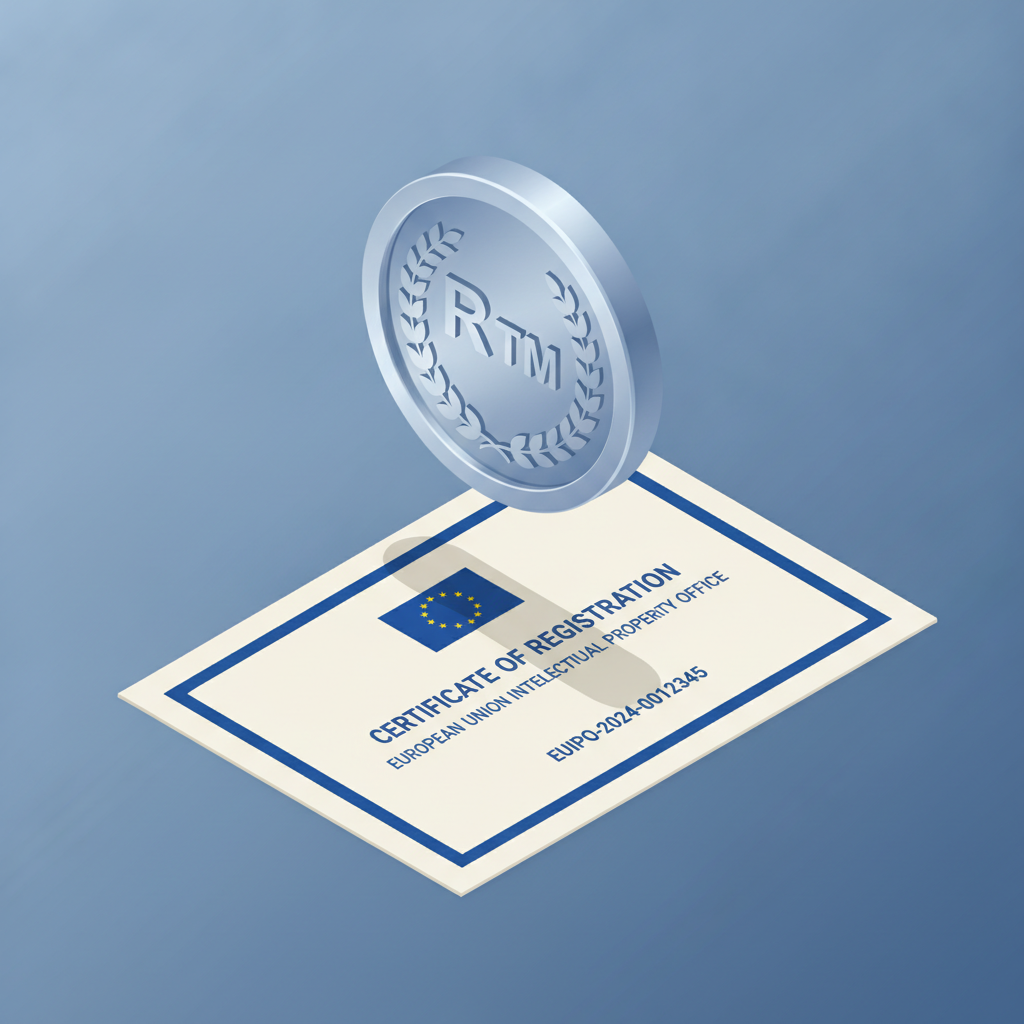
Relying solely on platform-specific reporting tools often leaves creators in a reactive cycle, where infringers simply migrate to new handles after a takedown. To move toward sustainable protection, many entrepreneurs prioritize trademark registration in the EU, which converts intangible brand equity into a formal legal asset. Unlike informal copyright, which requires proving authorship of individual creative works, a registered trademark provides a clear, defensible title recognized by the European Union Intellectual Property Office (EUIPO).
The strategic value of this registration lies in the shift of the burden of proof. While unregistered creators must compile extensive, often subjective evidence of “prior use” to challenge a copycat, a trademark owner relies on the certificate of registration. This distinction is critical in the EU’s “first-to-file” landscape, where registration establishes legal priority across all member states.
| Feature | Platform Reporting | Registered Trademark |
|---|---|---|
| Scope | Single Platform | Pan-European (27 States) |
| Proof Required | Evidence of Prior Use/Authorship | Registration Certificate |
| Enforcement | Reactive Takedowns | Injunction & Damage Claims |
Practical Scenario: Consider a designer whose logo is misappropriated by a cross-border print-on-demand vendor. Before registration, the designer faces high jurisdictional hurdles when attempting to prove rights in the infringer’s home country. With a registered EU trademark, the designer can leverage official EU-wide recognition to issue formal cease-and-desist notices, significantly increasing the probability of a resolution without prolonged litigation.
Note: Trademark outcomes depend on factors such as Nice Classification accuracy and distinctiveness. This information is for educational purposes and does not replace professional legal counsel.
Registration Checklist For Digital Creators
Securing a competitive edge in the European market requires more than just creative talent; it demands a structured approach to legal ownership. While understanding the weight of registered trademarks provides the foundation, digital creators must execute specific procedural steps to ensure their brand assets are bulletproof against unauthorized use.
- Conduct a Comprehensive Clearance Search: Before filing, use tools like TMview and the EUIPO’s eSearch plus database to identify conflicting marks. This step is vital for protecting your designs from copycats on Instagram by ensuring you aren’t infringing on an existing brand name or logo already registered in the EU.
- Define Jurisdictional Scope: Determine if an EU-wide registration via the EUIPO is sufficient or if you need broader protection through the WIPO Madrid System. A single EU trademark covers all member states, providing a unified “right to exclude” across the entire European Single Market.
- Classify Goods and Services: Correct labeling is critical. Use the TMclass tool to select the appropriate Nice Classification (e.g., Class 25 for apparel or Class 41 for digital entertainment). Incorrect classification can leave significant gaps in your enforcement strategy.
- Document Human Authorship for AI Assets: If your designs incorporate generative technology, maintain a log of prompt engineering and manual post-processing. Clear evidence of creative choices helps satisfy the EU’s requirement for human-centric intellectual property.
- Establish a Monitoring Protocol: Registration is the beginning, not the end. Set up alerts for lookalike accounts and unofficial shops that may attempt to register similar trademarks or sell counterfeit merchandise on European platforms.
Following this technical checklist transforms a vulnerable digital profile into a legally recognized business entity. However, even with the strongest registrations, the manner in which you address infringers publicly can significantly impact your commercial longevity.
Managing Brand Reputation During Disputes
Protecting design assets from social media infringement requires a balance between firm legal enforcement and strategic communication to maintain your community’s trust during high-stakes disputes.
The following subsections examine professional public statement standards and the critical thresholds for escalating matters to legal counsel.
Public Statements And Professionalism
In the digital space, the court of public opinion often moves faster than a legal tribunal. When you discover that a competitor is leveraging your brand identity, the impulse to immediately “call them out” can backfire, potentially leading to defamation claims or alienating your audience. Maintaining a professional tone is a strategic necessity for effectively managing disputes while preserving your brand’s integrity.
| Drafting Context | Professional Response | Reactive Response |
|---|---|---|
| Initial Discovery | Objective documentation of the infringement and private outreach via formal channels. | Aggressive public comments or “story” rants tagging the infringer without evidence. |
| Public Statement | “We are aware of the similarities and are taking the necessary legal steps to protect our IP.” | “This person is a thief who stole my life’s work. Everyone go report their account now!” |
| Conflict Resolution | Focusing on trademark rights and the unique value provided to authorized customers. | Engaging in circular arguments in the comment section or direct messages. |
A measured approach signals to both your audience and the infringer that you treat your intellectual property as a serious business asset. By following the principles of formalizing intellectual property rights in Europe effectively, you can rely on your legal standing rather than emotional appeals. This professionalism creates a clear record of your attempts to resolve the issue amicably, which can be highly persuasive if the dispute moves toward a formal legal escalation.
Determining when this public-facing diplomacy has reached its limit is the next critical step in your enforcement strategy.
When To Escalate To Counsel
Professional communication and platform-level takedowns are effective for routine infringements, but certain scenarios demand a transition from administrative reporting to formal legal escalation. When the unauthorized use of your work shifts from a single isolated post to a systematic commercial operation, the risks to your brand equity grow exponentially. Determining the exact threshold for involving counsel depends on the scale of financial damage and the nature of the theft, especially when protecting your designs from Instagram copycats involves cross-border enforcement or complex digital assets.
Strategic escalation is generally required in the following instances:
- Commercial Scale Theft: When a competitor is not just sharing an image, but producing and selling physical merchandise or digital products based on your original visuals.
- Identity Hijacking: The appearance of lookalike accounts or unofficial shops that use your name, logo, and profile aesthetics to deceive your audience or secure fraudulent brand collaborations.
- High-Value Digital Assets: Disputes involving complex files where authorship is questioned, particularly under EU copyright laws for freelance creators which demand clear proof of human creative contribution.
- Bad Faith Registrations: Discovering that a third party has preemptively registered your personal brand or stage name as a trademark in the EU to block your market entry.
To learn more about protecting your creative output against evolving digital challenges, continue reading our guide on how to copyright digital art in Europe: Modern challenges in digital authorship.
For help with this task, use the Trademark registration in the EU service.
Your Next Steps In Enforcement
Effective protection requires shifting from reactive platform reports to a proactive legal strategy that secures your ownership before a dispute begins. By formalizing your intellectual property through registration, you gain the statutory leverage needed to handle everything from identity theft to commercial misappropriation across the EU market. To build a resilient foundation for your creative work, I recommend you learn how to copyright digital art in Europe effectively as your next priority. If you are ready to secure your brand identity against professional imitators, contact our team today to initiate your official registration and ensure your creative assets remain under your exclusive control.
Frequently Asked Questions
How does EU trademark registration differ from automatic copyright protection for my designs?
While copyright arises automatically upon the creation of an original work, it often requires you to prove ownership and originality during a dispute, which can be difficult in a digital-only environment. In contrast, trademark registration in the EU provides a government-backed, public record of your brand assets.
Key differences include:
- Scope of Enforcement: Trademarks protect the source identifier of your goods or services (like your brand name or logo), whereas copyright protects the artistic expression itself.
- Burden of Proof: A registration certificate acts as prima facie evidence of your exclusive rights across all 27 EU member states, simplifying the process of blocking infringers on marketplaces or social platforms.
- Strategic Value: Registered trademarks grant you the legal standing to initiate court proceedings or formal opposition, offering a significantly higher deterrent effect against copycats than simple copyright claims.
Can I protect AI-generated assets in the EU using the same methods as human-created work?
The legal status of AI-generated content in the EU is currently evolving, with a strong focus on the degree of human intervention. To claim protection, you must document the creative choices you made during the process. Examples of such choices include:
- Iterative prompt engineering and refinement.
- Manual post-processing, color correction, or composition adjustments.
- The arrangement of AI-generated elements into a unique, original layout.
Under current EU frameworks, purely autonomous, non-human output may struggle to meet the threshold of authorship. However, if your brand identity relies on these assets, securing a trademark registration in the EU for your brand name or logo remains a powerful, independent way to protect your commercial interests regardless of the underlying creation method.
What is the role of the Nice Classification in protecting my digital brand assets?
The Nice Classification is an international system used to categorize goods and services for the purposes of trademark registration. When protecting your designs or brand, selecting the correct classes is essential to ensure your protection covers the specific ways you monetize your work.
For digital creators, common classes often include:
- Class 9: For downloadable digital files or software.
- Class 35: For advertising and business management of online shops.
- Class 41: For educational services or entertainment content provided online.
Failing to choose the correct classification during your registration process can leave your brand vulnerable to competitors operating in adjacent markets. Consulting with an IP professional ensures your application is robust and covers your current and future commercial activities.
Why is a trademark clearance search critical before I start selling my designs?
A clearance search is a proactive step that involves checking databases like TMview and eSearch plus to ensure your proposed brand name, logo, or design elements do not infringe on pre-existing rights. This step is vital because:
- Avoiding Litigation: It identifies potential conflicts early, preventing you from receiving a cease and desist letter after you have already invested in marketing.
- Reducing Refusal Rates: Applications that conflict with existing, identical, or similar marks are likely to be rejected by the EUIPO, resulting in a loss of filing fees.
- Commercial Certainty: It provides you with the confidence that your brand is distinctive and uniquely yours, creating a solid foundation for long-term growth and potential licensing deals.
What happens if a copycat is based outside of the European Union?
Enforcing intellectual property rights across international borders is significantly more complex than within the EU. While a trademark registration in the EU provides comprehensive protection within the 27 member states, it does not automatically extend globally.
If you face international infringement, your strategy should include:
- Monitoring: Utilizing digital tools to detect international commercial printing or unauthorized listings.
- Platform Diplomacy: Leveraging your registered EU rights to bolster your reputation and request takedowns on global platforms, even if the infringer is located in a different jurisdiction.
- Legal Consultation: Evaluating whether your target markets warrant filing for international protection via the WIPO Madrid System, which allows you to extend your trademark protection to other participating countries.