Introduction: Why EU Protection Matters Now
US companies cannot register EU trademarks directly; they must appoint an authorized professional representative. The process involves an EUIPO filing, a classification check, and an opposition period, serving as a vital step for scaling into European markets.
Mandatory Requirement: EU Legal Representation
Securing a strong brand presence in Europe requires navigating specific legal prerequisites. This section examines the mandatory role of EU representatives and the criteria for selecting a qualified IP partner.
Why EU Representatives are Required

According to Regulation (EU) 2017/1001, applicants established outside the European Economic Area (EEA) are legally mandated to be represented before the European Union Intellectual Property Office (EUIPO) in all proceedings. This requirement is not merely a formality but a safeguard ensuring that communication with the Office remains efficient and legally sound. For a US-based entity, attempting to file a trademark registration in the EU without a qualified representative will lead to an immediate formal deficiency notice and subsequent rejection if not rectified within strict deadlines.
Attempting to file without a local representative will lead to immediate rejection by EUIPO, as the Office requires a professional intermediary to handle procedural complexities and official notifications.
Engaging a local firm provides a significant strategic asset beyond basic compliance. EUIPO examiners often issue absolute grounds objections if a name is descriptive in any of the 24 official languages of the Union. For instance, a brand name that appears distinct in English might carry a purely descriptive or offensive meaning in another EU language, such as a word for a common household object or a generic product term in a specific member state. A representative with deep regional expertise can anticipate these linguistic nuances during the pre-filing stage, identifying potential conflicts in specific jurisdictions that a generic search might overlook. This professional oversight minimizes the risk of a single opposition blocking your rights across all 27 member states, which is a common pitfall when US companies apply the logic of domestic USPTO filings to the unified European system.
Identifying the right expert involves evaluating their track record in handling cross-border disputes and their ability to align legal filings with your long-term commercial goals.
Selecting the Right IP Partner
Selecting an IP representative is a strategic necessity under Article 120 of Regulation (EU) 2017/1001 for entities based outside the European Economic Area. Because this appointment impacts your ability to navigate the EU’s 24 official languages and diverse regulatory landscape, the right counsel must filter administrative filings through a lens of high-stakes risk mitigation. For US companies, the objective is to build a defensible asset across 27 member states; this requires an attorney capable of predicting how local variations in consumer perception trigger “absolute grounds” objections—such as a term that is descriptive in one language (e.g., German) but not in others—which may pass US examination but fail at the EUIPO.
Vetting an IP partner requires moving beyond automated search reports. A competent professional provides manual analysis to explain the commercial likelihood of opposition rather than delivering raw data. Use this evaluation framework to vet your prospective counsel:
- Linguistic Competence: Does the attorney have experience addressing “absolute grounds” refusals rooted in the linguistic nuances of non-English EU member states?
- Substantive Opinion: Will you receive a manual legal assessment regarding the likelihood of confusion, or merely an automated data dump?
- Lifecycle Coverage: Does the fee structure encompass the filing process through the critical 3-month opposition window?
- Scalability: How does the firm manage the potential transition from an EUIPO filing to an International Registration (WIPO)?
- Monitoring Capacity: What is the specific protocol for responding to third-party observations during the publication phase?
A common mistake for US businesses is assuming a domestic generalist can effectively navigate EUIPO Board of Appeal procedures, where local procedural expertise is often decisive. For US entities looking to streamline these technical requirements, our Trademark registration in the EU service manages these cross-border complexities, ensuring your brand identity is professionally shielded as you scale into European markets.
Disclaimer: This content is for informational purposes and does not constitute individual legal advice.
Related topic reference: Benefits of an EU trademark for small businesses.
Strategic Path: Direct Filing vs Madrid
Choosing between a direct EUIPO filing and the international Madrid Protocol depends on your company’s expansion roadmap and risk tolerance. We will examine the operational speed of the direct route versus the administrative centralization offered by the WIPO-managed system. This choice impacts how you manage your portfolio across multiple jurisdictions.
Direct EUIPO Filing Advantages
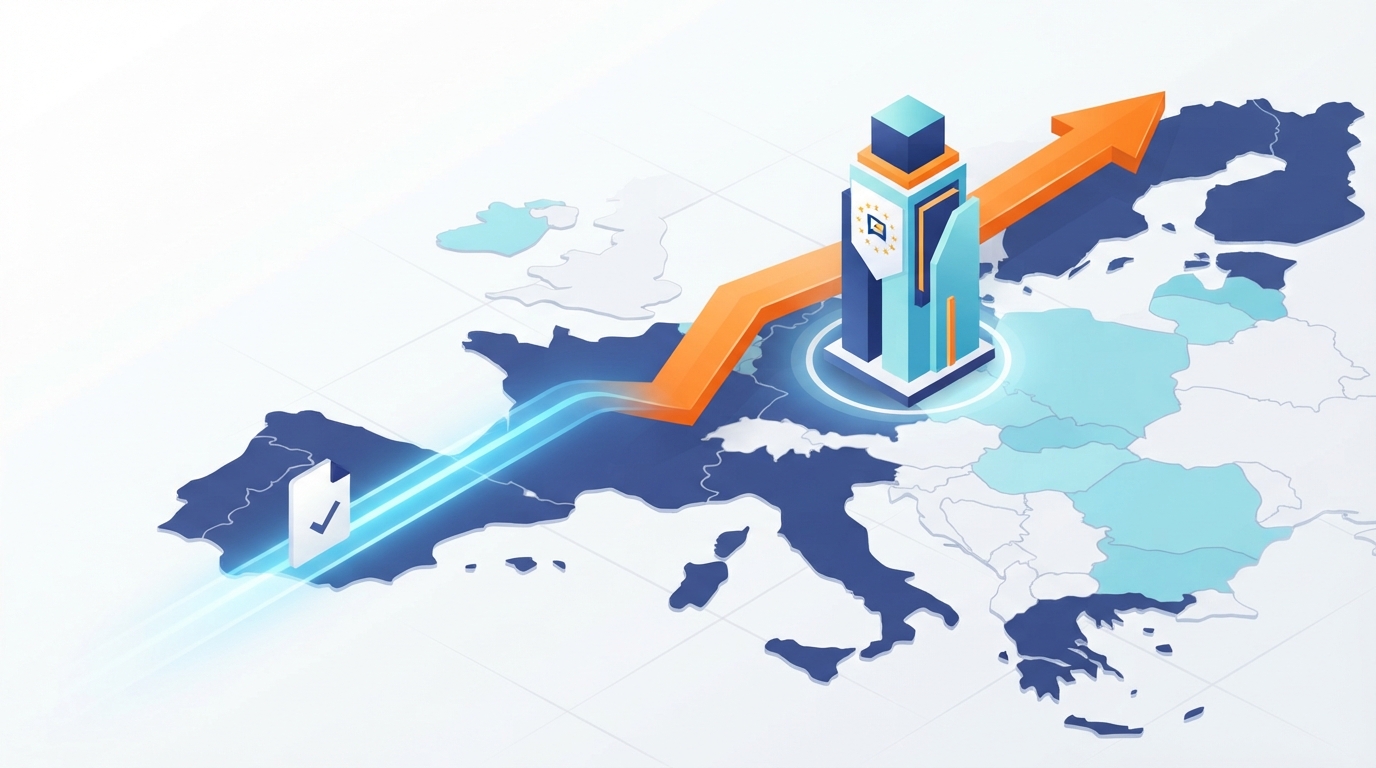
Filing directly with the European Union Intellectual Property Office (EUIPO) is often the most efficient path for American companies focusing their immediate growth on the European single market. This route provides a centralized, streamlined procedure where a single application grants exclusive rights across all member states, bypassing the administrative layers often found in international filing systems.
One of the primary benefits of the direct approach is speed and control during the examination phase. Because the application is handled entirely within the EUIPO framework, communications regarding absolute grounds for refusal or technical corrections happen directly with your authorized representative. This eliminates the multi-month delays typically associated with the World Intellectual Property Organization (WIPO) processing international applications before they even reach European examiners.
| Feature | Direct EUIPO Filing | Madrid System (WIPO) |
|---|---|---|
| Processing Speed | Faster; direct communication with examiners. | Slower; involves an additional administrative layer at WIPO. |
| Risk Profile | Independent; rejection doesn’t affect other filings. | Dependency; the “central attack” risk can invalidate the whole chain. |
| Language Handling | Managed directly in one of the 5 working languages. | Requires careful coordination between USPTO and WIPO. |
| Flexibility | High; easier to amend the list of goods/services. | Restricted by the original US basic application. |
For many of our clients, the “central attack” vulnerability of the Madrid System is a deciding factor. Under the international route, if your basic US application fails or is cancelled within the first five years, the European extension may also collapse. Direct filing avoids this dependency, ensuring that your European presence remains secure even if your domestic strategy shifts. This level of autonomy is particularly valuable for businesses where the EU is a primary revenue driver rather than a secondary market. While the direct route offers maximum control, it is also helpful to understand when the Madrid Protocol might serve a broader global strategy.
The Madrid Protocol Strategy
While direct filing offers independence and speed, the WIPO Madrid System serves as a centralized gateway for companies with a footprint spanning multiple continents. If your US-based entity already holds a registration with the USPTO and intends to expand into the EU alongside markets like Japan, China, or Australia, the Madrid Protocol can streamline the administrative burden of managing diverse portfolios.
Choosing this path requires a pragmatic assessment of your long-term scaling strategy. The Madrid system functions as a “bundle” of national or regional applications handled through a single administrative office, which can offer significant cost efficiency when the number of target jurisdictions exceeds four or five. However, it is vital to remember that the scope of your European protection will be strictly bound by the description of goods and services in your US base application, which is often narrower than what the EUIPO allows. To determine if this route aligns with your growth, consider the following decision matrix:
Strategic Decision Matrix: Choosing Your Filing Path
| Business Goal | Recommended Route | Primary Reasoning |
|---|---|---|
| Simultaneous expansion into 5+ non-EU countries | Madrid Protocol (WIPO) | Centralized renewal and lower administrative overhead for global portfolios. |
| Rapid entry into the European single market only | Direct EUIPO Filing | Faster communication and avoidance of the five-year “central attack” dependency. |
| Maximum flexibility in product descriptions | Direct EUIPO Filing | Allows for broader terms not permitted under strict USPTO examination standards. |
| Budget-conscious protection for early SMBs | Direct EUIPO Filing | Eliminates WIPO handling fees and speeds up the path to securing brand assets for European scaling. |
For many US enterprises, the initial cost savings of a WIPO filing are often outweighed by the strategic need for a standalone European right that remains immune to USPTO challenges. Once the high-level strategy is set, the focus shifts to the tactical execution of the filing process itself.
Essential Steps to EU Registration
Securing a European trademark requires navigating a standardized multi-stage procedure. This section details the systematic registration workflow and the critical nuances of managing international classifications to ensure your brand remains enforceable.
The Registration Workflow

Securing a European trademark requires navigating a multi-stage administrative process that prioritizes risk mitigation. For US companies, the workflow involves proactive strategy to identify potential conflicts early, ensuring that legal risks are managed before they escalate into financial liabilities.
To streamline your EU market entry, follow this 5-step roadmap:
| Step | Focus Area | Objective |
|---|---|---|
| 1. Conflict Search | Phonetic/Visual | Identify existing rights using TMview to minimize opposition risks. |
| 2. Classification | Nice Classification | Define the scope of goods/services to avoid over- or under-protection. |
| 3. Filing | EUIPO Application | Secure a formal priority date through the electronic submission system. |
| 4. Examination | Absolute Grounds | Ensure the mark meets distinctiveness criteria (e.g., avoiding descriptive terminology). |
| 5. Registration | Publication | Complete the mandatory 3-month opposition window to achieve final status. |
Strategic Insight: A common mistake for US firms is applying for a term that is descriptive in one EU member state language, even if it is considered distinctive in English. Because the EU internal market operates as a single system, the EUIPO may reject applications based on descriptiveness across any of the official EU languages. Pre-filing linguistic screening is essential to avoid the cost of an aborted application.
Managing Trademark Classification
While the workflow provides the structural bones of your application, the description of goods and services acts as its legal heart. The European Union Intellectual Property Office (EUIPO) utilizes the Nice Classification system, a global standard that categorizes products into 45 distinct classes. However, a common mistake when US entities seek European protection is the direct copy-pasting of USPTO descriptions. US applications often require extreme specificity and evidence of use, whereas the EU system allows for broader protection if drafted with foresight.
Strategic growth for SMBs in Europe relies on a classification list that covers not just current operations but also logical brand extensions. If your list is too narrow, you may find yourself unable to stop a competitor from using your name on a related product line six months after launch. Conversely, being over-broad without a genuine intention to use the mark in those categories can leave your registration vulnerable to non-use cancellation actions after the initial five-year grace period. Precision in this phase is the best way to protect intellectual property in the EU while maintaining a lean legal budget.
| Classification Pitfall | Typical US Approach (Risky in EU) | Strategic EU Adjustment |
|---|---|---|
| Over-Specificity | Listing every individual component of a software suite. | Using broader terms like “Downloadable software” to cover future updates. |
| Class Mismatch | Relying on US-specific class interpretations for retail services. | Mapping services to EUIPO-specific Class 35 standards for clarity. |
| Insufficient Future-Proofing | Focusing only on the primary product sold today. | Including ancillary services (e.g., maintenance or consulting) in related classes. |
Correctly managing these categories ensures your brand remains defensible as you scale across different European markets and helps avoid common cross-border filing complications.
Avoiding Common US-EU Pitfalls
Expanding into Europe requires more than just administrative filing; it demands a proactive defense against local legal challenges. We will explore the technical risks of opposition proceedings and the ongoing requirements for maintaining rights.
The Risk of Opposition
While understanding the procedural requirements is essential, navigating the three-month opposition window is where many applications succeed or fail. This period allows owners of earlier rights to challenge your filing if they believe it creates a likelihood of confusion with their existing marks. Underestimating this phase often leads to expensive delays and complex legal negotiations that could have been avoided with a more rigorous pre-filing strategy.
Consider the case of a US-based software provider, which we will call Company A. Seeking to expand rapidly, they filed for an EU trademark without conducting a comprehensive clearance search for conflicting names in Europe. Two months into the opposition period, a Spanish firm with a phonetically similar name in a related class filed an objection. Because Company A had not identified this risk early on, they faced a six-month delay, high legal fees for a cooling-off period, and were eventually forced to limit their list of services to settle the dispute. This scenario highlights why a preliminary search is a non-negotiable step for long-term ROI.
Proactive risk management involves more than just a literal string search; it requires analyzing the following factors to ensure a smooth path to registration:
- Phonetic and Visual Similarity: Assessing how the mark is perceived by non-English speaking consumers across diverse member states.
- Class Overlap: Identifying potential conflicts not just in your primary class, but in related sectors where your brand might logically expand.
- Geographic Scope: Monitoring for earlier national trademarks in specific countries that can block a territory-wide EU registration.
Establishing a clear path through the opposition phase ensures that your intellectual property serves as a stable foundation for growth rather than a source of legal friction.
Maintaining Trademark Rights
After successfully navigating potential oppositions, the focus shifts to maintaining the integrity of your registration through active market presence. Unlike the US system, which often requires a Declaration of Use to maintain a filing, the EU system is initially more flexible but carries stricter consequences for long-term inactivity. Understanding these nuances is vital for US entities accustomed to the USPTO’s rigid “use-based” filing requirements.
In the European Union, your trademark is protected from the moment of registration, but it remains vulnerable to non-use cancellation if it is not put to “genuine use” within a specific timeframe. This distinction allows companies to secure protection for future business lines, provided they have a concrete plan for activation. The EU framework operates under these key principles:
- The Five-Year Grace Period: You have five years from the date of registration to begin using the mark in the EU before it can be challenged by third parties for non-use.
- Genuine Use Standard: Use must be more than merely symbolic; it should involve actual commercial activity aimed at creating or maintaining a market share for the goods or services.
- Territorial Reach: While use does not have to occur in all 27 member states, it must be sufficient to be considered use within the internal market of the EU.
- Evidence Maintenance: Consistent record-keeping of invoices, marketing materials, and shipping documents in EU territories is essential for defending the mark in the future.
- Periodic Renewals: Every ten years, the registration must be renewed to ensure the continued exclusivity of the brand.
Strategic management of these rights ensures that your brand remains a defensible asset as you scale your European operations.
For help with this task, use the Trademark registration in the EU service.
Final Thoughts: Secure Your EU Presence
Securing a registered trademark in the EU for a US company is more than a administrative task; it is a strategic investment that transforms a brand into a protected cross-border asset across 27 member states. By proactively navigating the nuances of the EUIPO and ensuring professional representation, American businesses can establish a resilient legal foundation that scales alongside their European market growth. To further refine your strategy, explore the best way to protect intellectual property in the EU for emerging ventures and ensure your expansion remains secure from the very first day.
Frequently Asked Questions
How does the Brexit transition affect my existing EU trademark or future filings?
Since the United Kingdom’s withdrawal from the European Union, the EUIPO no longer covers the UK territory. This has created a bifurcated system that requires strategic planning for businesses targeting both regions:
- Existing Trademarks: If you held an EU trademark before the end of the transition period (December 31, 2020), the UK Intellectual Property Office (UKIPO) automatically created a ‘comparable UK trademark’ for you.
- New Filings: You must now file separately with the EUIPO for coverage in the 27 EU member states and with the UKIPO for protection in the United Kingdom.
- Strategic Consideration: Relying on a single registration is no longer possible. Businesses must budget for two distinct filings, two sets of potential opposition proceedings, and two maintenance schedules to ensure full coverage in the European market.
What is the primary difference between a European Union Trademark (EUTM) and the WIPO Madrid System?
While both systems facilitate international brand protection, they function under different legal frameworks and administrative structures:
- EUTM (Direct Filing): A single registration that provides uniform protection across all 27 EU member states. It is a ‘unitary’ right, meaning it is treated as a single asset. If you face a challenge in one country, it often impacts the entire EU application.
- Madrid System (WIPO): An international registration system that acts as a ‘bundle’ of individual national or regional filings. When designating the EU through Madrid, you are essentially requesting the WIPO to ask the EUIPO to grant protection.
- Key Distinction: Direct filing at the EUIPO is often preferred by US companies for speed and direct communication with the examiner, whereas the Madrid System is often utilized for companies seeking to manage a portfolio across multiple global jurisdictions (including non-EU countries) from a single hub.
Why is a trademark search across the EU more complex than in the United States?
Performing a conflict search in the EU is significantly more nuanced due to the linguistic and cultural diversity of the region. Unlike the US, where the search is primarily conducted in English:
- Linguistic Breadth: An EU trademark must be valid across 24 official languages. A mark that is descriptive or offensive in just one of these languages can be rejected by the EUIPO.
- Regional Rights: You must check not only for existing EUTMs but also for national trademarks registered within individual member states, as these can serve as the basis for an opposition against your EU-wide application.
- Professional Expertise: Utilizing a professional trademark registration service ensures that searches account for these linguistic pitfalls and local rights that automated tools might overlook.
Can I use my US ‘intent-to-use’ filing as a basis for my EU application?
The EU system functions differently than the US trademark system regarding ‘use.’ Specifically:
- No ‘Intent-to-Use’ Requirement: Unlike the US, where you must eventually prove use to register a mark, you do not need to show evidence of use in the EU at the time of filing.
- The 5-Year Grace Period: Once your trademark is registered in the EU, you have a 5-year grace period where you do not need to provide proof of ‘genuine use.’ However, after these 5 years, your trademark becomes vulnerable to cancellation if it has not been used in the European market.
- Strategy: US companies should view the EU trademark as a preemptive strategic asset that secures the brand identity before full-scale commercial entry, provided they have a plan to enter the market within that 5-year window.
How can I find a qualified trademark attorney in Madrid or elsewhere in the EU to represent my company?
For US-based entities, appointing an authorized representative is a legal mandate under EUIPO regulations. When searching for representation:
- Verify Authorization: Ensure the firm or individual is listed on the EUIPO database of professional representatives. This guarantees they have the legal standing to represent you in all proceedings, including potential oppositions or appeals.
- Evaluate Expertise: Look for firms that specialize in cross-border IP strategy for foreign entities rather than just domestic registration.
- Streamlined Solutions: Many US businesses choose to partner with specialized legal firms, such as BrandR Legal EU, which are structured specifically to act as the mandatory EU representative for foreign startups and SMBs, removing the administrative burden of vetting individual local attorneys across different member states.