Can I Copyright AI Generated Images in the EU?
While AI art tools have disrupted the creative landscape, the legal path to ownership remains clouded by technicalities regarding human authorship. This guide explores the originality thresholds and practical strategies for securing your digital assets in the European market.
The Originality Threshold in EU Law
Understanding the legal status of non-human generated content requires a deep dive into European judicial standards. We will now examine the specific criteria for human intellectual creation and the boundaries of using AI as a tool.
Defining Human Intellectual Creation
In the European legal framework, copyright does not protect every image created; it specifically guards the “author’s own intellectual creation.” As Anton Polikarpov notes, AI is a sophisticated instrument, but the law currently views it as a tool rather than a creator. For a work to qualify for protection, it must reflect the personality of a human author who made free and creative choices during the production process. The focus of EU law is not on the AI itself, but on whether the final output serves as an expression of human intent; if an algorithm independently determines composition, lighting, and style without significant human intervention, the result likely falls into the public domain.
The Court of Justice of the European Union (CJEU) has established through landmark cases, such as Infopaq and Painer, that originality is inextricably linked to human expression. To successfully claim rights, a creator must demonstrate that they exercised “creative freedom” by providing specific instructions, iterating on drafts, or manually refining the output. Simply entering a generic prompt is rarely enough to meet this threshold. When considering how to protect digital art in Europe, the focus must always be on the human footprints left on the final file.
Copyright is a reward for human ingenuity, not for the processing power of a server. To secure your rights, you must be the master of the machine, steering the creative process from the initial concept to the final aesthetic refinement. — Anton Polikarpov
When your work forms the core of a commercial brand, keep in mind that if copyright protection for raw AI output is uncertain, EU trademark registration remains a viable path for securing brand identity. It is essential to distinguish between the autonomous generation of a machine and the guided output that serves as a mere extension of a designer’s hand.
Understanding where the machine ends and the artist begins is the first step in determining when AI becomes a mere tool in your workflow.
Related topic reference: How to copyright digital art in Europe effectively.
When AI Becomes a Mere Tool
When the creative process shifts from human intuition to algorithmic output, the legal standing of the result changes fundamentally. While traditional digital art relies on the software as an extension of the artist’s hand, AI often acts as the primary generative force, which complicates the question of whether can I copyright AI generated images in the EU under current frameworks. The distinction lies in who—or what—makes the definitive creative choices that shape the final visual expression.
European courts look for the “stamp of the author’s personality.” If a creator merely provides a high-level prompt and lets the machine determine the composition, lighting, and style, the resulting work lacks the necessary human intervention. However, when a designer uses AI iteratively—refining outputs, manually adjusting layers, or overpainting specific elements—the machine is relegated to a tool. This distinction is critical for understanding how to copyright digital art in europe: Modern challenges in digital authorship and determining which assets can be legally defended.
| Feature | Prompt-Based Creation | Iterative Editing & Refinement |
|---|---|---|
| Creative Control | Delegated to the algorithm. | Retained by the human creator. |
| Decision Making | Machine selects aesthetic details. | Human makes specific, conscious choices. |
| Legal Status | Likely public domain in the EU. | Potentially eligible for copyright. |
| Evidence Needed | None (usually indefensible). | Logs, drafts, and manual edit history. |
For freelance creators and agencies, the goal is to move beyond “one-click” generation. To secure a foothold in copyrighting digital art in Europe effectively, you must be prepared to demonstrate that the final image is a result of your own intellectual choices rather than a random statistical probability from a neural network. This leads us directly to the specific legal barriers that prevent machines from being recognized as authors.
The Human Authorship Requirement Explained
This section examines why EU law requires a human creator for legal protection. We will explore the reasons pure machine outputs fail and how human intervention can bridge this legal gap.
Why Pure AI Content Fails
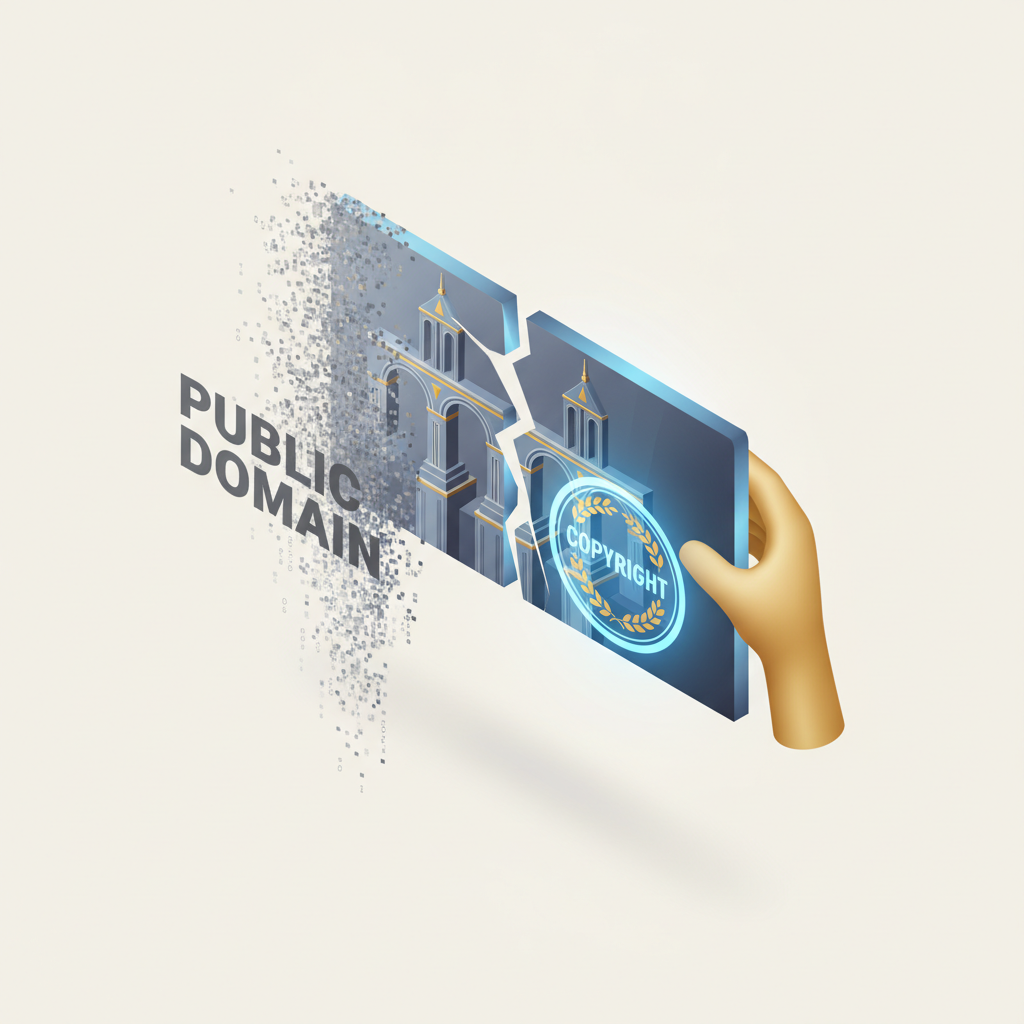
European copyright frameworks hinge on the principle that protection is granted only to works that constitute the “author’s own intellectual creation.” As established by the Court of Justice of the European Union in Case C-5/08 (Infopaq), a work must reflect the author’s personality through free and creative choices—a threshold that software models currently cannot meet independently.
Because AI lacks legal personality, it cannot be vested with the rights and obligations of an author. Consequently, imagery generated entirely by an algorithm typically falls into the public domain immediately upon creation. This creates a strategic void: without a human author, there is no legal basis to prevent competitors from copying or using your generated assets.
| Feature | Pure AI Content | Human-Led Creation |
|---|---|---|
| Copyright Eligibility | Likely Public Domain | Protected upon creation |
| Legal Ownership | None | Author/Employer |
| Enforceability | Very Limited | Strong (via copyright law) |
Common Pitfall: Many creators assume that paying for an AI subscription grants them automatic copyright over the output. In reality, ownership of the subscription service’s terms does not equate to statutory copyright in the EU. For instance, if you generate a logo using an AI tool, you may own the file, but you likely lack the legal standing to sue for infringement if a third party replicates that same design.
Warning: Copyright protection is currently not granted to non-human works in the EU. While copyright protects the expression of an idea, trademarking serves as a valid alternative for commercial usage by protecting the source-identifying function of a design, regardless of whether a human or an algorithm assisted in its production.
Disclaimer: This content provides general information, not individual legal advice. Enforcement outcomes and the validity of intellectual property claims depend on the specific circumstances of the mark, the goods/services provided, and jurisdictional requirements.
Retaining Control Through Human Intervention
When the output moves beyond a simple algorithmic generation and reflects a series of specific, human-driven aesthetic choices, the legal conversation shifts. For creators asking if they can copyright AI generated images in the EU, the answer often depends on how meticulously they document the transition from machine-driven draft to human-refined art. To move into the territory of protected intellectual property, you must demonstrate that the AI served merely as a sophisticated brush rather than the independent artist.
To strengthen a potential claim of authorship, it is essential to treat the creative process as a forensic trail. The European Union Intellectual Property Office (EUIPO) and national courts look for the “stamp of the author’s personality,” which is best evidenced by traditional creative workflows integrated with digital tools. If you are modifying machine outputs, the following documentation steps are critical for your legal defense:
- Preliminary Conceptualization: Archive early sketches, mood boards, or hand-drawn compositions that existed before the first prompt was even typed. This proves the creative intent originated with you.
- Iterative Layering and Logs: Maintain a history of your prompt iterations and the corresponding adjustments. More importantly, document the use of specific digital tools for masking, lighting adjustments, and color grading performed manually in external software.
- Overpainting and Manual Modification: Evidence of manual brushwork—whether adding texture, correcting anatomical errors, or refining fine details—provides the strongest proof of human intervention. Save versions of the work at different stages of these manual edits.
- Technical Metadata: Keep the original files with timestamps and layer history. In digital art disputes, the ability to show the internal structure of a file (PSD layers, vector paths) can be the deciding factor in proving you exercised creative control.
By shifting the focus from the final result to the sequence of conscious decisions made during production, you align your work with the standards of European digital authorship. This disciplined approach to documentation transforms a vulnerable digital asset into a defensible piece of property, bridging the gap between raw technology and personal expression.
Securing Your Assets via Trademarks
When traditional authorship remains legally uncertain, establishing commercial rights through registered brand identifiers provides a more predictable path for protecting AI-assisted assets within the European market.
The following sections analyze the strategic choice between copyright and trademark protection, highlighting how to register specific visual elements as protected brand assets.
Copyright vs Trademark Protection Paths
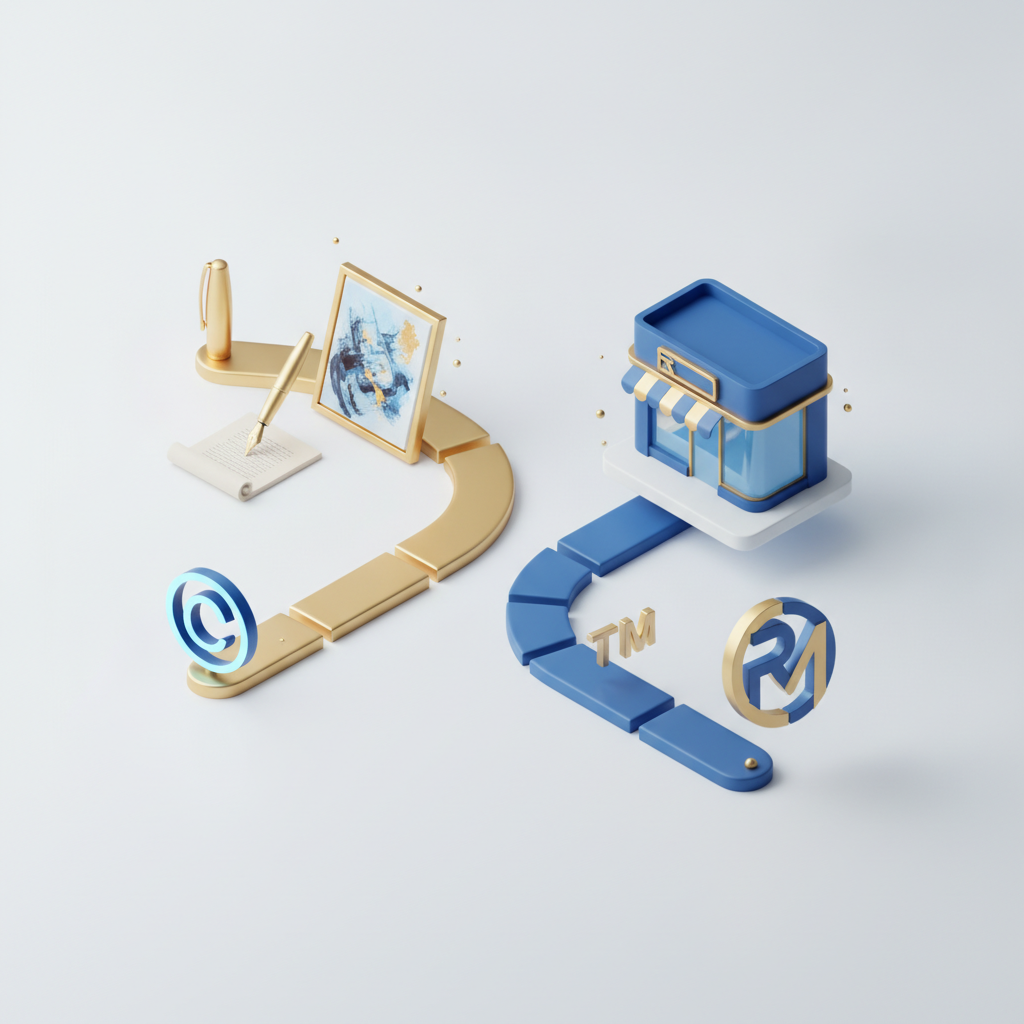
Choosing the right protection path requires a clear understanding of the legal function each right serves. While copyright arises automatically from the act of creation—provided the work meets the threshold of originality—it faces significant hurdles when applied to non-human outputs. In contrast, trademark protection focuses on the commercial origin of an asset, making the technical process of its creation secondary to its role in the marketplace.
The table below provides a concise framework for categorizing assets based on their legal treatment under current European standards.
| Asset Category | Typical Protection Path | Primary Requirement |
|---|---|---|
| Copyrightable Art | EU Copyright Law | Stamp of the author’s personality and conscious creative choices. |
| Non-Copyrightable AI Assets | Public Domain / Contract Law | Raw outputs generated from high-level prompts without human refinement. |
| Trademarkable Brand Assets | EUIPO Registration | Distinctiveness and use as a source identifier in trade (e.g., logos). |
As you define which assets require the most rigorous protection, the focus shifts to the practical steps of integrating these visual elements into a formal brand structure.
Registering AI Art as a Brand
While copyright focus on human-authored expression remains complex, trademark law provides a more predictable path for securing AI-generated brand assets. The EUIPO evaluates trademark applications based on distinctiveness and the ability of a sign to identify the commercial source of goods or services, rather than the technical method of the design’s creation. Consequently, businesses can successfully register AI-assisted logos or icons, bypassing the ongoing legal uncertainty surrounding whether one can copyright AI generated images in the EU.
By opting for professional trademark registration, you secure exclusive rights across all 27 Member States. This protection is instrumental for enforcing brand integrity; if a competitor uses a confusingly similar visual on social media or commerce platforms, a registered trademark provides the legal standing required to initiate takedown requests—a process often more streamlined than copyright litigation.
Strategic Comparison: Securing AI Assets
| Goal | Trademark Path | Copyright Path |
|---|---|---|
| Core Requirement | Distinctiveness (Source-identifying) | Originality (Human-authored) |
| AI Applicability | High (Method-neutral) | Low (Requires human intervention) |
| Primary Benefit | Commercial exclusivity | Protects specific expression |
Example: A fashion startup using an AI-generated motif for a clothing line may struggle to prove “originality” for copyright protection, but by registering that motif as a logo under the relevant Nice Classification, the brand gains immediate, enforceable rights against copycats in the EU market.
For help with this task, use the Trademark registration in the EU service.
Protecting Your Creative Future
Understanding whether you can copyright AI generated images in the EU requires shifting focus from the software’s capabilities to the human’s creative choices and iterative refinements. While autonomous algorithmic output remains ineligible for protection, documenting your specific interventions—such as manual overpainting or complex prompt engineering—allows you to secure rights under established digital art laws and prepares your work for the evolving challenges of digital authorship. For commercial assets like logos or icons, pivoting to a trademark strategy remains the most robust way to defend your brand’s market position regardless of the underlying technology used. To ensure your creative portfolio is legally enforceable across all 27 Member States, I invite you to reach out for a professional consultation to structure your intellectual property strategy effectively.
Frequently Asked Questions
How does the registration process for a trademark differ from claiming copyright for a piece of digital art?
The core difference lies in the legal objective of each protection. Copyright arises automatically upon the creation of a work, provided it meets the standard of originality, and is intended to protect the expression of an idea from unauthorized copying. Conversely, trademark registration is a proactive legal process designed to protect source identifiers, such as brand names, logos, or slogans, that distinguish your goods or services in the marketplace.
Key procedural differences include:
- Origin: Copyright is an automatic right; trademarks generally require formal registration with the European Union Intellectual Property Office (EUIPO) to gain broad protection across all 27 EU Member States.
- Duration: Copyright typically lasts for the life of the author plus 70 years. Trademarks can be renewed indefinitely every 10 years, provided the mark remains in use for commercial activities.
- Purpose: Copyright protects the artistic expression itself; trademarks protect the reputation and distinctiveness of your brand.
For businesses looking to secure their digital assets, pursuing Trademark registration in the EU provides a stable, enforceable legal shield, regardless of whether the underlying graphic design was assisted by artificial intelligence.
Can I use AI-generated images for my business if I cannot obtain copyright for them?
Yes, you can utilize AI-generated images for commercial purposes, but you must be aware of the limitations regarding exclusivity. If the output is considered to have originated solely from the AI without sufficient human creative input, it may be deemed to fall into the public domain. This means you may not be able to prevent competitors from using the same or highly similar imagery.
To mitigate this risk, entrepreneurs often:
- Modify the output: Substantial post-processing in software like Photoshop can help establish a human claim over the final version.
- Leverage Trademark Law: If you use an AI-generated image as your official company logo, you should prioritize registering it as a trademark. While you might not own the copyright to the image file itself, a trademark registration grants you the exclusive right to use that specific mark in trade within the registered categories, preventing others from using it in a way that creates consumer confusion.
Does EU law distinguish between different types of AI tools, such as generative models versus style-transfer software?
Under current EU legal frameworks, specifically the principles established by the Court of Justice of the European Union (CJEU), the law is generally technology-neutral. This means the specific technical architecture of the software (whether it is a diffusion model, a GAN, or a simple filter) is less important than the degree of human control exercised during the process.
Legal authorities focus on whether the final output is a result of the human author’s free, creative choices. If a tool acts as a mere instrument—similar to a camera or a paintbrush—the threshold is easier to meet. If the software operates autonomously based on a simple prompt, it is viewed as a generator rather than a tool, which complicates claims of human authorship. Therefore, the focus remains on your documentation of the creative process rather than the technical specifications of the software used.
What documentation should I keep to prove my ‘creative freedom’ in AI-assisted projects?
To strengthen your position in potential disputes, you should maintain a detailed creative log or audit trail of your project’s development. This is essential if you intend to argue that your human input transcended the capabilities of the AI. Useful documentation includes:
- Drafts and Iterations: Keep records of early drafts, rejected variants, and prompt history that show your decision-making process.
- Manual Refinement: Save layers or screenshots of edits made outside the AI tool (e.g., color corrections, vector tracing, or manual digital painting).
- Creative Briefs: Document the specific aesthetic choices, compositions, and thematic goals you set out to achieve, demonstrating that the AI was guided by your specific, non-obvious intent.
This documentation acts as evidence that the final work is a reflection of your personality, which is the cornerstone of originality under the Infopaq ruling.
Are there specific risks when selling digital products in the EU that contain AI-generated elements?
Selling digital products that rely heavily on AI-generated content carries specific IP risks, particularly regarding infringement and enforceability. If you cannot claim copyright, you cannot easily stop third parties from copying your work. Furthermore, if the AI model was trained on protected, non-licensed data, there may be lingering questions regarding the provenance of the output.
For commercial sellers, the most prudent strategy involves:
- Auditing your assets: Determine which elements are strictly AI-generated versus human-authored.
- Defining your rights in Terms of Service: Clearly outline what your customers are purchasing—is it a license to use a specific, non-copyrightable visual asset, or are you offering a brand-protected identity?
- Registering your brand identity: Instead of relying on the copyright status of individual digital assets, register your company name, brand logo, and key visual identifiers as trademarks. This creates a clear legal boundary that protects your business identity, which is often more valuable than the protection of an individual image file.